The POSIX-Native AI Swarm: Inside HKUDS/ClawTeam
How a research lab bypassed complex API orchestration by using tmux, git worktrees, and filesystem locks to manage autonomous AI agents.
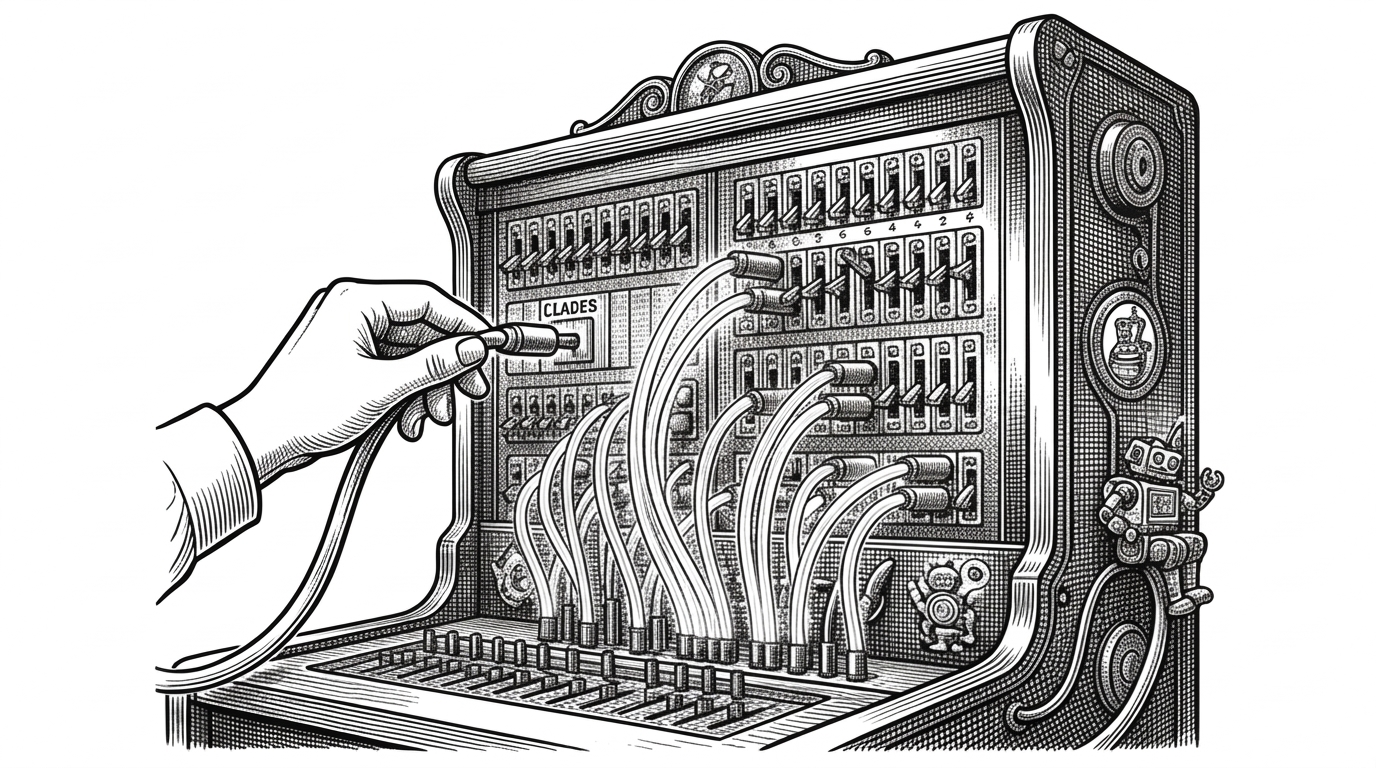
- ClawTeam uses tmux to spawn and manage autonomous AI agents within isolated terminal environments.
- The framework replaces network-based messaging with a filesystem bus that uses atomic renames and advisory locks to coordinate agent tasks.
- Isolated git worktrees prevent race conditions by giving every agent a private directory to modify the shared codebase.
- A native CLI adapter injects coordination logic into third-party agents without requiring modifications to their underlying code.
The Terminal is the API
Modern multi-agent orchestration frameworks typically force developers to write complex Python scripts or configure massive YAML files. They construct proprietary memory banks and heavy REST APIs to keep agents communicating. ClawTeam takes the opposite approach. It applies the 1970s Unix philosophy to 2026 large language models.
Developed by the HKU Data Science Lab (HKUDS), ClawTeam treats existing command-line AI agents as raw compute primitives. It does not care if the underlying model is Claude, Codex, or a custom local binary. If the agent can run in a terminal, ClawTeam can orchestrate it.
The framework uses tmux to spawn isolated terminal environments for each worker agent. When a user issues a command to the "Leader" agent, that leader programmatically spawns sub-agents into their own named tmux windows. Human operators can simply attach to the session to watch the swarm work in real time, making debugging as simple as switching terminal tabs.
The Filesystem as a Message Bus
Inter-agent communication usually requires a message broker like Redis or RabbitMQ. ClawTeam discards network-based messaging entirely for a local-first approach. It uses the physical hard drive as its message bus.
Inside clawteam/transport/file.py, the framework defines a system where directories act as inboxes and files act as messages. To prevent two agents from reading the same instruction at the same time, ClawTeam relies on fcntl.flock for advisory locking. It also employs an atomic state machine to guarantee message delivery.
When an agent sends a message, it writes the data to a .tmp file. Once the write is complete, it performs an atomic rename to a .json file. A receiving agent detects the new file, applies a filesystem lock, and renames it to .consumed. This ensures that even if an agent process crashes mid-thought, the message state remains consistent and recoverable.
Solving the Agent Merge Conflict
When multiple autonomous agents edit the same repository, they inevitably destroy each other's work. Traditional AI coding agents operate in a single working directory, leading to race conditions where one agent overwrites a file while another is still reading it.
ClawTeam solves this in clawteam/workspace/git.py by provisioning isolated git worktrees for every spawned worker. A worktree allows multiple physical directories to share a single underlying .git history.
Each agent gets a pristine, parallel copy of the codebase. They can write code, run tests, and commit changes without ever stepping on the toes of the other agents. Once a worker completes its task, the leader agent reviews the worktree and merges the branch back into the main line.
The Injection Architecture
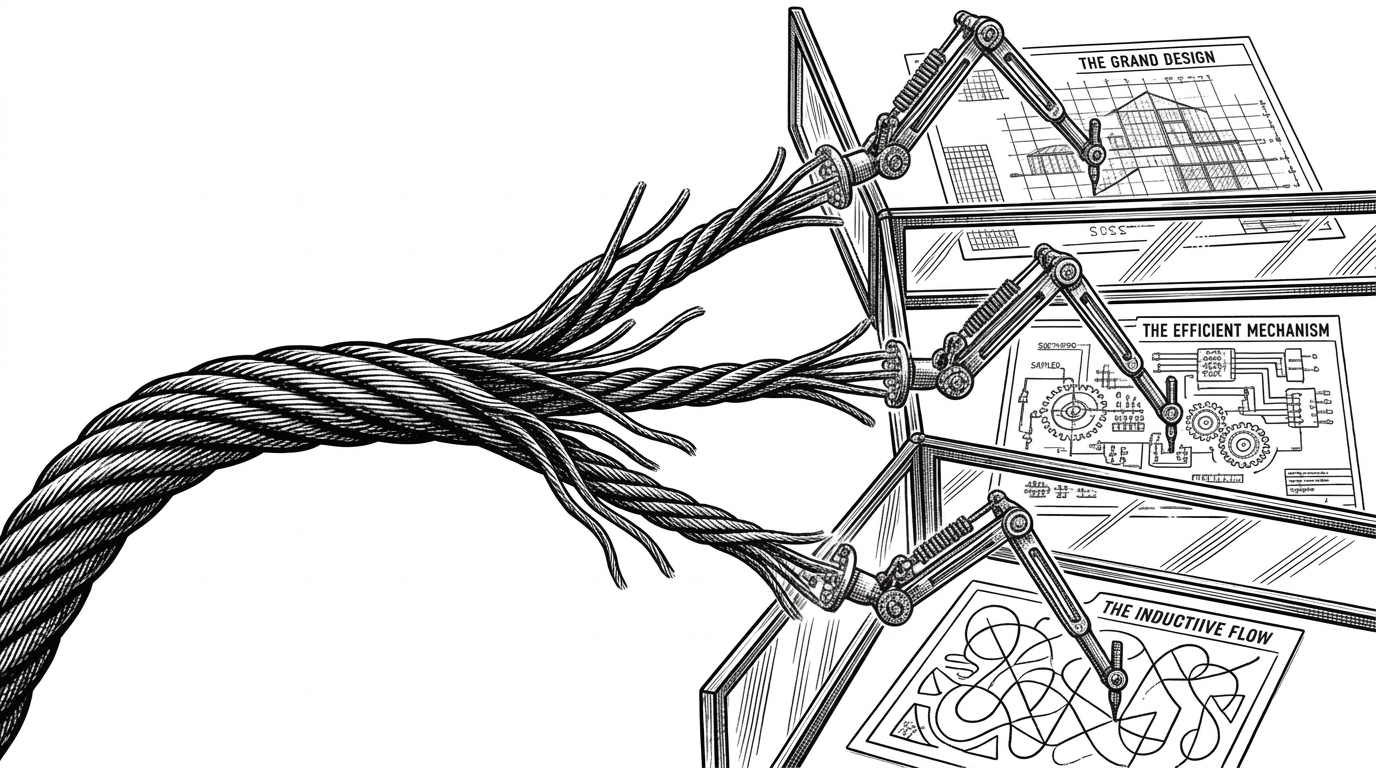
ClawTeam does not attempt to build a better LLM wrapper. Instead, it uses a NativeCliAdapter to inject its own context into third-party binaries. It tricks solo agents into functioning as a coordinated team.
When ClawTeam launches Anthropic's Claude Code or the open-source OpenClaw agent, it injects environment variables like CLAWTEAM_AGENT_ID and tool definitions directly into the subprocess. The underlying agent believes it is just using another CLI tool. It learns to run clawteam task update just as a human developer would.
One Command Line: Full Automation. — agents spawn swarms, delegate tasks, and deliver results.
This decoupling means ClawTeam can upgrade its logic without waiting for upstream agents to support new API standards. The terminal itself acts as the universal compatibility layer.
Swarm Coordination vs. Heavy Frameworks
The multi-agent ecosystem is currently divided between heavy programmatic frameworks and lightweight protocol layers. ClawTeam occupies a unique middle ground.
Frameworks like CrewAI require developers to define agents in Python scripts, managing memory arrays and SQLite databases manually. Platforms like SwarmClaw provide web-based dashboards and complex webhook triggers for autonomous execution. ClawTeam ignores both paradigms in favor of POSIX primitives.
| Framework | Orchestration Model | Communication Bus | State Persistence | Primary Interface |
|---|---|---|---|---|
| ClawTeam | CLI-native Leader/Worker | Filesystem Locks | Git Worktrees | Terminal (tmux) |
| Clawith | Autonomous Triggers | Webhooks | Vector DB | API |
| CrewAI | Python Scripts | Memory Arrays | SQLite | Code |
By relying on the filesystem, tmux, and Git, ClawTeam dramatically lowers the barrier to entry for local AI orchestration. It proves that scaling agent intelligence does not always require adding new layers of abstraction. Sometimes, the best way to manage the future of software development is to use the tools that have reliably managed operating systems for the last fifty years.
Sources: Technical details and architectural patterns were analyzed directly from the HKUDS/ClawTeam GitHub repository. Context on the OpenClaw ecosystem and ClawWork benchmarks was gathered from Remote OpenClaw and Particula Tech.