The Model That Points: Inside MaverickRen/PixelLM
How a lightweight codebook and a clever loss function gave Large Multimodal Models spatial agency without the heavy overhead of Segment Anything.


While large multimodal models (LMMs) have achieved remarkable progress, generating pixel-level masks for image reasoning tasks involving multiple open-world targets remains a challenge. To bridge this gap, we introduce PixelLM, an effective and efficient LMM for pixel-level reasoning and understanding.
- PixelLM swaps bulky external segmentation engines for a lightweight internal codebook, giving language models native spatial agency.
- A novel overlap loss function solves spatial ambiguity, mathematically forcing the model to distinguish between adjacent, distinct objects in a single query.
- Decoupled vision projectors ensure that the features used for text generation remain completely distinct from those used for precise boundary drawing.
Giving the LLM a Cursor
Standard Large Multimodal Models are excellent at describing images. They can tell you a dog is wearing a red collar, but they lack spatial agency. They can talk, but they cannot touch. This limitation restricts their utility in applications requiring precise physical boundaries, such as robotics or medical imaging.
PixelLM is built to solve this exact problem. It focuses on reasoning segmentation, a task where the model must understand complex queries like "segment the food that tastes spicy" rather than simple class labels. Instead of relying on bounding boxes, PixelLM generates precise, multi-target pixel masks directly from natural language prompts.
The Overlap Problem
The core technical challenge of multi-target segmentation is spatial ambiguity. When a user asks an AI to segment "the dog and the leash," models often blend the pixels together. The boundary where the two objects meet becomes a confused gradient.

PixelLM solves this mathematically using a custom overlap_loss function. This function explicitly penalizes the model for assigning the same pixels to multiple distinct targets in a single query. It forces the model to draw a hard line in the sand, ensuring that the dog and the leash remain separate entities in the output mask.
Words to Pixels: The Segmentation Codebook
The magic of PixelLM lies in its architecture, specifically within model/PixelLM.py. The model inherits from LLaVA, an established open-source language-and-vision assistant. However, rather than simply outputting text tokens to describe an image, PixelLM introduces a segmentation codebook.
When prompted to segment an object, the model generates special [SEG] tokens. These tokens act as a bridge. They bypass the standard text generation pipeline and flow directly into a lightweight pixel decoder. This decoder, based on the mask decoder from Segment Anything (SAM) but drastically reduced in size, expands the [SEG] tokens into the final visual mask.
Shedding the SAM Baggage
Previous attempts to achieve reasoning segmentation, such as LISA, relied on a brute-force approach. They bolted a massive, frozen Segment Anything Model directly onto the LLM. This pipeline was computationally expensive and struggled to scale when asked to identify multiple targets simultaneously.
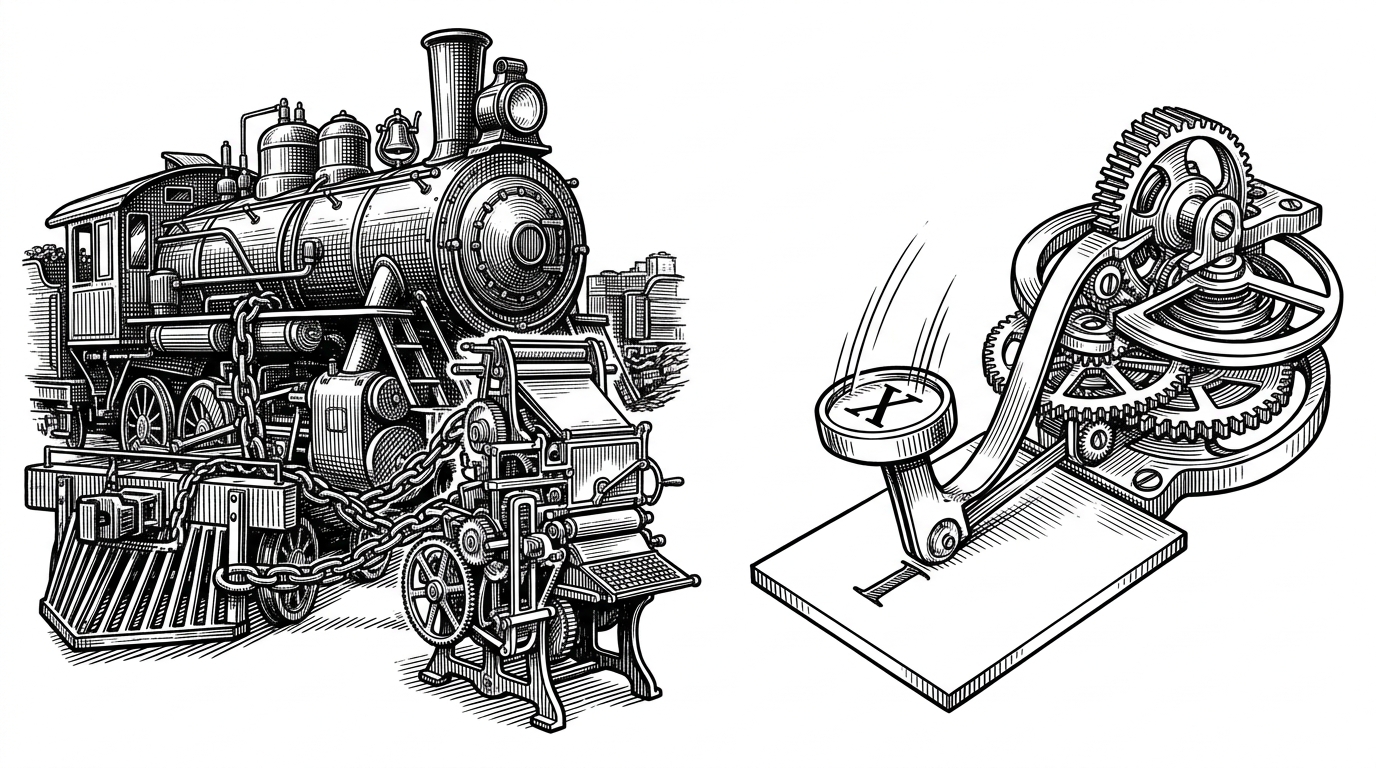
PixelLM sheds this baggage entirely. By using its internal codebook and a minimal decoder, it remains highly efficient. The authors also implemented decoupled vision projectors, governed by the separate_mm_projector flag. This architecture ensures that the features required for "talking" about an image are processed separately from the features needed for "drawing" its boundaries.
| Feature | LISA (Bolted SAM) | PixelLM |
|---|---|---|
| Architecture | LLM + External Frozen SAM | Unified Codebook & Lightweight Decoder |
| Multi-Target Handling | Iterative (Costly passes) | Native (Single pass generation) |
| Vision Projectors | Shared | Decoupled |
| Computational Overhead | High | Low (Supports 4-bit quantization) |
Distilling the Frontier
To train this novel architecture, the researchers needed data that did not exist. They created the MUSE dataset (Multi-reasoning segmentation dataset) by using a frontier closed-source model, GPT-4V, as a synthetic teacher. This allowed them to generate 246,000 highly complex, multi-target reasoning pairs.
By leveraging Low-Rank Adaptation (LoRA) on this synthetic dataset, the open-source model learned to replicate the reasoning capabilities of its larger, closed-source counterpart. The result is a specialized, highly efficient tool that pushes the boundaries of what open-source multimodal models can achieve.