ike: Sakana AI’s Modular Shell Around DeepSpeed
A closer look at the framework that turns distributed LLM training into a plug-in architecture for data, loss functions, configs, and checkpoints.
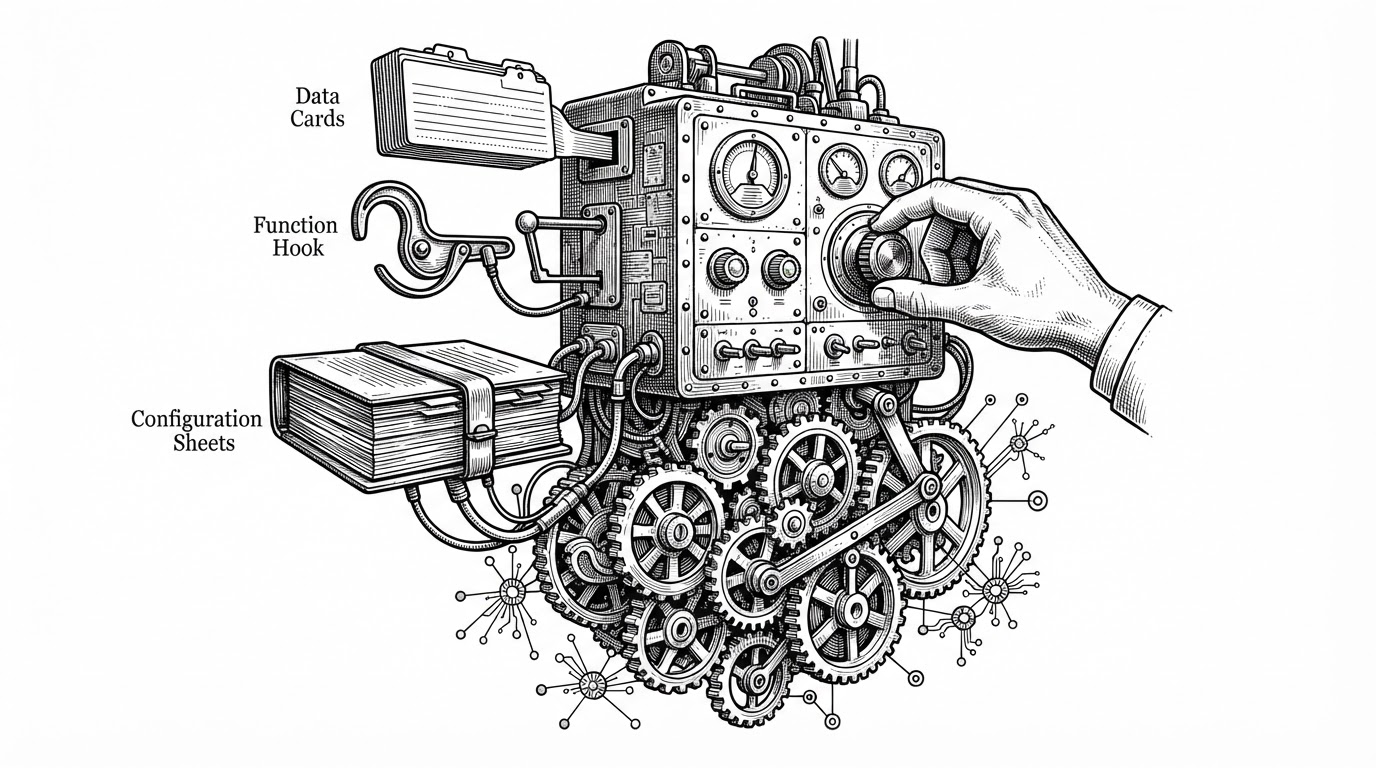
- ike makes DeepSpeed feel less like infrastructure and more like a research interface with swappable task logic.
- Its central bet is a clean split between orchestration and model behavior, which keeps the training loop generic without making it rigid.
- The repo’s configuration and checkpoint design show that reproducibility is treated as a first-class feature, not a convenience.
- In the broader landscape, ike is best understood as a workflow layer on top of DeepSpeed, not a competitor to distributed systems engines.
Distributed LLM training usually arrives wrapped in ceremony. You get rank-aware code paths, config sprawl, checkpoint edge cases, and enough boilerplate to make every experiment feel like a systems project. ike is interesting because it tries to absorb that tax and leave researchers with a cleaner surface to work on.
A DeepSpeed-based framework for distributed training and inference of language models.
Why ike Exists
The project’s pitch is straightforward: keep the power of DeepSpeed, but stop forcing every experiment to be a bespoke distributed systems exercise. In practice, that means ike treats model training as a composition problem. The backend handles the hard parts of scale, while the framework gives researchers a narrower, more legible way to plug in task-specific logic.
That matters because most LLM work is not just “train a causal LM.” Even in a small lab, you may want supervised fine-tuning, reward modeling, custom evaluation loops, or something stranger. ike’s value is that it does not assume the task is ordinary.
Task → Pipeline → Modules
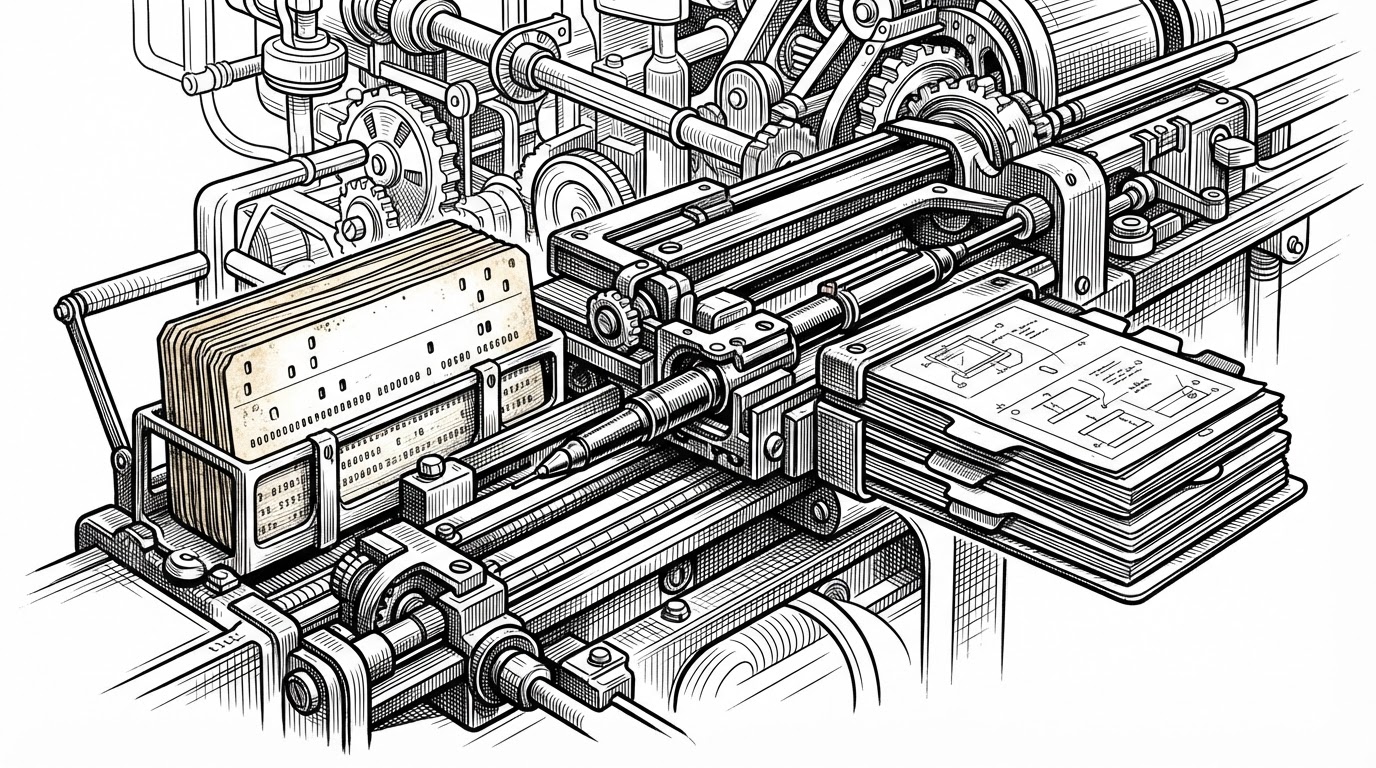
That modularity is not a slogan. In the code, the pipeline is built around injected functions and classes rather than hard-coded assumptions about the task. The result is a framework that can stay generic at the orchestration layer while still supporting experiment-specific behavior.
pipeline = TrainingPipeline(
    model=model,
    train_forward_step_fn=train_forward_step_fn,
    data_processor_classes=data_processor_classes,
    optimizer=optimizer,
)

loss = pipeline.run()
How Training Actually Runs
The key files here are training.py and inference.py. They coordinate the run, but they do not own the meaning of the run. That distinction is the whole trick. The pipeline manages distributed control flow, while the task logic is injected from outside.
This is why ike can stretch beyond ordinary fine-tuning. If the pipeline only needs a callable that returns the right training signal, it can support workflows that are not just plain supervised LM updates. That makes it a plausible base for more specialized research setups, including objectives that sit closer to preference optimization or reward-driven training.
The distributed details matter too. The training path handles synchronization points, rank-aware coordination, and checkpoint naming so that all workers agree on what just happened. That is the unglamorous part of a distributed stack, but it is also where many experimental frameworks fall apart.
In other words: ike is not trying to make distributed training disappear. It is trying to make it legible enough that researchers can keep moving.
# Conceptual flow inside the pipeline
config = load_config()
samples = data_processor.process(raw_data)
loss = train_forward_step_fn(model, samples)
synchronize_workers()
save_checkpoint(file_id=create_fileid())
Configuration as a Research Tool
ike uses configargparse and layered config files to treat configuration as part of the experiment, not an afterthought. That sounds small until you have to reproduce a run with dozens of knobs: model size, ZeRO stage, micro-batch size, LoRA rank, optimizer settings, and logging targets.
| Axis | ike | Plain DeepSpeed setup |
|---|---|---|
| Configuration | Layered config files and CLI composition | Manual argument wiring |
| Task logic | Injected forward steps and data processors | Usually embedded in the training script |
| Reproducibility | Experiment-friendly config structure | Depends on each project’s conventions |
| Research iteration | Fast to swap workloads | Slower to refactor |
| Primary value | Workflow ergonomics | Raw distributed capability |
That makes ike feel designed for a lab, not just a library consumer. The framework encourages researchers to keep one mental model for multiple experiments, instead of rebuilding the same training scaffold every time a new objective appears.
The Small Detail That Saves Distributed Runs
One of the most revealing details is create_fileid. It synchronizes checkpoint identifiers across ranks so every worker writes into the same logical run directory. The mechanism uses distributed broadcast to keep timestamps aligned, which avoids a classic failure mode where each process invents its own version of the truth.
This is the kind of detail that rarely makes a demo slide but often decides whether a run is recoverable. It tells you the framework was built by people who have already felt the pain of losing experiments to inconsistent distributed state.
Where ike Fits in the Landscape
ike does not compete with DeepSpeed on being a lower-level engine. It sits above it. The better comparison is with the ways researchers usually assemble their own training stacks: DeepSpeed directly, Megatron-LM, Colossal-AI, or PyTorch FSDP. ike is trying to win on workflow clarity, especially when the task itself is changing often.
| Project | Abstraction level | Best fit | Main trade-off |
|---|---|---|---|
| ike | High-level research control layer | Rapid experimentation on top of DeepSpeed | Less of a systems primitive, more of a workflow layer |
| DeepSpeed | Low-level distributed engine | General large-model training | Powerful, but hands-on |
| Megatron-LM | Scale-first training stack | Very large training runs | More specialized and operationally heavy |
| Colossal-AI | Broad distributed training framework | General distributed optimization | Feature-rich, but still infrastructure-centric |
| PyTorch FSDP | Native PyTorch sharding | Teams staying close to core PyTorch | Cleaner integration, less custom orchestration |
So the takeaway is not that ike replaces these tools. It re-frames the problem. Instead of asking how to build a better distributed engine, it asks how to make a DeepSpeed-based workflow feel modular enough for research.
What Sakana AI Is Signaling Here
Taken as a repo, ike says something useful about Sakana AI’s style. The team seems comfortable building infrastructure that serves a research loop, not just a product surface. That usually means values like reproducibility, composability, and rapid iteration matter as much as raw throughput.
That is a practical signal. It suggests a lab that expects its workflows to change often, and wants the machinery underneath to stay stable while the task logic shifts around it.