MiMoCode: The Terminal Agent That Refuses to Forget
Xiaomi’s open-source coding assistant is built around checkpoints, long-term project memory, and self-improving workflows, so it can keep going when ordinary agents lose the thread.
- MiMoCode’s main idea is that long-horizon coding fails less from weak models than from forgotten state, so it turns memory into core infrastructure.
- Its checkpointing and project-memory system are designed to reconstruct context from durable artifacts instead of relying on chat history alone.
- The `/dream` and `/distill` loop pushes some learning out of the model and into the harness, which is what makes MiMoCode feel self-improving.
- The terminal UI matters because the system has to stay responsive while streaming output, not just look clever in a demo.
The problem MiMoCode is built to solve
Most coding agents are impressive for the first stretch of a task and shaky after that. They can generate code, run commands, and even recover from small mistakes, but they often lose the thread when a project grows beyond a few turns of context. MiMoCode is built around a blunt premise: the real bottleneck is not intelligence, it is continuity.
That is why the repository reads less like a chat interface and more like an operating system for a coding agent. The model matters, but the harness matters more. The whole design is trying to answer one question: how do you keep an agent useful after the session gets long, messy, and expensive?
Memory is the product, not a feature
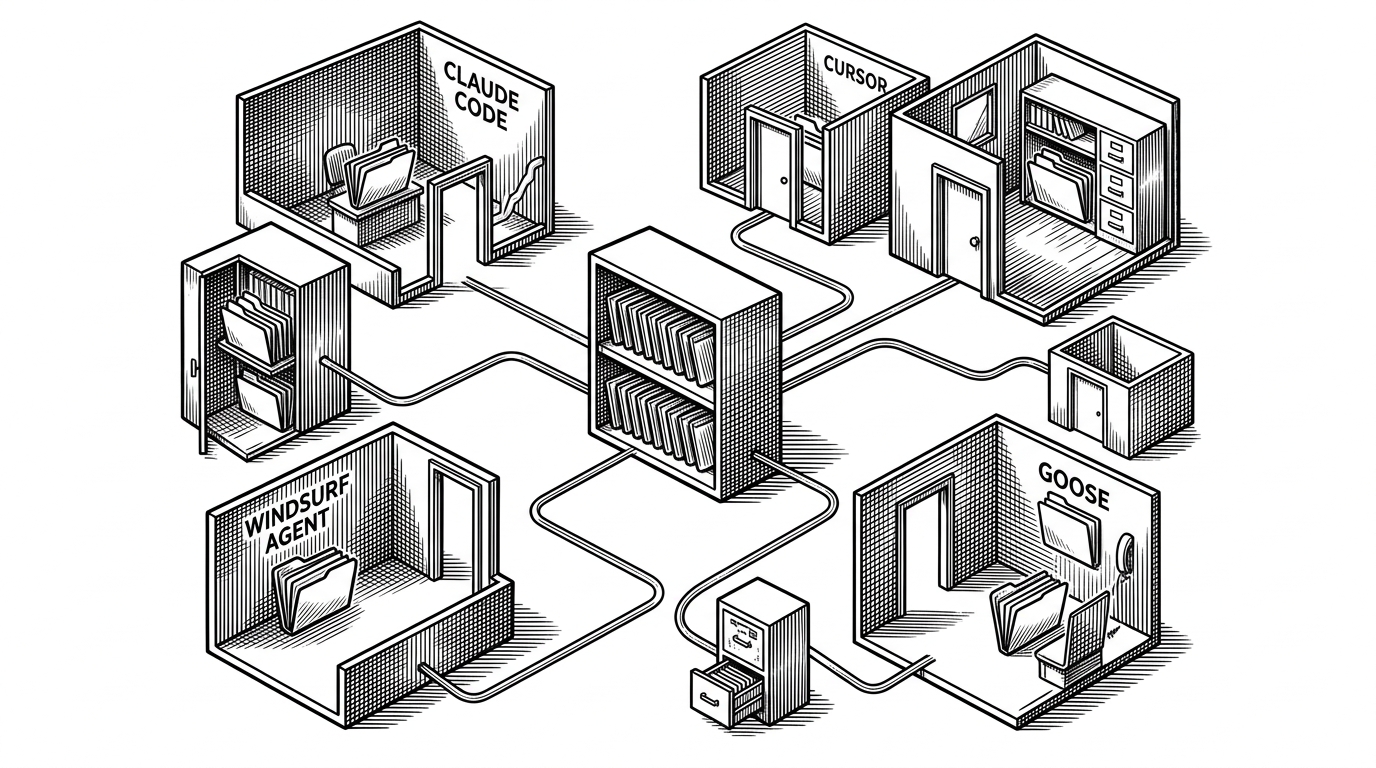
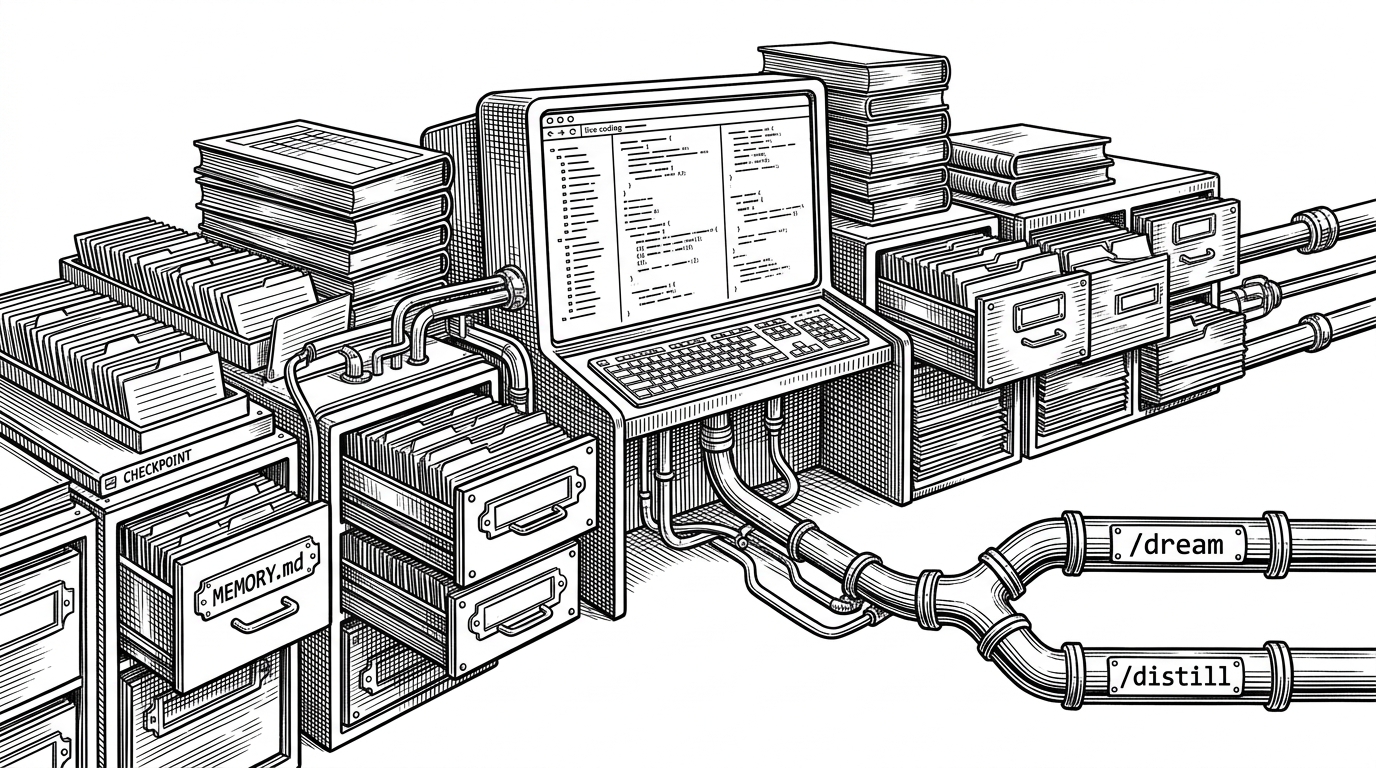
MiMoCode does not treat memory as a soft prompt pasted into the top of a conversation. It uses durable project artifacts: MEMORY.md, session checkpoints, scratch notes, and progress logs. On restart, the agent rebuilds itself from those files instead of hoping the model remembers what happened.
That is the distinction that makes MiMoCode interesting. It is not trying to extend attention in the abstract. It is manufacturing continuity through storage and retrieval. In the project’s own terms, checkpoints are not backups. They are part of the working system.
What we need is not better compression, but an explicit storage-and-retrieval mechanism that decides what information should be written into persistent structures, and when it should be recalled
The self-improving loop: /dream and /distill
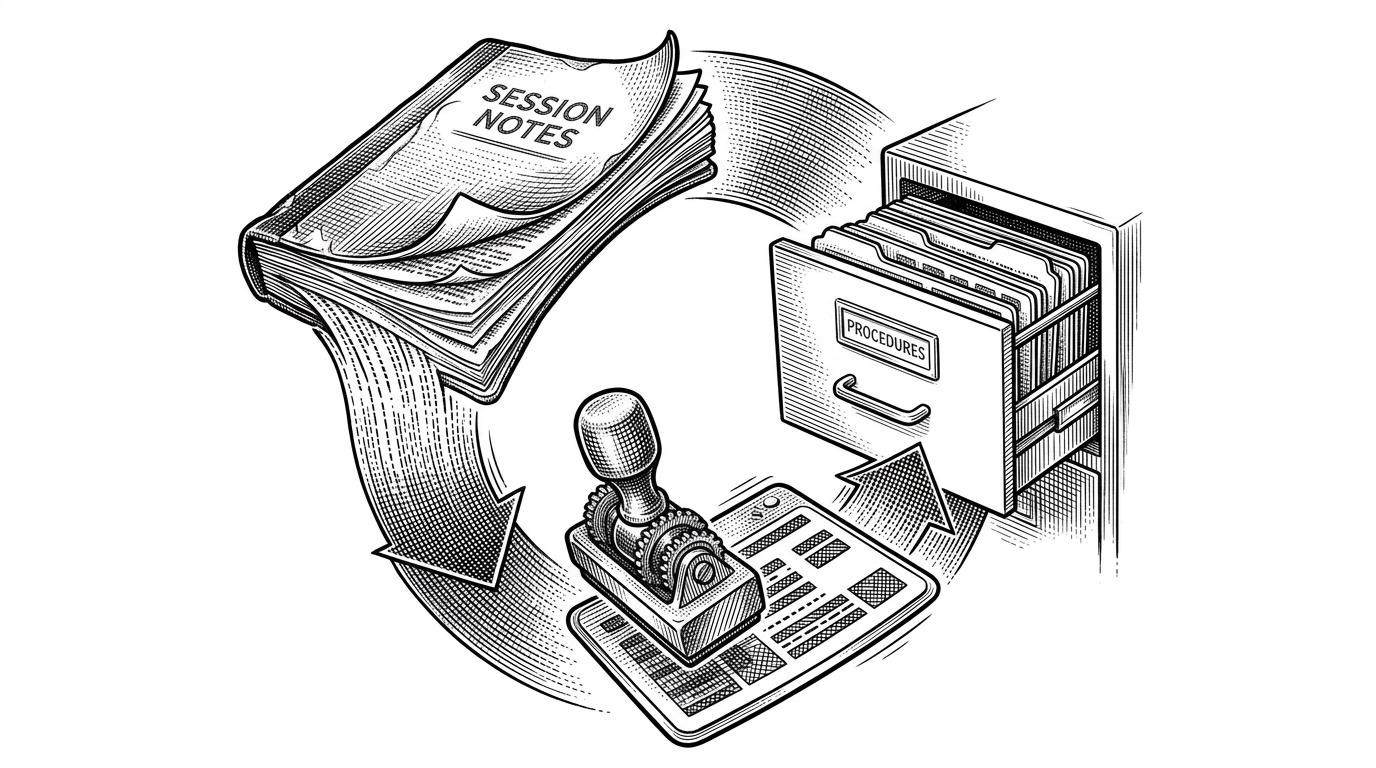
This is the part of MiMoCode that feels most like a system design rather than a product feature. /dream scans past sessions, deduplicates what matters, and compresses the result into long-term memory. /distill goes after repetition itself, turning recurring workflows into reusable skills.
That changes where learning happens. Some of it stays in the model, but some of it gets moved into the agent harness. If the same patterns show up again and again, MiMoCode does not want to rediscover them from scratch. It wants to bottle them.
Why the terminal still matters
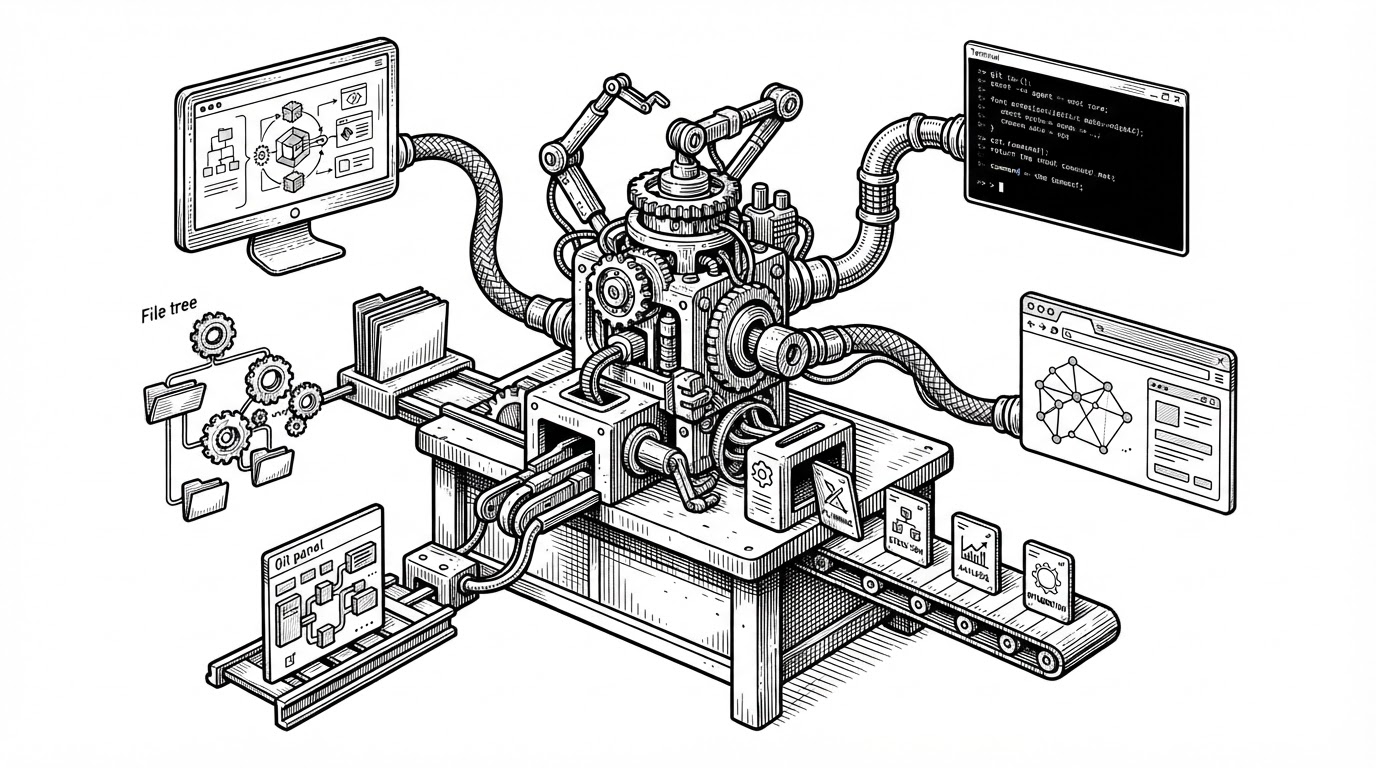
MiMoCode is terminal-native, but that does not mean old-school or minimal. The app is built with SolidJS, Vite, Bun, and a streaming UI stack that is trying to keep pace with model output in real time. That matters because an agent is only as usable as its response latency.
The repo’s global SDK layer batches token updates with a coalescing flush mechanism. Instead of repainting on every tiny delta, it flushes on a 16ms frame. That is a small detail with a big payoff: the interface stays responsive while the model is dumping output at speed.
const FLUSH_FRAME_MS = 16

if (!flushScheduled) {
  flushScheduled = true
  setTimeout(() => {
    flushBufferedTokens()
    flushScheduled = false
  }, FLUSH_FRAME_MS)
}
How the architecture keeps the UI responsive
The codebase is organized around narrow contexts instead of one giant app store. Providers such as command, models, terminal, and global sync each own a smaller slice of the state. That separation is what lets the terminal feel alive without repainting the world on every event.
Under the hood, the app consumes server-sent events, normalizes agent state during bootstrap, and keeps the rendering path tight enough for a shell-like experience. The architecture is not glamorous, but it is disciplined. It is designed to survive a lot of streaming without making the interface feel drunk.
MiMoCode vs. the field
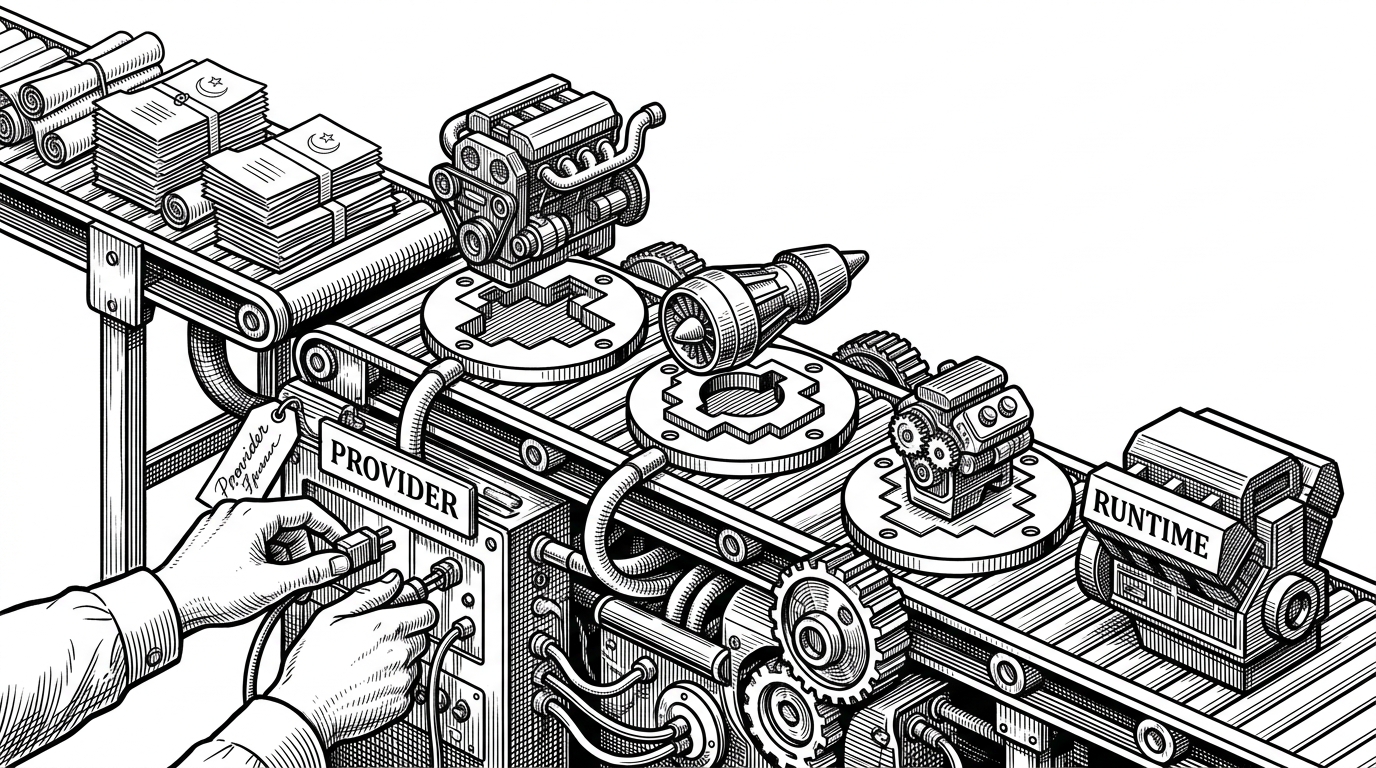
Compared with Claude Code, OpenCode, Aider, and Codex CLI, MiMoCode is not just another terminal front end. Its edge is the combination of model agnosticism, persistent memory, and a harness that treats long-running work as a first-class problem. That makes it feel less like a wrapper and more like an operating environment.
| Project | Model lock-in | Persistent memory | Self-improving workflows | Long-horizon orientation | Terminal-native |
|---|---|---|---|---|---|
| MiMoCode | No. Can connect to multiple providers and local models. | Yes. Memory files and checkpoints are central. | Yes. `/dream` and `/distill` are core ideas. | Explicitly optimized for long tasks. | Yes. |
| Claude Code | Tied to Anthropic’s ecosystem. | Not as a project-level system. | Not a core repo concept. | Strong, but less open-ended as a harness. | Yes. |
| OpenCode | More flexible than closed tools. | Less emphasized than in MiMoCode. | Not the main differentiator here. | Good base, but MiMoCode extends it. | Yes. |
| Aider | Flexible and practical. | Limited compared with MiMoCode’s layered memory. | Not a central design goal. | Useful, but not memory-centric. | Yes. |
| Codex CLI | OpenAI-tied by default. | Not the focus. | Not the focus. | Useful for coding, not for durable project continuity. | Yes. |
The real difference is not that MiMoCode claims to be smarter. It claims to be harder to derail. That is a more interesting product promise, especially for tasks that take hours, not minutes.
What MiMoCode is really optimizing for
MiMoCode is not chasing the prettiest assistant or the flashiest demo. It is optimizing for the moment when the task gets deep, the context gets crowded, and the agent has to stay coherent anyway. That is a narrower claim than “better AI coding,” but it is also the one that matters.
If the project works as intended, the win is simple. After the third hour, the fifth checkpoint, and the hundredth token burst, the agent still knows where it is, what it already tried, and what should happen next.