x-mentor-skill Turns X Growth Into a Knowledge Operating System
A modular AI skill that distills creator heuristics, algorithm weights, and account diagnostics into a layered workflow that LLMs can actually use.
- The repo’s main idea is architectural, not topical: it turns X growth advice into a routed knowledge system an LLM can execute without drowning in context.
- Scenario E shows the payoff, because the skill can scrape, persist, and render an account diagnosis instead of just generating advice in a chat loop.
- Its best trick is progressive disclosure, where the router loads only the references needed for the current task and leaves the rest asleep.
- The project is really a memory pattern in disguise, using user-data folders and evidence files as a lightweight stand-in for long-term retrieval.
The real product is the router
The clever part of x-mentor-skill is not that it knows X growth. It is that it refuses to load everything at once. SKILL.md behaves like a dispatcher, sending each request to the smallest useful slice of knowledge instead of dumping a giant prompt into the model’s mouth.
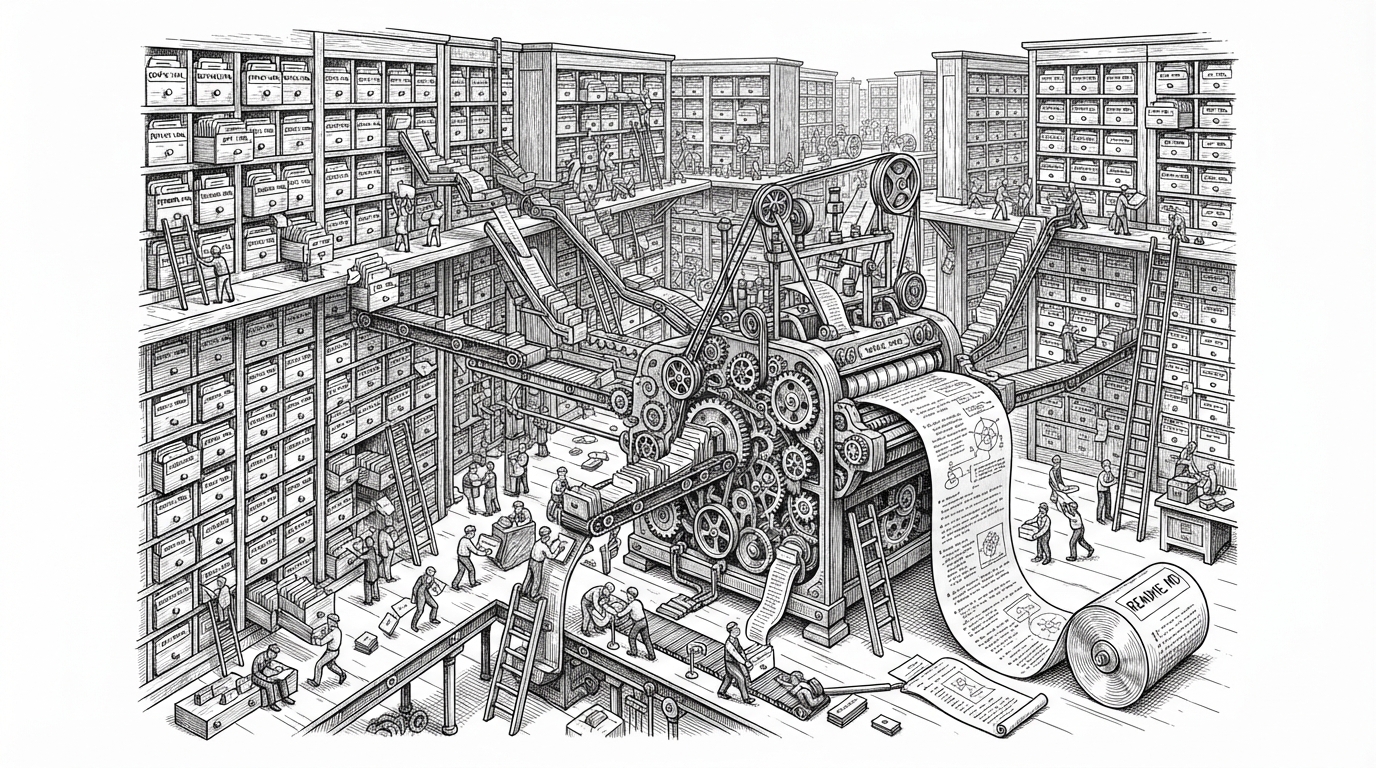
That matters because most agent failures start with context bloat. This repo is built around the opposite instinct: keep the active frame small, then fetch references only when the job asks for them.
npx skills add alchaincyf/x-mentor-skill Claude Codeを使ってる人なら、これ打つだけで今日から使える。 実はこのポストもx-mentor-skillで作ってみたw
The practical payoff shows up in Scenario E, the account diagnosis flow. The skill can collect tweets, parse engagement signals, save artifacts under user-data/, and render a report. That is where the project stops being a writing helper and starts acting like an analyst.
| Model | Context size | Memory handling | Evidence access | Updateability | Agentic fit | Generic output risk |
|---|---|---|---|---|---|---|
| Monolithic prompt | Large and brittle | None | Always loaded | Hard to revise | Weak | High |
| Static skill pack | Moderate | Light | Mostly fixed | Better, but still static | Mixed | Medium |
| x-mentor-skill | Small and routed | Persistent user-data | On demand | Modular and fast | Strong | Low |
Scenario E is where the repo becomes an agent
Scenario E is the first place the design feels truly operational. The workflow is simple on paper. Scrape the account, extract signals, persist the result, then render the report. In practice, that sequence turns the skill into something closer to a consulting pipeline than a content generator.

| Step | What happens | Why it matters |
|---|---|---|
| Scrape | Collects tweets and engagement signals | The skill sees real account behavior instead of guessing |
| Parse | Turns raw posts into structured data | The model can compare patterns instead of reading screenshots |
| Persist | Stores artifacts in user-data | Later sessions inherit prior state without redoing the work |
| Render | Generates a report | The output becomes something a human can review and act on |
Why the knowledge is split into layers
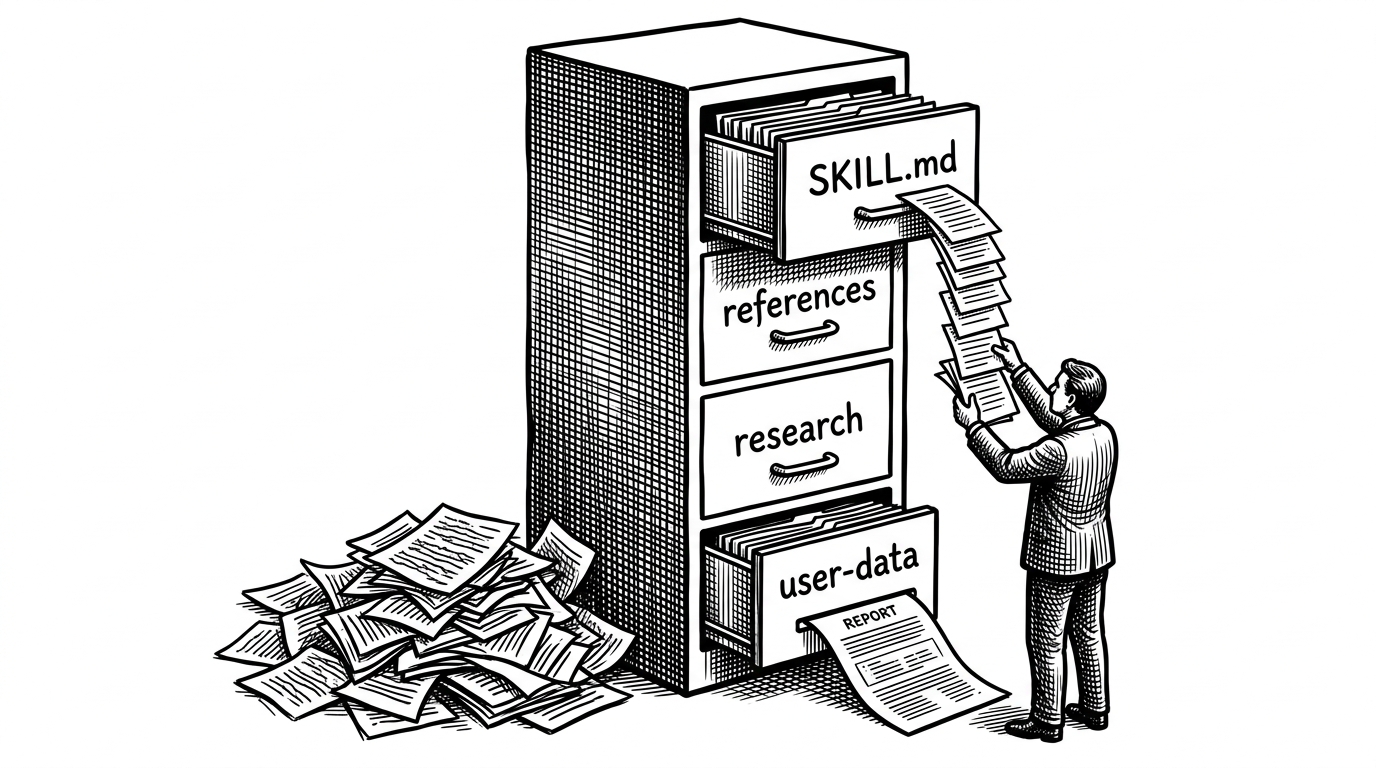
The repo’s layered design is its most important technical choice. The kernel lives in SKILL.md, operational references sit in references/, evidence sits deeper in references/research/, and account-specific artifacts live in user-data/. Each layer exists to protect the context budget.
That is a better shape for an LLM than one giant markdown file. The model gets a map, not a landfill. It can route, justify, and remember without carrying every fact in every turn.
| Layer | Job | Loaded when needed? |
|---|---|---|
| SKILL.md | Routes the task | Yes |
| references/ | Holds operational guidance | Yes |
| references/research/ | Keeps evidence and source tracing | Only for deep justification |
| user-data/ | Stores account history and diagnostics | Only for the relevant user |
The repo’s secret is not intelligence. It is weighting
The strongest signal in the repo is how brutally it ranks platform behavior. algorithm-niche.md and mental-models-heuristics.md convert folklore into decision rules. The point is not to sound smart about X. The point is to choose better actions than a generic model would choose on its own.
- Reply = 27x Like
- Author Reply = 150x Like
- Focus on Engagement Velocity in the first 15-30 minutes
- Use the 1/3/1 rhythm for threads
- If the draft feels conventional, run the Tequila Test
That last line is the sharpest part. The Tequila Test says to list the conventional advice, delete it, and write what remains. It is a neat editorial filter because it forces the model to leave behind the obvious and keep the useful.
| Heuristic | What it does | Effect on output |
|---|---|---|
| 150x author reply weighting | Elevates direct creator response | The model prioritizes high-leverage interactions |
| 1/3/1 rhythm | Structures thread pacing | The output feels designed, not rambling |
| Tequila Test | Deletes conventional advice | The output becomes more specific and less generic |
This is the project’s real thesis in miniature. It does not ask the model to invent taste from scratch. It encodes taste as priority order.
What this project is really competing with
The comparison is not against X tools alone. It is against three weaker patterns: the monolithic prompt, the static skill pack, and the context-heavy agent that tries to remember everything all the time. Those approaches can work, but they age badly.
| Approach | Strength | Weakness |
|---|---|---|
| Monolithic prompt | Easy to start | Breaks under complexity |
| Static skill pack | Reusable | Still mostly fixed knowledge |
| x-mentor-skill | Routed, persistent, modular | Requires more thoughtful architecture |
What makes x-mentor-skill different is not that it is smarter copy. It is that it treats knowledge like infrastructure. That is a more durable advantage than any single growth tactic.
The larger lesson
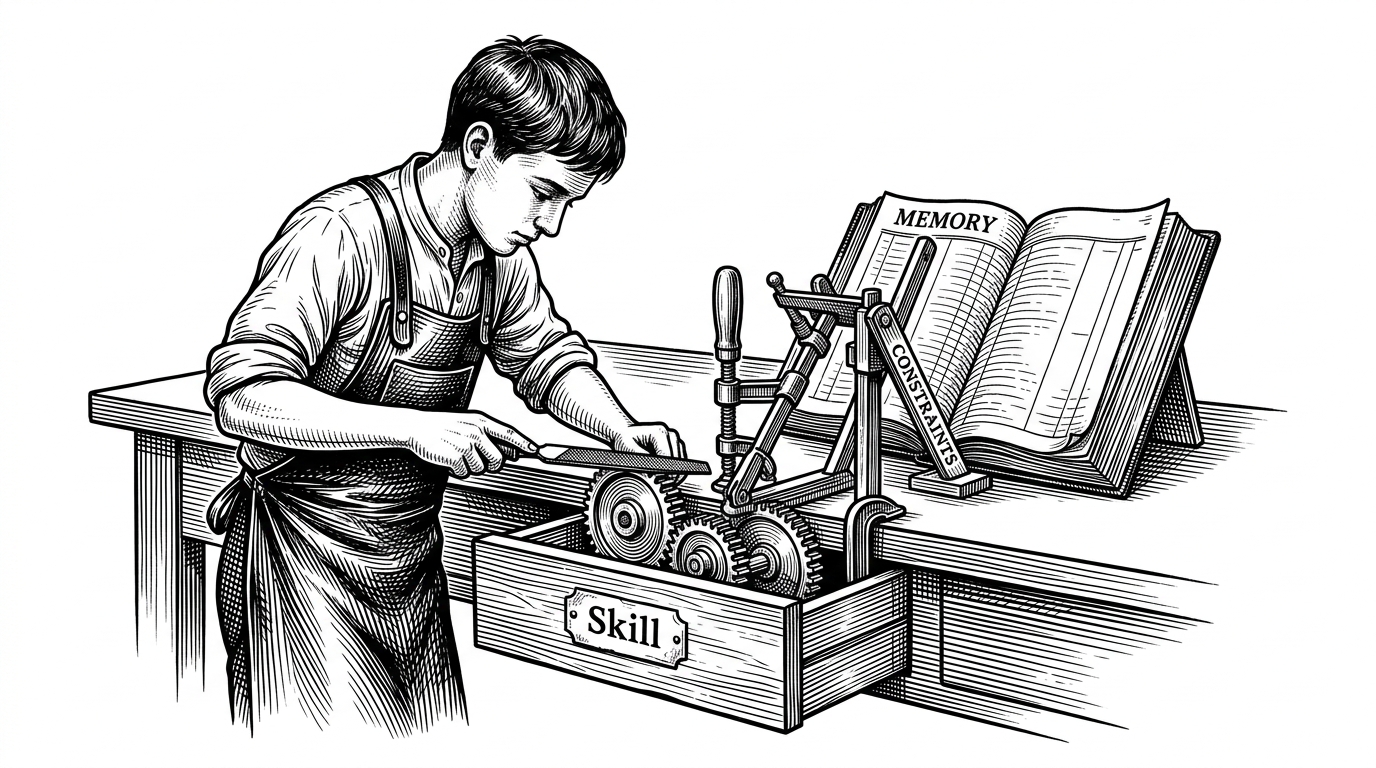
This repo is a compact argument for the next phase of agent design. Prompting still matters, but knowledge architecture matters more when the task has memory, evidence, and workflow. The winning system is the one that decides what to reveal, when to reveal it, and what should survive the next session.
That is why this project stands out. It does not merely teach an LLM how to talk about X growth. It gives the model a structure for thinking, retrieving, and remembering like an operator.