bmad-method-test-architecture-enterprise: BMad TEA: How a Markdown Test Architect Turns AI Into a Risk-First Quality Engineer
Inside the repo that replaces "generate more tests" with a stricter idea: load only the right knowledge, follow only the current step, and decide what not to test.
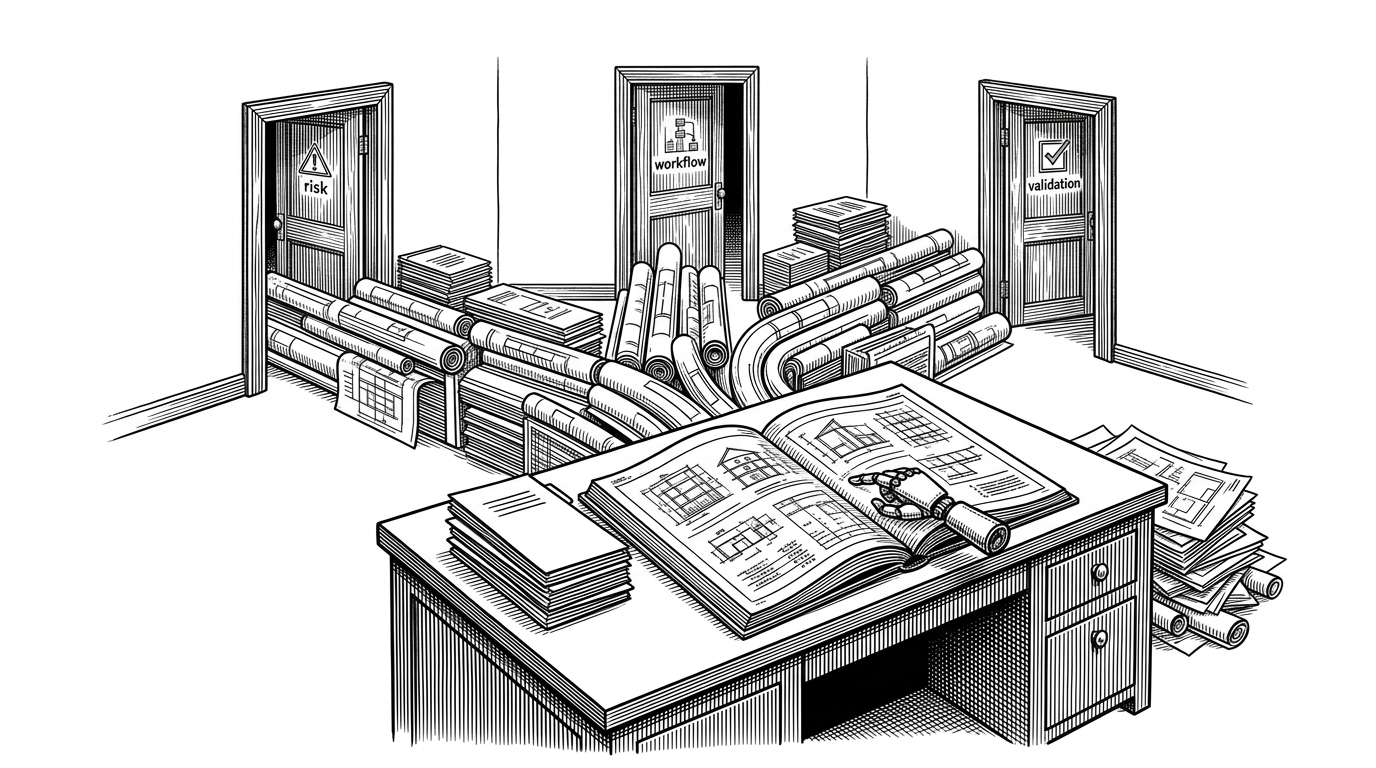
- TEA is not trying to write more tests. It is trying to make AI behave like a cautious senior test architect that weighs risk before coverage.
- Its real trick is not model magic but constraint design: persona, registry, and workflow steps keep the agent narrow enough to be reliable.
- The repo treats knowledge as fragments, not a giant prompt, which makes context cheaper and the outputs more reproducible.
- The strongest claim TEA makes is upstream of execution: it decides what a suite should care about before anyone starts automating it.
Most AI testing tools start with volume. TEA starts with restraint. It asks a harder question than "what tests can I generate?" It asks, "what deserves attention, and what should be left alone?"
That is why the repository feels more like an operating model than a toolkit. The README positions TEA as a standalone BMAD module that delivers risk-based test strategy, test automation guidance, and release gate decisions. The emphasis lands on strategy, not just automation.
TEA (Test Engineering Architect) is a standalone BMAD module that delivers risk-based test strategy, test automation guidance, and release gate decisions.
TEA’s core idea: test less, test smarter
TEA is built around a simple but unusual thesis. A good testing system does not cover everything equally. It concentrates effort where probability, impact, and product risk intersect. That is a more enterprise-friendly answer than blanket coverage promises, because it gives teams a way to spend test effort where it actually changes outcomes.
The repo makes that philosophy operational. It wraps the model in a single expert persona, a shared knowledge base, and step-based workflows. In practice, TEA is trying to turn judgment into a repeatable artifact instead of leaving it to whichever prompt happens to be in vogue.
BMad works because it turns big, fuzzy work into **repeatable workflows**.
Murat, the architect persona
The center of the system is Murat, the persona defined in src/agents/bmad-tea/SKILL.md. He is not decorative prompt flavor. He is the decision-maker the workflows defer to, with a risk-first posture and a habit of forcing clarity before action.
That matters because persona files are often where AI projects get sloppy. TEA does the opposite. It makes the persona specific enough to steer choices, but still structured enough to function as part of a machine-readable process.
It provides a single expert agent (Murat, Master Test Architect and Quality Advisor)...
Workflow-as-code, but for judgment
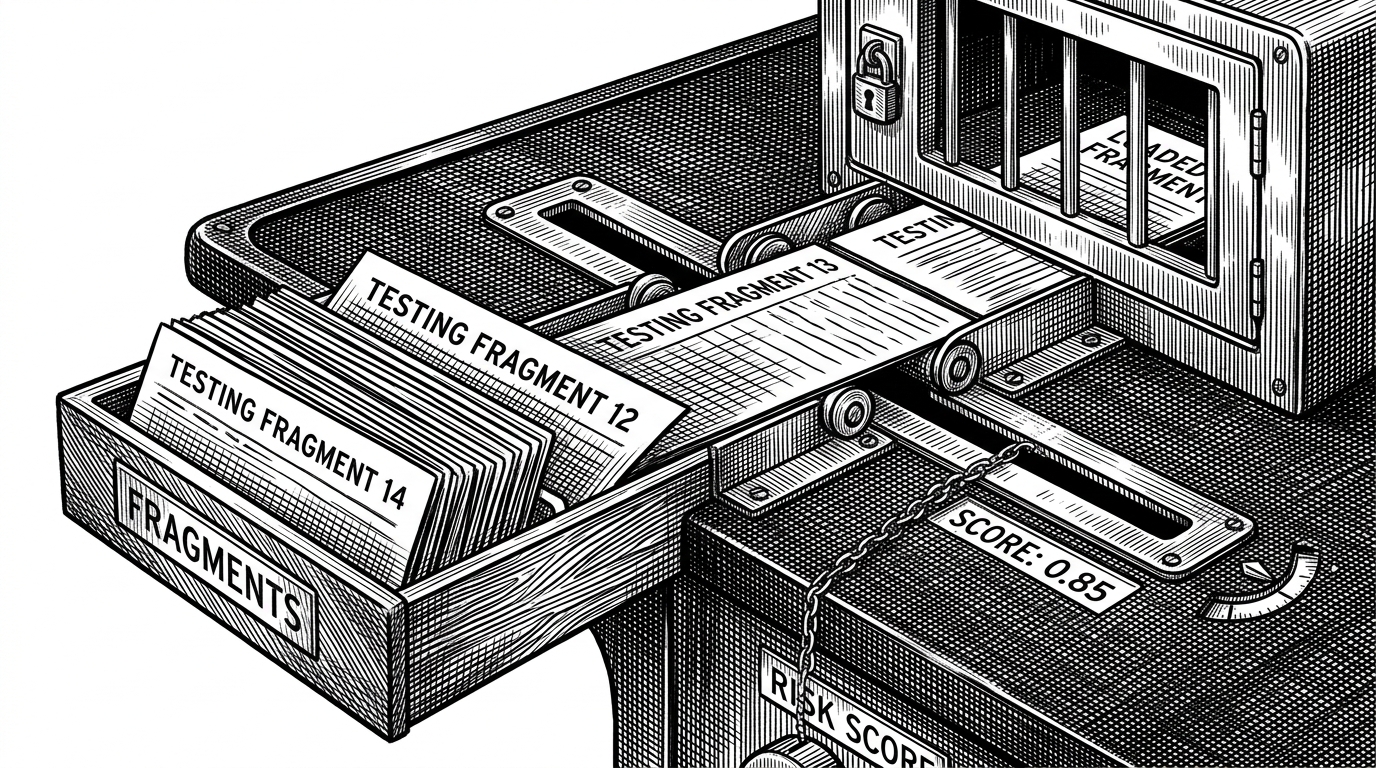
TEA’s workflow structure is the clever part. The repository uses step files for Create, Edit, and Validate, which means the agent is not asked to hold the whole process in memory. It gets only the current step, which is a very different design choice from dumping a long instruction set into one prompt.
That is a state machine for judgment. The model moves through a controlled sequence, and each stage has its own expectations, outputs, and checks. In other words, the workflow does not just guide the model. It fences it in.
src/workflows/testarch/
  bmad-testarch-atdd/
    steps-c/
    steps-e/
    steps-v/
    checklist.md

src/agents/bmad-tea/
  SKILL.md
  resources/knowledge/
    tea-index.csv
    risk-governance.md
    probability-impact.md
    api-testing-patterns.md
That folder shape is the whole argument in miniature. The steps are narrow, the knowledge is modular, and the checklist gives the workflow a deterministic finish line. TEA is not pretending that LLMs are good at unconstrained memory. It is engineering around that weakness.
The knowledge registry is the quiet breakthrough
The most interesting implementation detail may be the least glamorous one: tea-index.csv. Instead of relying on a vector database or a giant monolithic prompt, TEA uses a simple registry to decide which knowledge fragments are eligible for a task. That makes the system easy to inspect, version, and reason about.
This is retrieval without mystique. It is local, legible, and reproducible. For a team that cares about governance, that is a feature, not a compromise.
The knowledge files in src/agents/bmad-tea/resources/knowledge/ behave like a curated test architect handbook. The workflow picks the relevant fragments, not the whole library, which keeps the model from drowning in context bloat.
Why the workflow refuses to test everything
TEA’s point of view is more opinionated than most testing tools. It is willing to say no. If the risk is low, the workflow should not waste cycles inventing elaborate coverage. If the risk is high, it should push harder on scope, NFRs, and validation.
That is a subtle but important shift. Many AI tools optimize for output quantity. TEA optimizes for decision quality. It treats test effort as a scarce resource and tries to allocate it like an engineer, not a content generator.
| Category | Primary job | Writes tests | Runs tests | Manages tests | Shapes strategy | Risk-based |
|---|---|---|---|---|---|---|
| TEA | Test architecture and release judgment | Sometimes | No | No | Yes | Yes |
| Playwright, Cypress, Selenium | Browser and UI execution | Yes | Yes | No | No | Usually not |
| Applitools, Testim, mabl | AI-assisted execution and visual/self-healing testing | Yes | Yes | Partial | Limited | Partial |
| TestRail, Xray | Test management and traceability | No | No | Yes | No | No |
That comparison is the point. TEA sits upstream of the suite. It is not the thing that runs the checks. It is the thing that decides what the checks should care about, and how much confidence they need to buy.
How TEA compares to the usual testing stack
The usual stack starts with execution frameworks, then adds reporting and management. TEA starts earlier. It shapes the test strategy before the automation layer gets involved, which makes it closer to a quality architect than a test runner.
That distinction explains why it can coexist with tools like Playwright and Pact.js instead of competing with them directly. TEA can guide the plan, while other tools still perform the execution and verification work.
Why this matters for enterprise teams
Enterprise teams do not just need more tests. They need consistency, auditability, and a way to keep quality decisions from collapsing into prompt drift. TEA tries to give them that by turning test strategy into a versioned workflow with named roles, scoped knowledge, and explicit gates.
That makes it useful even when the humans involved are mixed in skill level. A junior engineer can produce something more senior-sounding because the system does some of the architectural heavy lifting. The upside is not magic. It is standardization.
The project’s maturity shows up in its structure. It reads like a tool meant to survive repeated use inside real delivery pipelines, not a demo assembled to impress at first glance.