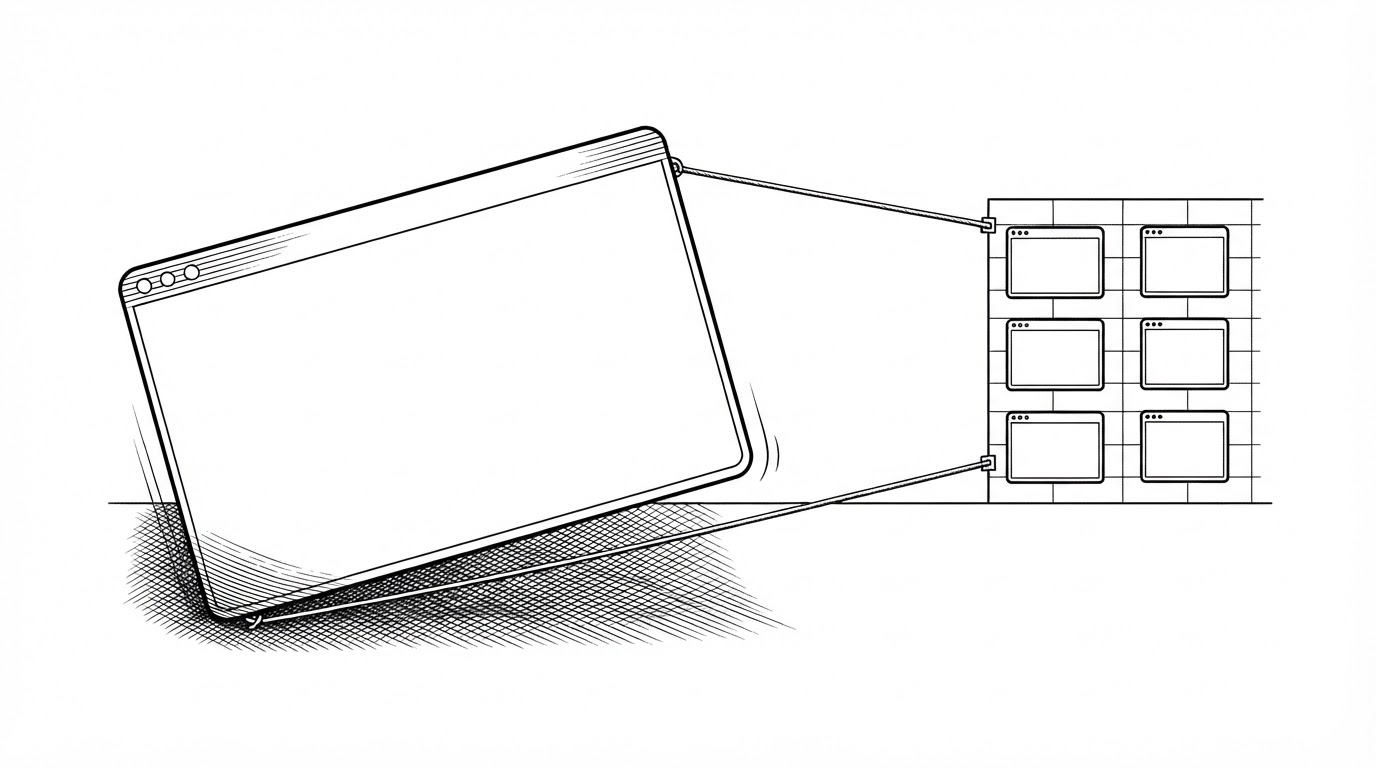
DanceUI: ByteDance’s Shadow SwiftUI Stack for Old iPhones
A look at the framework that backports modern observation, bridges into custom rendering, and turns Apple’s version lock into an engineering problem.

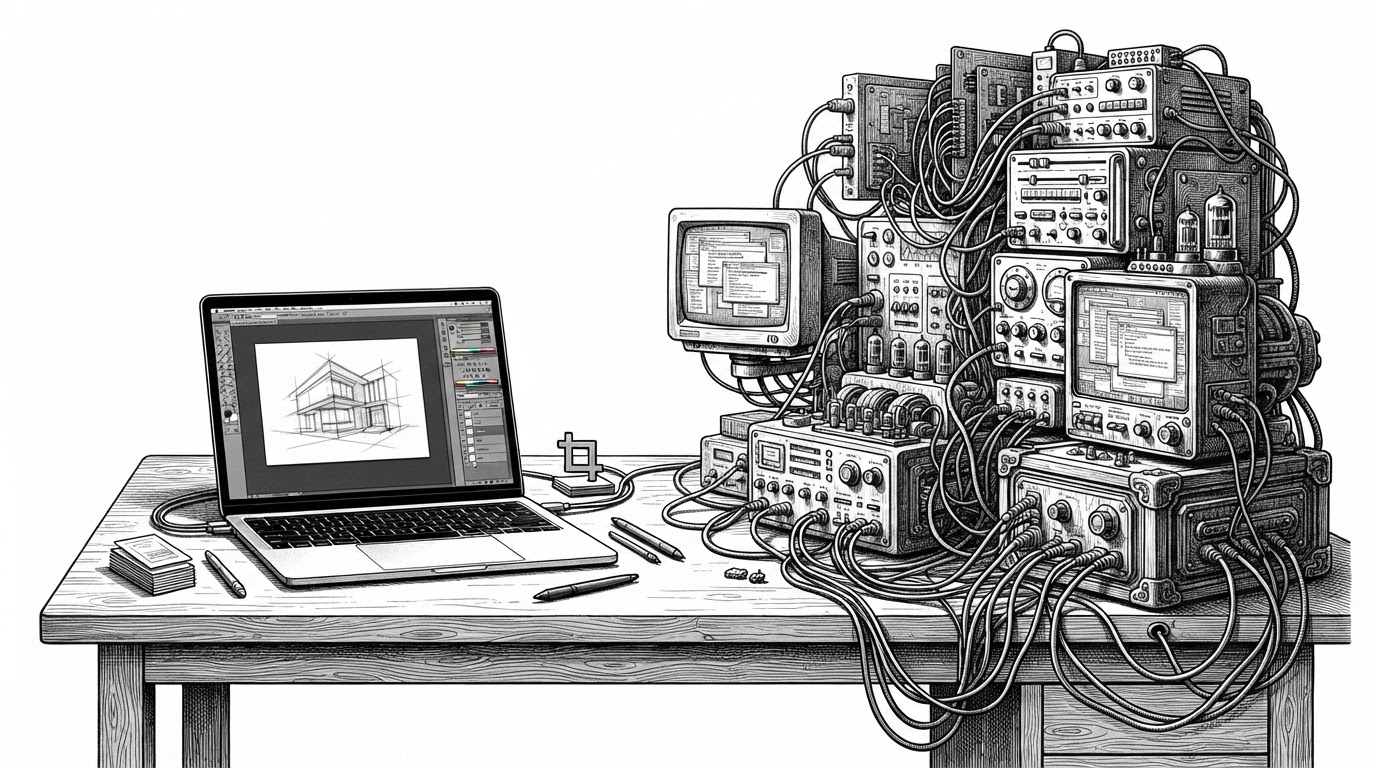
- DanceUI is best understood as a parallel SwiftUI stack, not a wrapper, because it re-creates observation, DSL semantics, and rendering control beneath a familiar API.
- Its sharpest value is compatibility, since it lets teams use newer Swift-style state management on older iOS versions without waiting for Apple’s release cadence.
- The technical surprise is the Observation backport, where macro expansion and a registrar turn property access into tracked dependencies.
- ByteDance’s real goal looks strategic as much as technical: own the UI substrate, reduce platform lock-in, and keep product behavior consistent across a large app portfolio.
The cost of waiting for Apple
Apple’s UI stack advances on Apple’s schedule. That is fine until you need modern state semantics, consistent behavior, and older-device support in the same product. Then every new API becomes a trade-off, not a win.
DanceUI exists to break that trade-off. In the technical report, it reads like ByteDance’s answer to version lock: a SwiftUI-like experience that reaches back to iOS 13 while preserving control over the pieces Apple normally owns.
That is why this project matters. It is not another component library competing on syntax polish. It is a claim that the UI layer itself can be made portable, internal, and independent of Apple’s release cadence.
What DanceUI actually is
The codebase is split into a few telling parts: Sources/DanceUI for the public DSL, Modules/DanceUIObservation for the observation backport, and Modules/DanceUICompose for the rendering bridge. There is also an example app and a podspec that points at a broader internal ecosystem.
The important point is what this structure implies. DanceUI is not just borrowing SwiftUI vocabulary. It is rebuilding the machinery that makes the vocabulary work.
struct ContentView: View {
    var body: some View {
        Text("Hello World")
    }
}
That kind of code is the tell. It looks ordinary, which is the point. Under the surface, the framework is trying to make ordinary SwiftUI-style code run on a much less forgiving compatibility base.
The surprising part is Observation
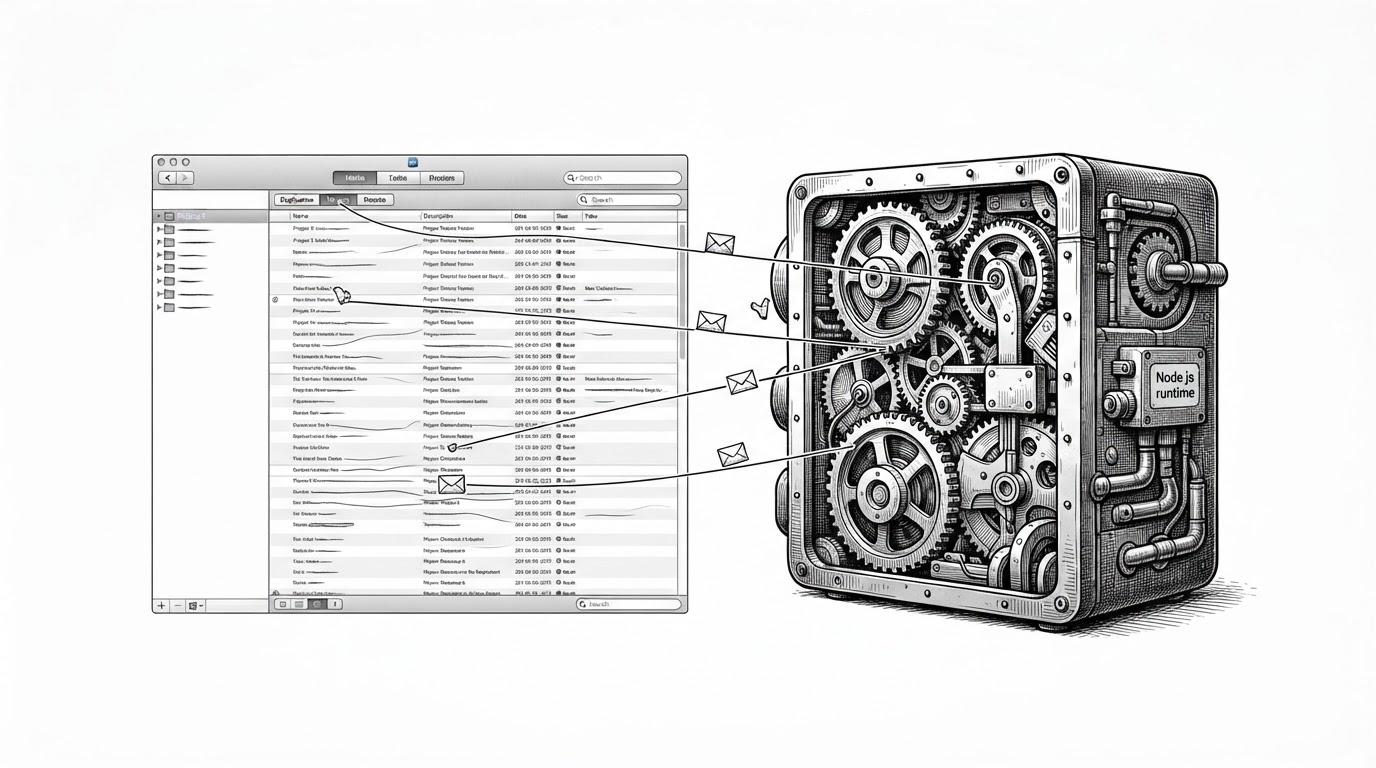
The deepest part of the report is the observation backport. Apple’s Observation framework only arrived much later, but DanceUI’s DanceUIObservation module appears to recreate the same user-facing behavior by combining a macro with a registrar that tracks what views read and what state mutates.

That matters because observation is the difference between a nice declarative API and a reliable UI system. If the framework can precisely track reads and mutations, it can redraw less, behave more predictably, and preserve the SwiftUI mental model without inheriting all of Apple’s timing constraints.
In other words, the macro is not a convenience. It is the mechanism that lets the source code stay simple while the runtime stays clever.
Rendering is not just UIKit in disguise
The rendering side, especially DanceUICompose, suggests the framework is not merely wrapping UIKit widgets and hoping for the best. It is building a bridge between the declarative layer and low-level drawing primitives, including text layout and canvas-style rendering.
That choice tells you a lot about the project’s ambitions. Once you own rendering, you can control performance, consistency, and platform quirks more directly than a thin wrapper ever could.
This is where the article stops being about API aesthetics and becomes about systems design. A wrapper can imitate syntax. A renderer can shape behavior.
Why ByteDance would build this
| Native SwiftUI | Thin UIKit wrapper | DanceUI |
|---|---|---|
| Elegant, modern, and Apple-controlled | Compatible, but usually shallow | Compatible and infrastructural |
| Bound to OS version gates | Depends on UIKit behavior underneath | Backports newer semantics to older iOS |
| Updates arrive on Apple’s schedule | Limited control over state and rendering | Owns observation, DSL, and rendering layers |
| Great for apps aligned with Apple’s roadmap | Useful for quick migrations | Useful for large internal portfolios that need stability and control |
This is the strategic read: ByteDance likely built DanceUI because control matters more than elegance at scale. If you can own the DSL, the state graph, and the renderer, you can move faster without waiting on OS releases or inheriting every platform inconsistency that comes with them.
That also explains the ecosystem shape. The podspec’s dependency hints, the modular structure, and the internal naming all point to a platform team mindset. The goal is not one app. The goal is repeatability across many apps.
DanceUI versus native SwiftUI
| Dimension | Native SwiftUI | DanceUI |
|---|---|---|
| OS support | Gated by Apple release cadence | Backported to older iOS versions |
| Developer feel | First-party and idiomatic | SwiftUI-like and familiar |
| Observation | Apple-owned framework behavior | Macro plus registrar backport |
| Rendering control | Bound to Apple’s stack | Custom bridge and lower-level primitives |
| Strategic posture | Use what Apple ships | Own the substrate when consistency matters |
So DanceUI is not a replacement for SwiftUI in the usual open-source sense. It is a parallel answer to the same problem, tuned for a company that wants the convenience of a modern declarative API without accepting the constraint of Apple’s timeline.
That is the real lesson for platform teams. Once your product depends on old-device support, fast iteration, and UI consistency across a large codebase, you stop asking whether a framework is pretty enough. You start asking whether you can own the whole chain from source code to pixels.