The Anatomy of a Pixel: Deconstructing chenglou/diffusion
How a frontend pioneer stripped Denoising Diffusion Probabilistic Models down to a single PyTorch file.
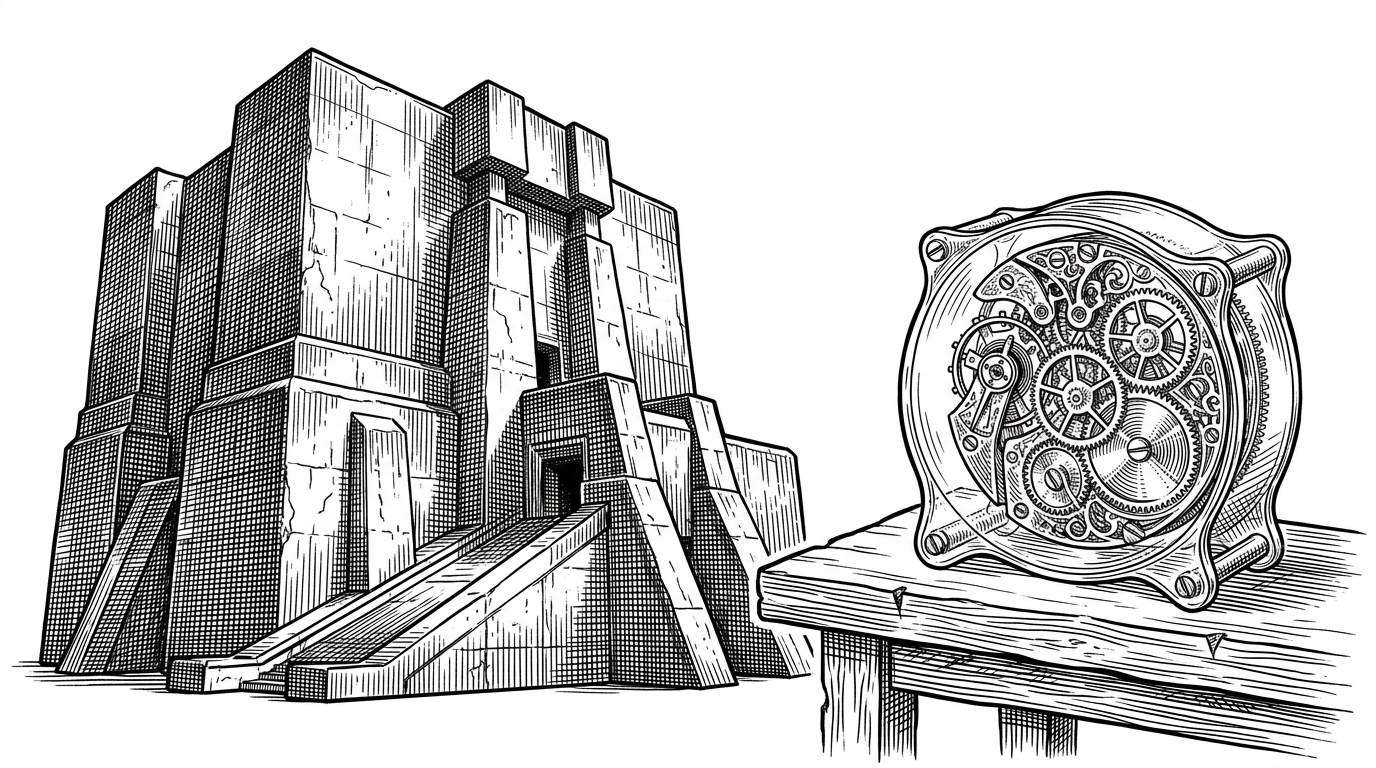
- The repository condenses the entire DDPM training loop and U-Net architecture into a single Python file.
- Manual tensor operations using torch.einsum expose the underlying math of multi-head attention without hidden abstractions.
- Stripping away production features like Latent Diffusion creates an ideal pedagogical environment for understanding generative AI.
The Black Box Problem
Modern generative AI is obscured by layers of abstraction. Developers rely on massive libraries to handle the heavy lifting of diffusion models. These frameworks are essential for shipping products quickly, but they are terrible for learning. When a single API call handles noise scheduling, U-Net instantiation, and inference, the underlying math becomes a black box.
To truly understand how pixels form from pure noise, you have to look under the hood. You need a sandbox, not a factory.
A Rosetta Stone for DDPM
In chenglou/diffusion, the entire architecture of a Denoising Diffusion Probabilistic Model lives in a single file. There are no nested module imports to chase down. The train.py file contains the core engine for 32x32 image generation, serving as a functional Rosetta Stone for developers transitioning from API consumers to machine learning practitioners.
The codebase normalizes images to a standard range and applies noise based on a linear schedule. The U-Net then learns to predict the exact noise added, rather than the original image itself. This architectural choice is laid bare in a few lines of readable PyTorch.
Bare Metal Tensor Math
The most compelling aspect of this repository is its refusal to hide complex math behind standard library functions. Instead of importing optimized attention layers, the code explicitly routes tensor data.
# Manual attention using einsum
attn = torch.einsum('bhdn,bhdm->bhnm', q, k) * (C // self.num_heads) ** -0.5
attn = F.softmax(attn, dim=-1)
out = torch.einsum('bhnm,bhdm->bhdn', attn, v)
By using torch.einsum, the developer explicitly defines the dimensional slices. The scaling factor and softmax application are visible, making the mechanics of multi-head attention undeniable. Similarly, the final convolution layer utilizes a zero-initialization trick. By setting the weights and biases to zero initially, the model predicts zero noise at the start of training, stabilizing the initial gradients.

The Declarative Mindset
Cheng Lou is best known for his pioneering work in the React and ReasonML ecosystems. His background is rooted in functional, declarative architectures. That minimalist mindset translates directly to this deep learning exploration. The codebase reflects a philosophy where fewer abstractions lead to greater comprehension.
Sandbox vs. Factory
This project is an educational tool, not a production pipeline. It lacks features like Latent Diffusion and Classifier-Free Guidance (CFG). These omissions are intentional. By keeping the model pure, the barrier to entry remains low.
| Feature | chenglou/diffusion | Production Libraries |
|---|---|---|
| Primary Goal | Pedagogical Sandbox | Production Pipeline |
| Architecture | Single-file monolithic | Abstracted modular packages |
| Attention Mechanism | Manual torch.einsum | Optimized nn.MultiheadAttention |
| Feature Set | Pure DDPM | Latent Diffusion, CFG, DDIM |