replicate/qwen-image-lora-trainer: The End of the Trigger Token
A deep dive into the trainer that turns Qwen-Image personalization into plain-English prompt engineering, and what that reveals about modern LoRA workflows.
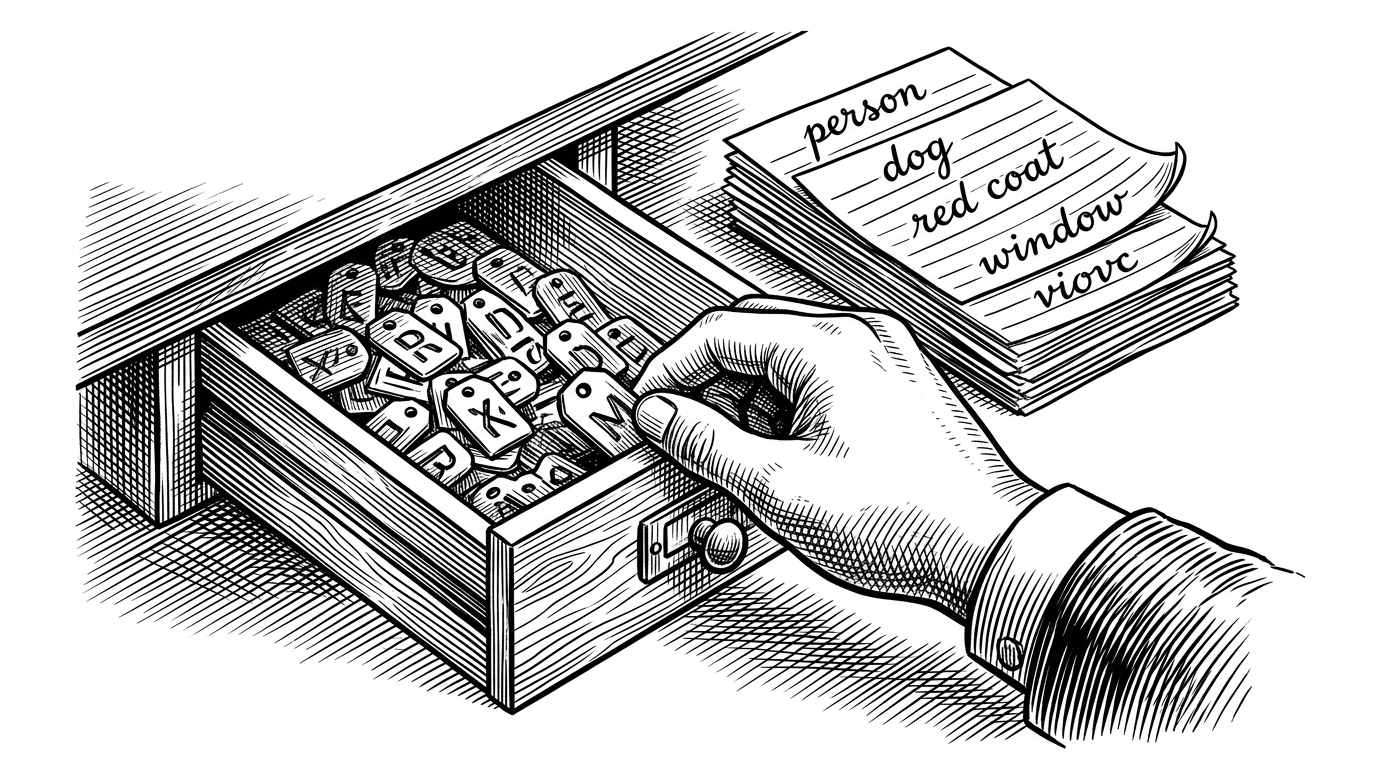
- Qwen-Image personalization in this repo is language-first, not token-first, which changes the basic mental model of how LoRAs are controlled.
- The real product is the orchestration layer in `train.py`, which turns messy user uploads into a reliable training job before a single gradient step runs.
- `predict.py` matters because it reconstructs the LoRA at inference time with enough metadata and download optimization to make hosted deployment practical.
- The repository captures a broader shift in image personalization from secret trigger words to model-specific prompt semantics and production packaging.
The secret word is gone
Critical: Qwen is extremely sensitive to prompting and differs from other image models. Do NOT use abstract tokens like "TOK", "sks", or meaningless identifiers.
That line changes the whole mental model. If you learned LoRA through Stable Diffusion, you probably expect a trigger token, a synthetic word that becomes the handle for a new concept. This repo says Qwen-Image does not want that bargain. It wants plain language, and it is sensitive enough to follow it.
Qwen Image LoRA brings the power of fine-tuning to Qwen’s exceptional image generation model. Unlike basic image generators, Qwen excels at complex composition - understanding spatial relationships, following detailed instructions, and placing objects exactly where you want them.
That is the interesting part. The trainer is not just packaging a new model. It is operationalizing a model family that seems to respond to semantic steering more than token incantation. In practice, that means the user experience shifts from inventing a secret word to writing better captions and prompts.
What the trainer actually automates
At a high level, the repo is a Cog wrapper around a training pipeline. The user uploads a ZIP of images, the trainer extracts the dataset, builds a configuration from `qwen_config.yaml`, and hands the job to the `ai-toolkit` submodule. The whole point is to remove the fragile parts that usually break first: dataset shape, caption files, and environment setup.
That glue shows up in the places production systems fail. The code in `train.py` extracts images from the archive, checks for matching captions, and fills gaps with a `default_caption` when a `.txt` file is missing. It also sets runtime environment variables for large GPUs, which tells you this was written for a real hosted workload, not a notebook demo.
Why train.py is the real product
This is where the repo stops being a model wrapper and becomes a user-facing system. The training logic does not ask people to understand directory layout or caption conventions. It normalizes the input, generates the training config, and keeps the job moving even when the dataset is imperfect. That is what makes the workflow usable by non-experts.
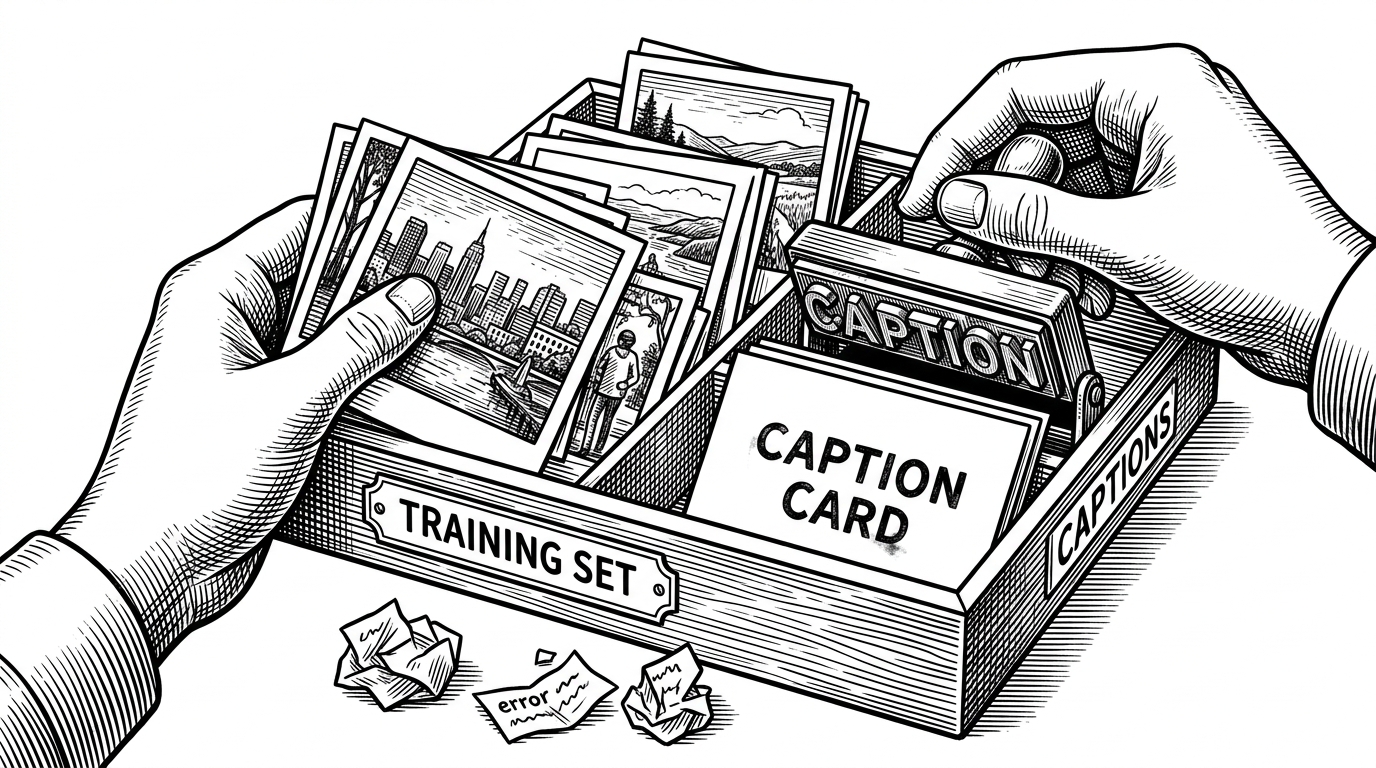
You can see the same mindset in the repository structure. `train.py` orchestrates the job, `predict.py` handles the reverse path, `helpers/billing/metrics.py` wraps usage reporting, and `qwen_lora_inference.py` provides a local sandbox for people who want to inspect the trained adapter outside Replicate. That is a proper product shape, not a one-off experiment.
How the LoRA comes back out
Inference is not just loading a file and calling it done. In `predict.py`, the predictor needs to discover the LoRA's metadata, infer the rank and alpha from the `.safetensors` payload, and attach the adapter to the base Qwen-Image model. That matters because the trainer cannot assume every run produced the same shape of adapter.
The performance details are telling. The code uses `pget` for parallelized weight downloads, which is exactly the kind of optimization you want in a hosted environment where cold starts and network time matter. The developer-facing inference script also points at `target_lin_modules=["QwenImageTransformer2DModel"]`, which signals that this trainer is built around the transformer side of the model rather than the classic U-Net centered LoRA playbook.
The production layer is not an accident
The most convincing sign that this repo is real is not the model code. It is the operational detail. `helpers/billing/metrics.py` validates metric types before reporting them, the training container is tuned for large NVIDIA hardware, and the package is shaped around Cog so it can run in a managed Replicate environment without extra ceremony.
The result? Compact, portable model adapters (typically 2MB to 200MB) that can be easily stored, shared, and deployed across your workflows.
That portability is the commercial edge. A LoRA is only useful if it can move cleanly from training to deployment, and this repo is engineered for that handoff. The billing layer, the runtime tuning, and the clean packaging all make the same promise: train once, ship the adapter, keep the rest of the system stable.
Qwen-Image versus the old LoRA playbook
| Classic Stable Diffusion LoRA | replicate/qwen-image-lora-trainer |
|---|---|
| Often relies on a trigger token such as a synthetic word. | Treats ordinary language as the control surface, so captions and prompts matter more than secret tokens. |
| Dataset prep usually assumes manual caption discipline from the start. | `train.py` can extract uploads, fill caption gaps, and keep the job moving. |
| Many workflows center on U-Net era diffusion tooling. | The inference path points at `QwenImageTransformer2DModel`, which reflects a transformer-first architecture. |
| Local experimentation is common, deployment is a separate concern. | The repo is wrapped for hosted runtime, with billing metrics, GPU tuning, and packaged artifacts. |
| The user learns the tool's quirks before the model. | The model's prompting behavior changes the tool itself, which is the real story here. |
The comparison is bigger than one repository. This project sits in a small but obvious shift across the ecosystem, where Qwen-specific trainers, cloud offerings, and downstream tooling all assume that model-specific language behavior is now part of the product. The legacy label on the original repo matters less than the pattern it revealed.
What this repo says about the next generation of image personalization
This repository is now considered legacy. Please use the newer and actively maintained Qwen / Qwen-image-lora-trainer for fine-tuning Qwen image models.
That note is a cleanup step, not a rebuttal. The older trainer still matters because it captures the transition point, when LoRA personalization stopped being mostly about hidden trigger words and started becoming about how a specific model family understands language. Once that shift is visible, the repo reads less like a wrapper and more like evidence.
Just released the world’s first LoRA for Qwen-Image, entire training toolkit open-sourced
The most interesting open-source tools are often the ones that expose a new default. Here, the default is not a secret word. It is ordinary language, plus enough orchestration to make that language usable in production. That is a small sentence with a big consequence, because it points to the next generation of image personalization: less ritual, more semantics.