cafem: CaféTone makes Android feel like a premium audio device
Instead of owning playback, this Kotlin app latches onto audio sessions, keeps a foreground service alive, and slips Virtualizer and Reverb into the signal path.
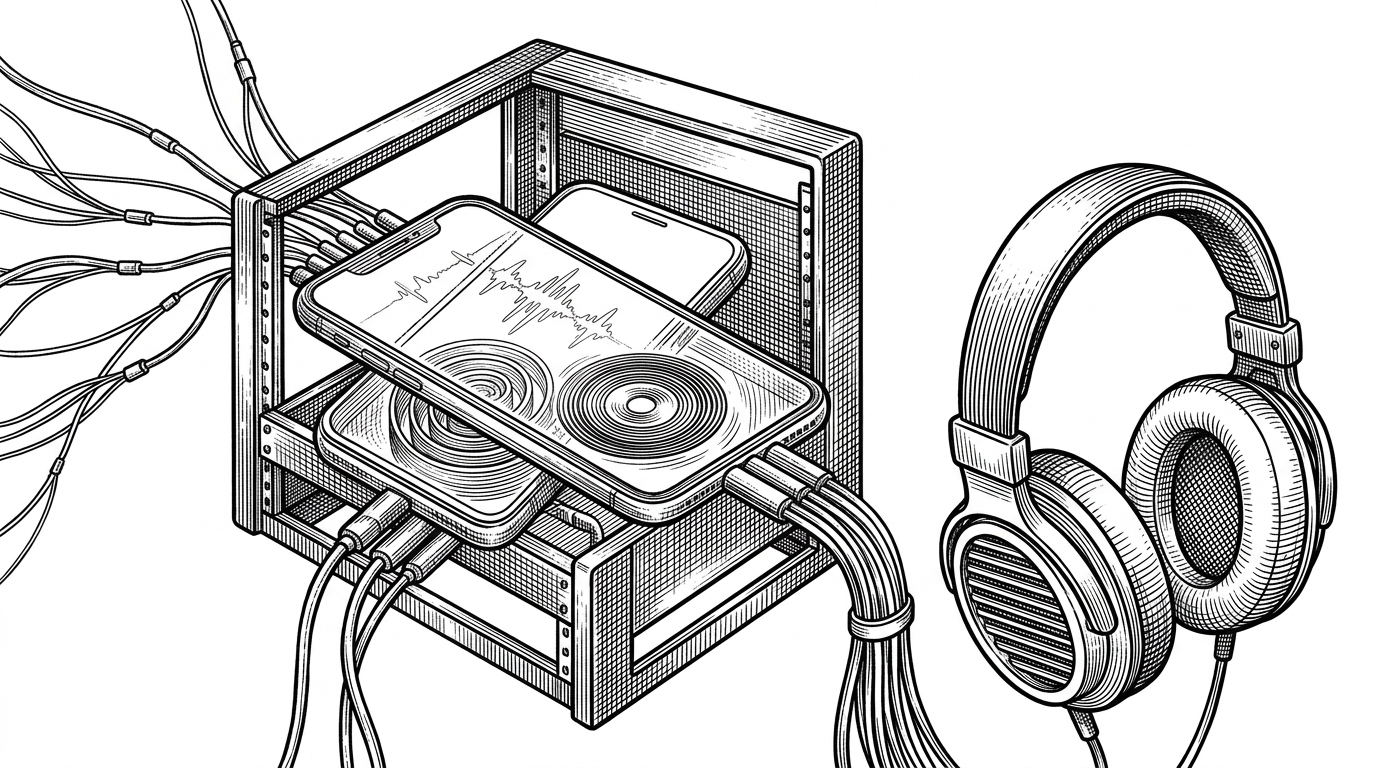
- CaféTone's real innovation is not sound processing, but the session-level hook that lets it follow playback instead of competing with it.
- The foreground service is the spine of the app, because persistence matters more here than any single control screen.
- Its premium-audio aesthetic is part of the product logic, not decorative polish.
- The project is modern in its Android choices, but it also shows how fragile system audio becomes once it depends on platform rules and OEM behavior.
The surprise is not the effect, it is the attachment point
Most audio apps fight for the player UI. CaféTone takes a different route. It watches for Android audio sessions, attaches its processing there, and keeps the effect chain alive even after the screen goes dark. That makes it feel less like an app and more like a software layer sitting between Spotify, YouTube, and the speakers.
A small repo with a systems problem at its center
CaféTone is a focused Android project from a single maintainer, and its structure reflects that narrow ambition. The codebase centers on CafeModeService, AudioSessionReceiver, and a Compose-based MainActivity, which is exactly the shape you would expect if the goal is to control sound without becoming another full music player. The generated Room files suggest persistence for presets or genre-based profiles, but the real story is the routing logic.
How the plumbing works
The path is straightforward once you reduce it to parts. Another app starts playback and Android emits OPEN_AUDIO_EFFECT_CONTROL_SESSION. AudioSessionReceiver catches that broadcast and hands the audioSessionId to CafeModeService. The service owns the AudioEffect objects, including Virtualizer and PresetReverb, and attaches them to the session so the processing follows the stream rather than the screen. The foreground service matters because Android will happily suspend anything that looks idle, and this project is built to keep the DSP chain standing.
Why the UI still matters
This is where the project gets tasteful instead of merely technical. The README's Sony Premium Audio framing is not cosmetic. It tells you the app is trying to feel like hardware, with a calm control surface that matches the promise of richer spatial sound. In a market full of blunt EQ sliders, that matters. Users do not just want more knobs. They want the experience to feel intentional.
What the stack says about the author
The codebase is modern enough to avoid nostalgia traps. Kotlin carries most of the app, Compose handles the interface, lifecycle support keeps the service honest, and KSP-generated Room files suggest the author is using current Android tooling instead of fighting it. That is a good sign. It means the project is not pretending Android is simpler than it is. It is working with the platform's rules, then trying to bend them politely.
CaféTone compared with the usual audio app
| Approach | Where it hooks | What survives when you leave the app | Trade-off |
|---|---|---|---|
| Player-bound EQ | Inside one app's UI | Nothing, once you switch apps | Simple, but narrow |
| System audio mod | Deeper in the device stack | Often follows playback across apps | More powerful, more fragile |
| CaféTone | Audio session control broadcasts plus a foreground service | Effects stay attached to the session and persist in the background | Modern, but dependent on Android's rules |
The real bet is persistence
The hard part is not building a good slider. It is surviving Android's background limits, fragmented OEM behavior, and the narrow permissions around audio effects. CaféTone's foreground service choice shows the right instinct. So does the use of a session receiver instead of a single-player assumption. The payoff is system-level reach. The cost is that the app has to keep earning that reach every time Android changes the rules.