fish-speech: Fish Speech: The Audio Llama That Treats Voice Like Tokens
A deep dive into how Fish Speech combines dual-autoregressive transformers, repetition-aware sampling, and codec-level decoding to make open-source TTS sound controlled, expressive, and fast.
- Fish Speech matters because it treats speech synthesis as a language-model problem, not a separate audio craft.
- Its dual-autoregressive design pushes audio detail into fast layers, which keeps generation efficient without forcing one giant sequence to do everything.
- Repetition-aware sampling is the practical safeguard that stops the model from falling into stutter loops.
- The repo is not just a model checkpoint. It is an operational TTS platform with docs, tooling, a frontend, and production-minded inference code.
Fish Speech is interesting because it refuses the usual TTS framing. Instead of treating voice as a special audio domain with its own bespoke rules, it borrows the modern LLM playbook and applies it directly to speech. That move is bigger than a model choice. It changes how the system thinks about text, tokens, and the path from prompt to voice.
Voice, Rebuilt as Token Prediction
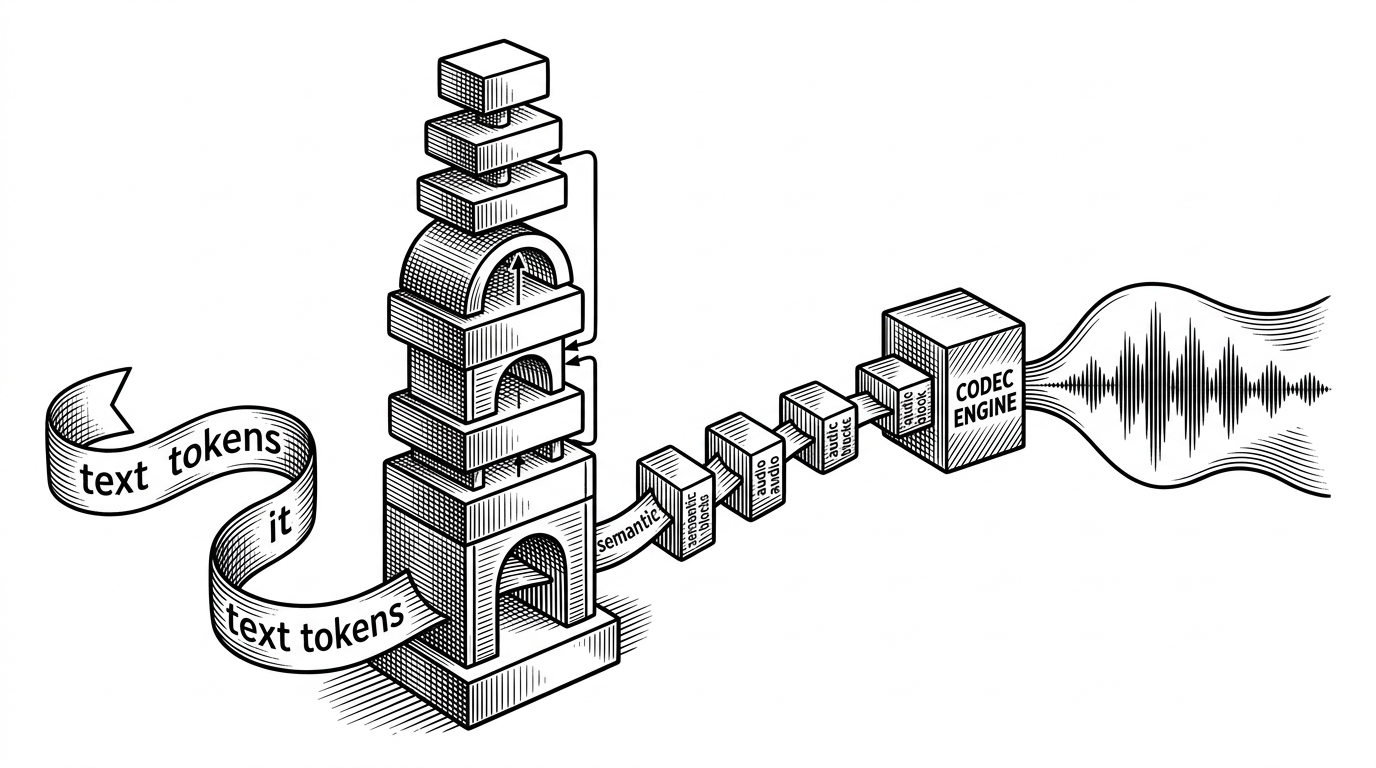
The repo’s most revealing idea is simple: text becomes semantic tokens, and semantic tokens become sound. That is why the architecture feels so familiar to anyone who has watched language models evolve. You can see the same family resemblance in the backbone design, the cache strategy, and the emphasis on sampling behavior rather than hand-built phoneme logic.
Fish-Speech is a new multilingual text-to-speech system that brings LLM reasoning directly into the speech pipeline. Instead of depending on fragile grapheme-to-phoneme rules, it uses language models to understand text natively, making it far better at polyphonic expressions, mixed-language content, and context-heavy inputs.
That is the hook. Fish Speech is not only generating audio. It is making voice feel like a first-class language modeling problem. Once you accept that premise, the rest of the repo starts to make sense.
Why Dual-AR Matters
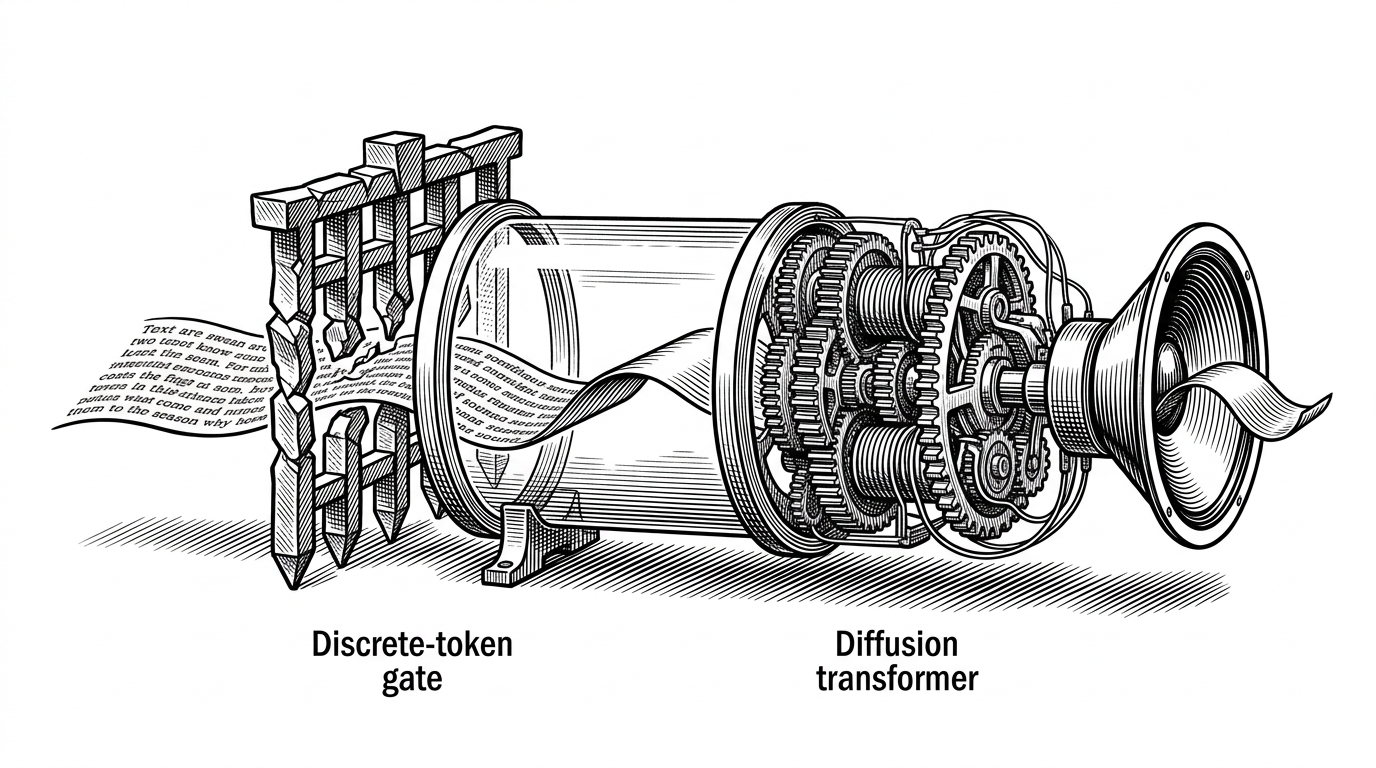
The core technical trick is dual-autoregressive decoding. One stream predicts the primary semantic token sequence. Fast layers then fill in additional codebook detail in parallel or semi-parallel. That matters because audio is dense. If you ask a single sequence model to carry every level of detail alone, the process gets slow, brittle, and expensive.
# Conceptual shape of the decode path
if token in recent_window:
    next_token = sample_with_higher_temperature(logits)
else:
    next_token = sample_standard(logits)

semantic_token = primary_model.predict(text_tokens)
codec_tokens = fast_layers.expand(semantic_token)
audio = dac_decoder(codec_tokens)
That is why the architecture feels elegant rather than overloaded. The model is not brute-forcing raw waveform generation. It is decomposing the problem into a main semantic prediction step and a detail expansion step, which is much closer to how good LLM systems split reasoning from rendering.
The Stutter Problem, and the Built-In Circuit Breaker
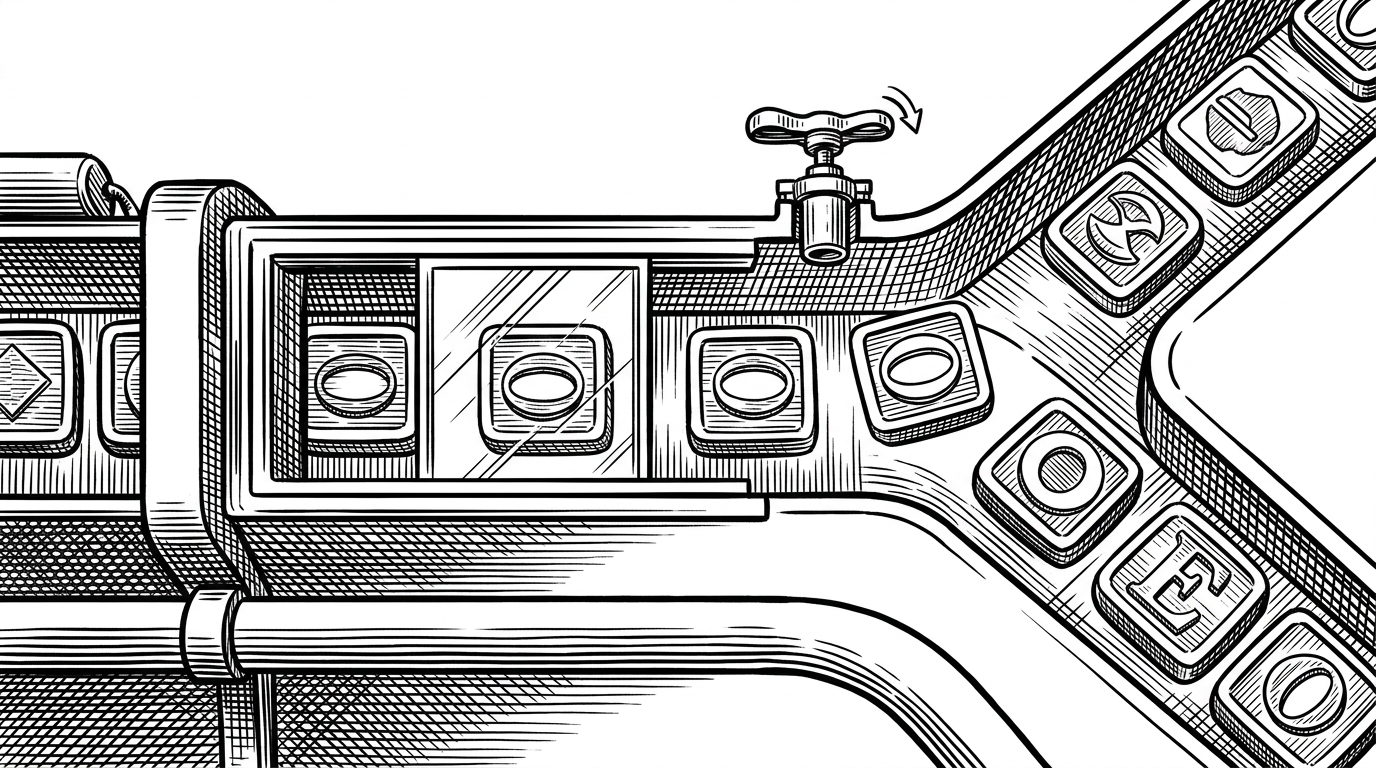
TTS systems can get trapped in repetition. The failure mode is familiar: a voice stutters, loops, or hangs on a phrase that should have moved on. Fish Speech addresses that directly with repetition-aware sampling, which watches a recent token window and increases temperature when the model starts circling the same choice.
| Failure mode | Typical result | Fish Speech response |
|---|---|---|
| Token repetition | Stutter or loop | Raise sampling temperature when repetition appears |
| Overconfident decoding | Flat, sticky phrasing | Keep generation moving with a recent-token window |
| Audio detail overload | Slow, brittle inference | Push detail into fast layers |
S2 enables Inline control over speech generation by embedding natural-language instructions directly at specific word or phrase positions within the text. Rather than relying on a fixed set of predefined tags, S2 accepts free-form textual descriptions — such as`[whisper in small voice]`,`[professional broadcast tone]`, or`[pitch up]`— allowing open-ended expression control at the word level.
That makes the model feel engineered, not merely trained. The interesting part is not that it avoids one bad behavior. It is that the repo exposes a control loop that notices the failure and actively changes the sampling conditions to escape it.
A Codec Stack That Thinks Like an LLM
Fish Speech’s codec layer is not an afterthought. The modified DAC path brings LLM-style infrastructure into audio reconstruction, including KV caching and transformer-style blocks in the decoding stack. That makes the system faster and tighter, because the model is leaning on the same inference tricks that made modern language models usable at scale.
# Simplified inference shape
with torch.inference_mode():
    semantic_tokens = text2semantic.generate(prompt, emotion_tags)
    acoustic_codes = dac.expand(semantic_tokens, use_kv_cache=True)
    waveform = codec.decode(acoustic_codes)
The strategic point is bigger than performance. Fish Speech is importing the habits of the LLM era into TTS: caching, transformer blocks, token streams, and sampling policies that can be tuned instead of hand-tweaked. That is why the project reads like an audio model and an LLM system at the same time.
Why Open Source Can Compete Here
Fish Speech sits in a crowded field, but the comparison is not as simple as open versus closed. Commercial tools still have polish, easy licensing, and often excellent long-form narration quality. What Fish Speech brings is a different kind of leverage: open weights, broad language coverage, controllable emotion, and architecture that looks native to the transformer era rather than retrofitted to it.
| System | What it does well | Trade-off |
|---|---|---|
| Fish Speech | Transformer-native TTS, strong control, open-weights ecosystem | License and production policy still matter |
| ElevenLabs | Polished narration and strong commercial ergonomics | Closed model and less architectural transparency |
| XTTS-v2 | Voice cloning and broad availability | More restrictive positioning and less control depth |
| Kokoro | Speed and lightness | Less of the full control stack Fish Speech emphasizes |
The important shift is strategic. Once speech generation looks like token prediction, the open-source community can reuse the same optimization culture that transformed LLMs. That is what makes Fish Speech feel less like a niche TTS repo and more like a platform bet.
The People and the Operating Model
The repo also looks like a serious product organization, not just a model dump. There is a TypeScript frontend, multilingual docs, training utilities, type checking, and inference tooling. That kind of surface area matters because it signals that the project is built for iteration, not one-off demos.

That is a meaningful detail. Projects like this only matter if the repo can survive contact with users, contributors, and deployment. Fish Speech appears built for that reality.