podman-kube-generator Is the Missing Compiler for Podman Stacks
A visual builder that translates container intent into Kubernetes YAML, Quadlets, and deployable Podman configurations without making users learn the whole stack first.
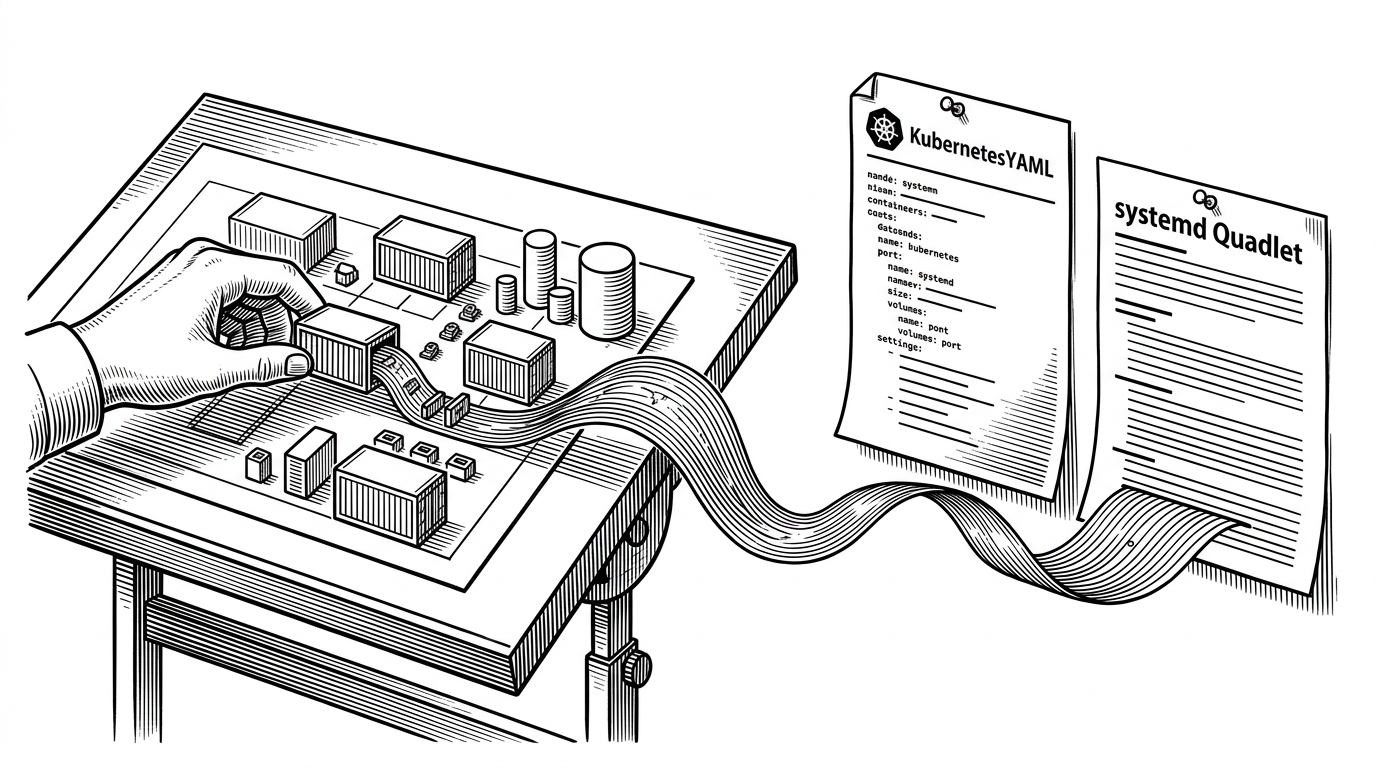

Podman is great, but writing Kubernetes YAML by hand every time you want to run a container stack is a barrier that shouldn't exist. The goal of this project is to make Podman stacks as accessible as possible, for beginners and experienced users alike.
- podman-kube-generator matters because it emits Podman-native deployment artifacts, not just a prettier container form.
- Its best trick is translation fidelity, especially around volume mounts, restart semantics, and image-specific presets.
- The repo behaves like a small product, with shareable configs, security hardening, templates, and deployment workflows baked in.
- It wins when you want to design a stack offline and end up with files you can actually run under Podman and systemd.
Why Podman needed a new kind of builder
Podman already has strong native primitives. The gap is the workflow around them. If you want a stack that ends up as podman play kube YAML or Quadlet files, you still have to know what to write and where the edges are.
That is where podman-kube-generator lands. It is not trying to replace Podman. It is trying to make Podman’s preferred outputs easier to produce, especially for people who would rather assemble a stack visually than hand-author every detail.
The project’s real job is translation
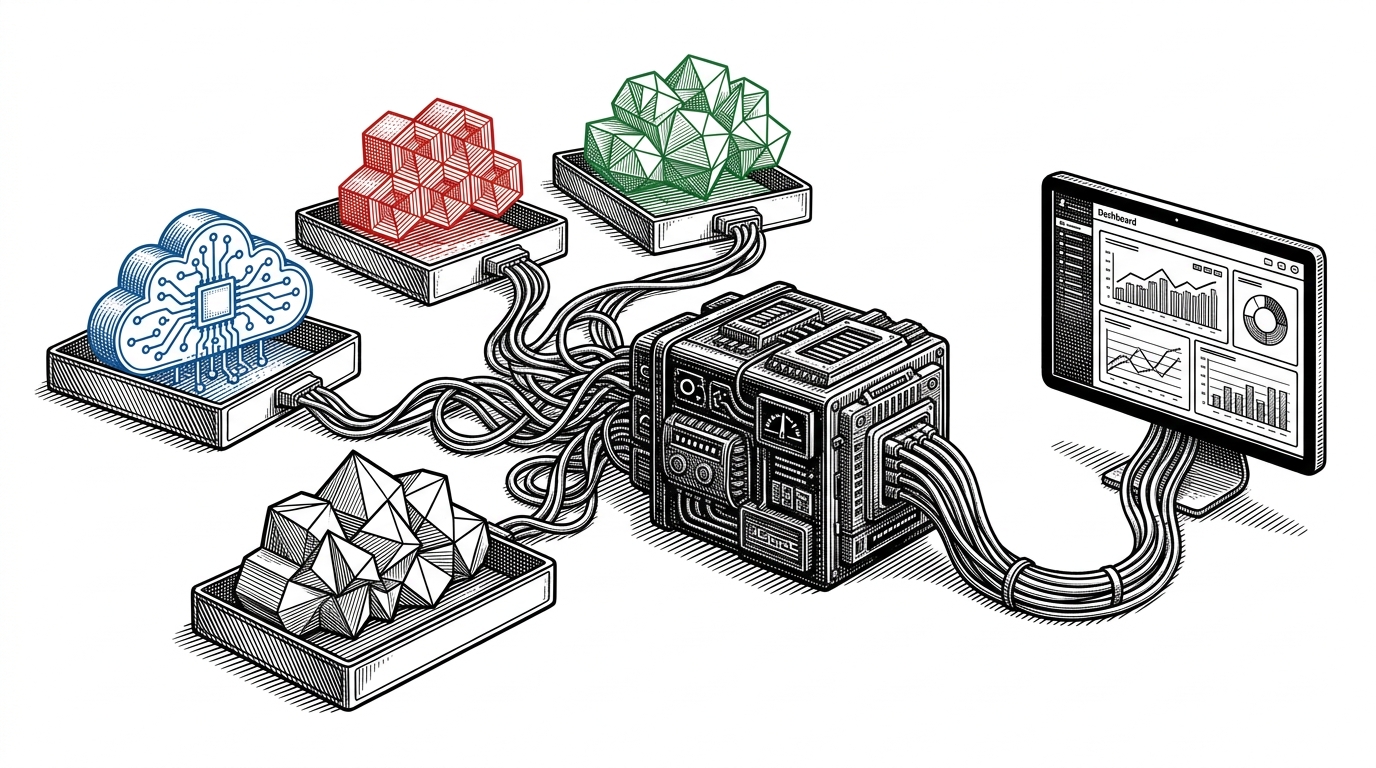
The easiest way to understand the repo is to treat it like a compiler. A visual stack goes in. A normalized internal model comes out. Then the generator fans that model into multiple targets: Kubernetes YAML, Quadlet, and a shell script.
The smartest part is the volume parser
# Simplified from the generator logic described in the repo analysis
KNOWN_FILE_PATHS = {
    "/etc/localtime",
    "/etc/hosts",
    "/etc/resolv.conf",
}

def parse_volume(host_path: str):
    if host_path in KNOWN_FILE_PATHS:
        return {
            "type": "hostPath",
            "pathType": "FileOrCreate",
        }
    return {
        "type": "hostPath",
        "pathType": "DirectoryOrCreate",
    }
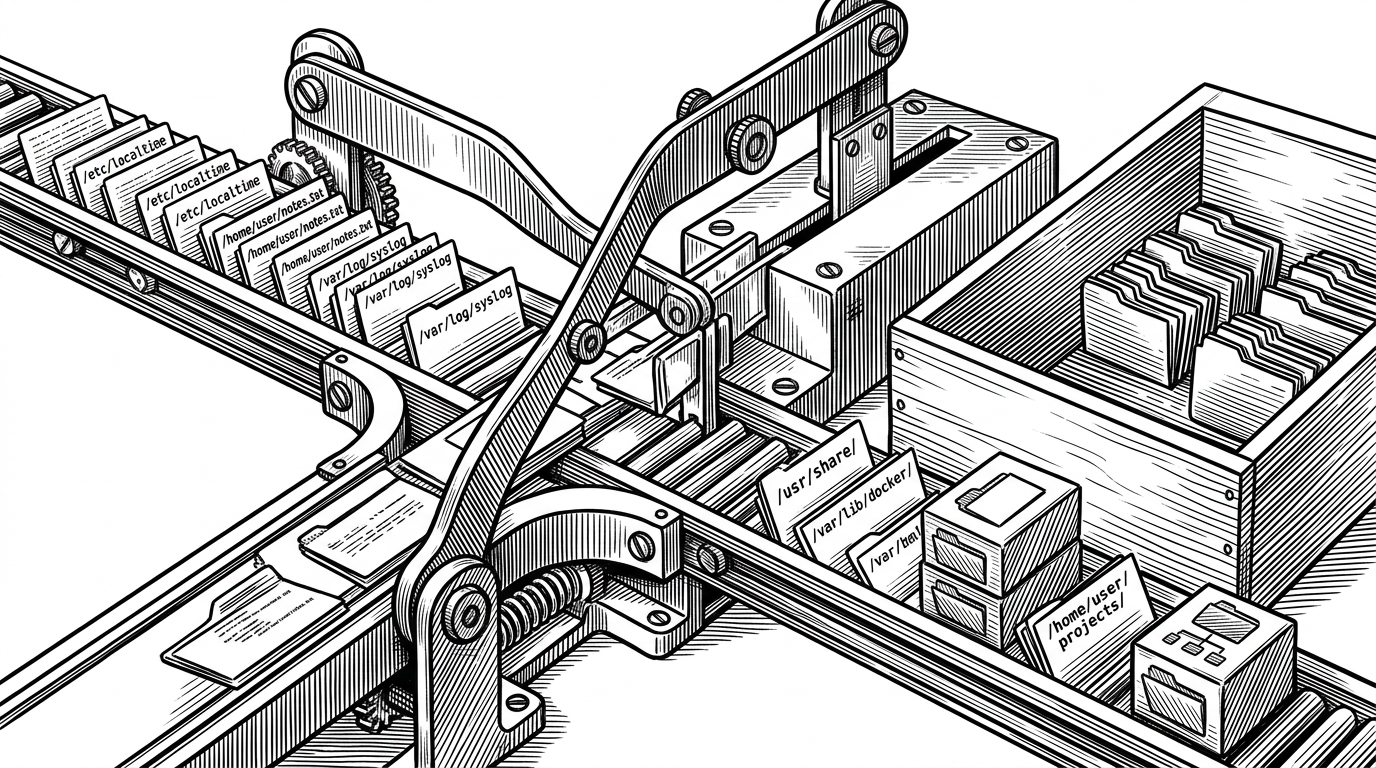
This is the kind of detail that separates a useful generator from a brittle one. If a tool misclassifies a mount, the output may still look fine until it fails at deployment time. Here, the parser is doing judgment, not just string formatting.
The repo’s logic around volumes points to the larger design philosophy. It is not content to stringify user input. It tries to preserve operational meaning in the output format.
Image presets turn a blank form into a working stack
The preset system is the project’s second quiet superpower. When a user selects a familiar image, the generator can prefill environment variables and connection hints that would otherwise take a lot of lookup and context switching.
| Problem | Generic form | podman-kube-generator |
|---|---|---|
| Known image settings | Start from scratch | Injects preset defaults and hints |
| Database wiring | Manual env var hunt | Prepopulates common connection values |
| User effort | High for every new stack | Lower once the image is recognized |
| Result | A blank template | A stack that is closer to runnable |
That changes the feel of the tool. It is not just a blank canvas. It behaves like a very opinionated assistant for the kinds of images people actually deploy.
Why the Django architecture matters here
The backend structure supports the product idea. Generation logic lives in dedicated modules such as kube.py, quadlet.py, and shell.py, while Django handles the web app around them: saved configs, sharing, admin, and security middleware.
| Layer | What it does | Why it matters |
|---|---|---|
| Generation modules | Produce YAML, Quadlet, and shell output | Keeps translation logic testable and focused |
| Django app | Handles UI, sharing, and persistence | Adds state without turning the generator into a monolith |
| Security layer | Applies admin TOTP and IP blocking | Makes the tool feel closer to a service than a demo |
| Frontend | Uses Bootstrap and HTMX | Delivers interactivity without a heavy SPA stack |
That separation matters because the project is both stateless and shareable. You can use it like a throwaway generator, but you can also save and revisit configs. It is a practical middle ground.
The product feels bigger than the repo
The repo has the sort of details that signal real operational intent. There are templates, share links, analytics, a cookie banner, TOTP for admin, IP blocking, and deployment scripts with rollback logic. None of that is required for a toy generator.
It is also why the project reads as more than a side utility. It is built like something people are expected to rely on, even if the codebase is still small enough for one maintainer to keep the whole thing coherent.
| Feature | What it signals |
|---|---|
| Saved configs and share links | The output is meant to be reused, not just copied once |
| Security middleware | The app is treated like a live service |
| Templates and presets | The repo is solving repeated deployment patterns |
| Rollback-aware update scripts | Operational discipline, not just feature shipping |
Podman-native beats generic container UIs when output matters
Here is the cleanest comparison: this project starts from intent and ends in Podman-native files. By contrast, podman kube generate exports what is already running, manual Quadlet authoring assumes you already know the syntax, Portainer is optimized for runtime management, and Docker Compose lives in a different deployment grammar altogether.
| Tool | Starting point | Best at | Where it falls short |
|---|---|---|---|
| podman-kube-generator | Visual stack design | Producing Podman-ready artifacts | It is specialized, not a general manager |
| podman kube generate | Existing containers | Exporting what already runs | You still need to build the stack first |
| Manual Quadlet | Hand-written files | Full control | High syntax and systemd overhead |
| Portainer | Live infrastructure | Operations and monitoring | Not focused on Podman-native file generation |
| Docker Compose workflow | Compose YAML | Docker ecosystem portability | Not aimed at Podman-first deployment artifacts |
That is the niche. It is not a universal control plane. It is a translator for a very specific path: visual composition to Podman-native deployment. And on that path, the opinionation is a feature.