Jarvis: The Local Voice Assistant That Remembers the Room
A deep dive into how `isair/jarvis` turns ambient speech, rolling transcript windows, and layered memory into a privacy-first assistant that can join a conversation without being reintroduced.
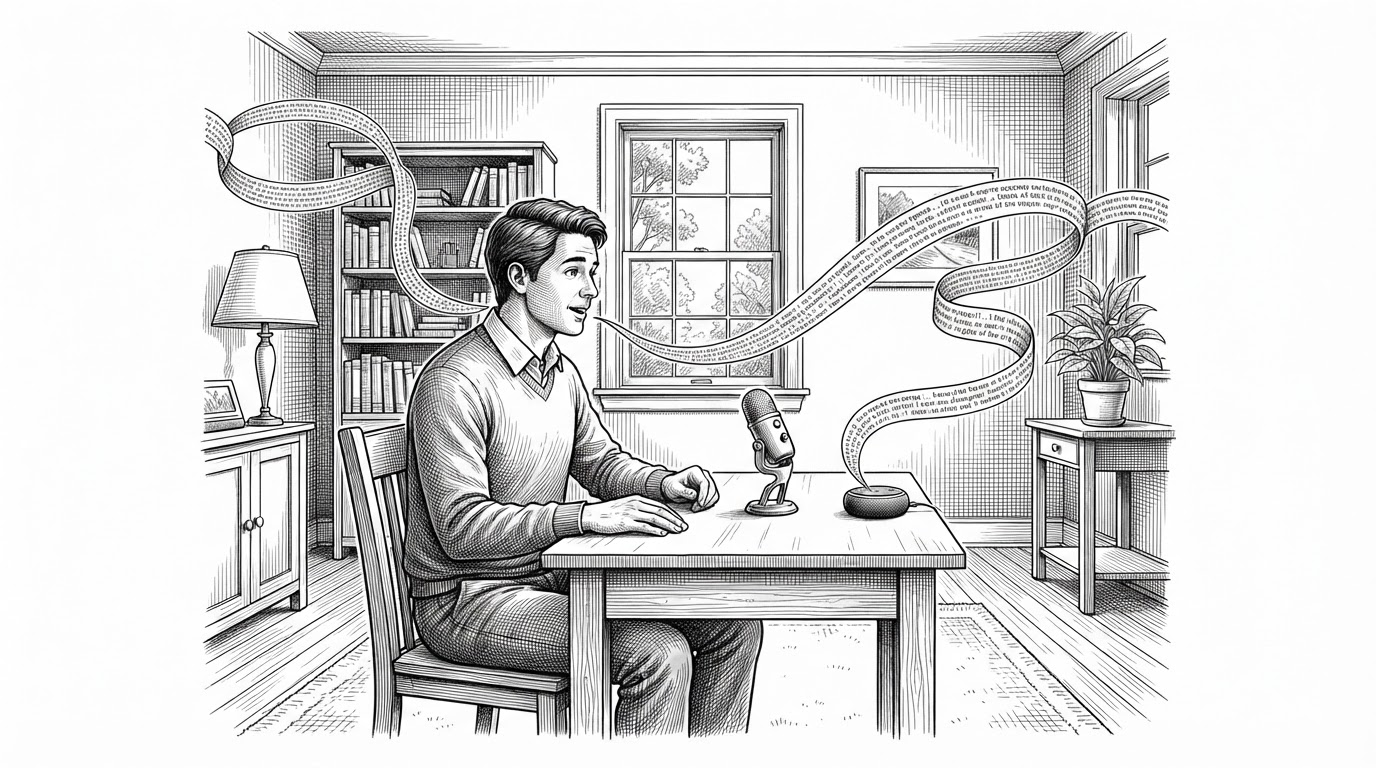

Jarvis is built to be part of the conversation, not another screen to type into. Talk through an idea, discuss plans with a friend, then ask “Jarvis, what do you think?”
- Jarvis treats voice as shared context, so a question can refer back to what the room already said without restating it.
- Its rolling transcript and intent judge are the core trick that turns ambient speech into usable intent.
- The memory stack is designed to compress interaction into durable context instead of hoarding raw logs forever.
- Its local-only plumbing is not a slogan, because the codebase is tuned to keep STT, TTS, and logs on the user’s machine.
Most voice assistants fail at the same moment: when the conversation stops being a command and starts becoming a thread. Jarvis is interesting because it aims at that harder problem first. It wants to be the third person in the room, not the box you have to rebrief every time you speak.
That idea shows up in the README itself. Baris Sencan describes it as part of the conversation, not another screen to type into, and that framing is the right one. The project is less about hotkeys and more about continuity.
Why Jarvis Feels Different
The obvious pitch for a local assistant is privacy. Jarvis has that, but privacy is not the whole story. The sharper claim is that it changes the social contract of an assistant: it can overhear, hold context, and answer in a way that feels continuous.
That matters because the common alternative is brittle. If the model only sees the last sentence, every follow-up becomes a reset. Jarvis instead keeps a rolling transcript window, so the system can infer what “that” or “it” points to before it speaks.
The Third-Person Model
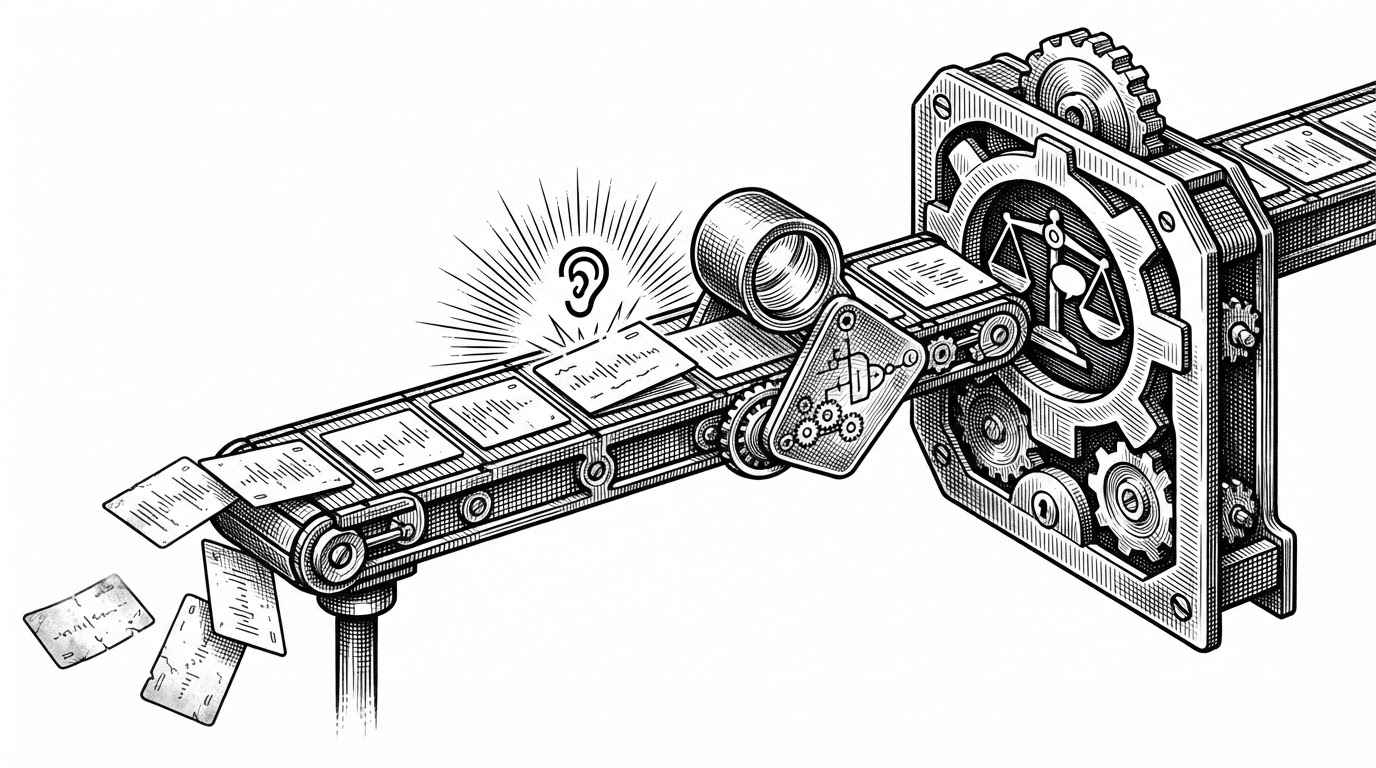
The most revealing module in the repo is the transcript buffer. It stores a bounded stretch of recent speech, roughly the last two minutes, and the wake word does not wipe that state away. Instead, the intent judge reads the entire window and asks a more subtle question: is this a fresh command, or a reference to something already said?
That is why the project feels different from a hotkey chat tool. The model is not only parsing language. It is tracking room state. If someone says, “Jarvis, what do you think about that?”, the “that” is resolved against the recent conversational past, not just the last utterance.
How the Memory Stack Prevents Context Rot
Jarvis does not rely on one monolithic memory store. It splits memory into short-term dialogue state, longer-term database-backed memory, and a diary flow that compresses the day before shutdown. That is the real answer to context rot: keep what is useful, summarize what matters, and stop pretending raw transcripts are a long-term strategy.
The shutdown path is especially telling. The daemon gives the assistant time to write a diary from the dialogue memory before exit. That means the system is not only reactive during the day. It is reflective at the edge of the day, turning conversation into a more durable record.
def shutdown():
    stop_listening()
    summary = update_diary_from_dialogue_memory()
    persist(summary)
exit_cleanly()| Memory layer | What it stores | Why it exists |
|---|---|---|
| Dialogue memory | Recent conversation state | Keeps the current exchange coherent |
| Database and graph memory | Longer-term facts and relationships | Lets the assistant retrieve durable context later |
| Diary / reflection | Compressed daily summary | Reduces raw transcript hoarding and keeps useful insight |
Why Local Execution Is Hard, and How Jarvis Handles It
Running speech recognition, text-to-speech, LLM routing, and a desktop UI on consumer hardware sounds simple until the machine starts fighting back. Jarvis is careful about that reality. It has platform-specific paths for Whisper, GPU setup, and thread limiting so the assistant does not freeze the desktop it lives on.
On Windows, it injects CUDA paths when needed. On Apple Silicon, it can use MLX Whisper. In the GUI layer, it also constrains aggressive math libraries so they do not overwhelm the CPU with thread storms. That is the difference between a prototype and a system that can sit in the background all day.
import os

os.environ.setdefault('OPENBLAS_NUM_THREADS', '1')
os.environ.setdefault('MKL_NUM_THREADS', '1')

# Keep the desktop responsive while STT, TTS, and models are active.
The point is not raw performance alone. The point is composure. Jarvis tries to stay local, stay responsive, and stay useful at the same time.
The Privacy Claim Is in the Plumbing
A privacy-first assistant is easy to claim and hard to prove. Jarvis makes the claim more credible by keeping the core loop on-device and by being careful about what gets emitted into logs. Even developer ergonomics are shaped by that choice, which matters because privacy often fails in the places people forget to inspect.
Talk naturally as if Jarvis is a third person in the room, and get conversational responses. It remembers everything, knows location and time, can check the web, control Chrome, track nutrition, and more with support for unlimited MCPs / tools without context rot.
That sentence is doing a lot of work. It is not just describing features. It is describing an operating principle: avoid context rot, keep tools extensible, and keep the assistant close to the hardware that hears the room.
What Jarvis Is Competing Against
Jarvis is not trying to beat every assistant on the same scoreboard. It is narrower than that. The project sits at the intersection of ambient listening, local execution, and conversational continuity, which puts it in a different category from hotkey chat tools and cloud-first desktop assistants.
| Project | Interaction model | Context strategy | Local-only? | Best for | Trade-off |
|---|---|---|---|---|---|
| Jarvis | Ambient voice, wake word, follow-up in context | Rolling transcript plus layered memory | Yes | Private room-aware conversation | Narrower ecosystem than cloud assistants |
| Leon | Command-oriented personal assistant | Task and plugin centric | Often local-capable, but less ambient | Structured automation | Less focused on room continuity |
| Screenpipe | Continuous screen and audio capture | Context from device activity streams | Local-first capture layer | Building a context substrate | Not primarily voice-first |
| ChatGPT Desktop / Claude Desktop | Hotkey-to-chat | Chat session context | No | Fast general-purpose prompting | Requires more explicit context from the user |
That comparison clarifies the niche. Jarvis is not just another assistant with a microphone. It is trying to preserve presence.
Why This Project Feels Mature
A lot of assistant repos look impressive in demos and fragile in practice. Jarvis reads differently because the engineering keeps recurring problems in view: install friction, GPU setup, evaluation, memory recovery, and failure handling. The presence of a dedicated eval suite is a strong tell. The project is being checked against behavior, not just vibes.
That discipline matters because the core promise is subtle. If the assistant forgets context, stalls the UI, or leaks data into logs, the whole product story collapses. Jarvis seems built by someone who knows those failures are the product.
The larger implication is simple. The next generation of personal assistants will not win by sounding smart in isolated turns. They will win by staying present, staying local, and staying coherent across the day.