The Universal Translator for AI Agents: Inside mcp-sse-shim
How Langflow's minimalist Python bridge solves the asynchronous routing problem of connecting local desktop clients to cloud-hosted Model Context Protocol servers.
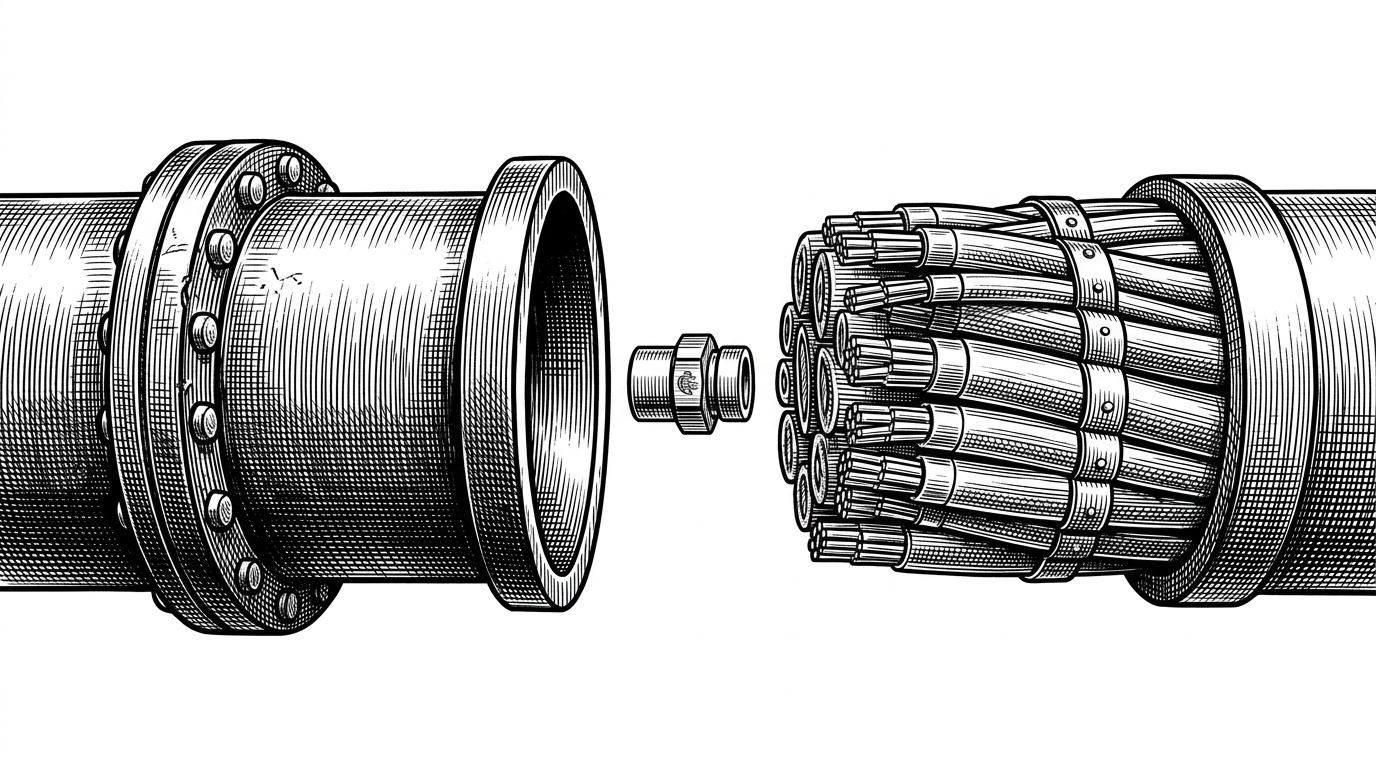
- The Model Context Protocol (MCP) suffers from a transport divide between local stdio clients and cloud-hosted SSE servers.
- mcp-sse-shim uses an asynchronous message queue to solve the 'chicken and egg' routing problem inherent in Server-Sent Events.
- The Python implementation relies almost exclusively on aiohttp to minimize latency in real-time agentic communication loops.
- This utility serves as a temporary, critical bridge while the ecosystem transitions to the new Streamable HTTP standard.
The Transport Divide
The Model Context Protocol (MCP) is powerful, but it is currently fragmented by its transport layers. Desktop applications and local agents rely on the secure, local stdio transport. Conversely, modern hosted servers rely on web-compatible Server-Sent Events (SSE). Without an adapter, a local client cannot utilize a cloud-hosted tool.
This divide creates a structural incompatibility. Local agents speak one language, and remote servers expect another. The mcp-sse-shim is a microscopic, hyper-optimized piece of plumbing that elegantly solves this interoperability gap.
| Transport | Environment | Characteristics |
|---|---|---|
| Stdio | Local Desktop | Persistent process, highly secure, zero network overhead. |
| HTTP+SSE | Cloud Hosted | Web-native, requires persistent connection for server-to-client. |
| Streamable HTTP | Modern Web | Stateless, standardized via RFC 206, eliminates long-lived SSE. |
Solving the Chicken and Egg Routing Problem
The hardest technical challenge the shim solves is an asynchronous timing issue. In an SSE architecture, the client cannot send commands until the server opens the stream and provides a specific POST endpoint URL. However, a local user or automated agent might fire off a command immediately upon startup.
The shim handles this by implementing an asynchronous message queue. It buffers incoming standard input commands until the remote routing is established, ensuring no data is lost during the initial handshake.
Asynchronous Stdio and the Windows Trap
Reading from standard input asynchronously without blocking the event loop is notoriously difficult. This is especially true across different operating systems. The Python implementation relies heavily on the aiohttp library to maintain a minimal dependency footprint while managing these concurrent streams.

To ensure cross-platform compatibility, the code includes specific fail-safes. The WindowsSelectorEventLoopPolicy is explicitly set for Windows environments, preventing the asynchronous standard input reader from freezing the entire application.
if sys.platform == "win32":
    asyncio.set_event_loop_policy(asyncio.WindowsSelectorEventLoopPolicy())

async def run_bridge():
    loop = asyncio.get_running_loop()
    while True:
        line = await loop.run_in_executor(None, sys.stdin.readline)
        if not line:
            break
        await process_message(line)
The Ephemeral Nature of Infrastructure
The technology landscape is shifting rapidly. The industry is currently moving away from long-lived SSE connections toward a stateless Streamable HTTP model. This transition is formalized in MCP RFC 206.
Since deprecating server-sent events (SSE) as a transport option, many remote MCP servers have moved to support the Streamable HTTP transport. Langflow 1.7 brings support for Streamable HTTP to the MCP Client component.
In this context, mcp-sse-shim is not a permanent monument. It is a vital, perfectly executed temporary bridge. It prevents ecosystem fragmentation during a major protocol transition, allowing developers to keep building without waiting for the rest of the world to catch up.