`larksuite/node-sdk-demo`: The Empty Repo That Makes Enterprise APIs Feel Usable
A tiny official scaffold reveals the real work behind Lark integrations: auth, signatures, token handling, and the path from docs to a first successful bot.


感谢同学提供pr。有没有可运行的demo嘞?我想本地跑跑看。
- The repo matters because it turns a hard enterprise integration path into a first success that feels reachable.
- For Lark, the real friction lives in auth, signatures, token refresh, and event handling, not in the API call itself.
- Good demo repos hide complexity in stages, so the developer meets one hard problem at a time.
- Compared with Slack, Microsoft, and Google, Lark's scaffold is less about breadth and more about proving the platform path.
A Repo That Mostly Says Here
Open larksuite/node-sdk-demo and you do not meet a sprawling sample app. In the snapshot reviewed here, you get an MIT license and a README that barely begins. That is not a bug. It is the clue.
Official demo repos are the first mile of a platform. They turn documentation into a runnable gesture, which matters most when the platform asks developers to deal with credentials, signatures, webhooks, and event delivery before they ever see a friendly bot reply. The repo is tiny because its real job is to make the path feel possible.
Why Official Demo Repos Exist
A demo repo is not a showcase. It is a friction reducer. If the official example is clear, developers trust the path, and the platform starts to feel less like a maze of docs and more like a sequence they can finish.
That ask gets at the point of the whole category. A demo has to be runnable locally, because a developer's confidence starts with one request, one callback, and one clean response. Without that, the repo is a postcard, not an onboarding path.
The Invisible Stack Behind a First Lark Bot
The hard part of a Lark integration is not the first API call. It is everything around it. The demo has to make room for app credentials, webhook verification, token acquisition, token refresh, and a response path that does not fall apart the first time a signature fails.
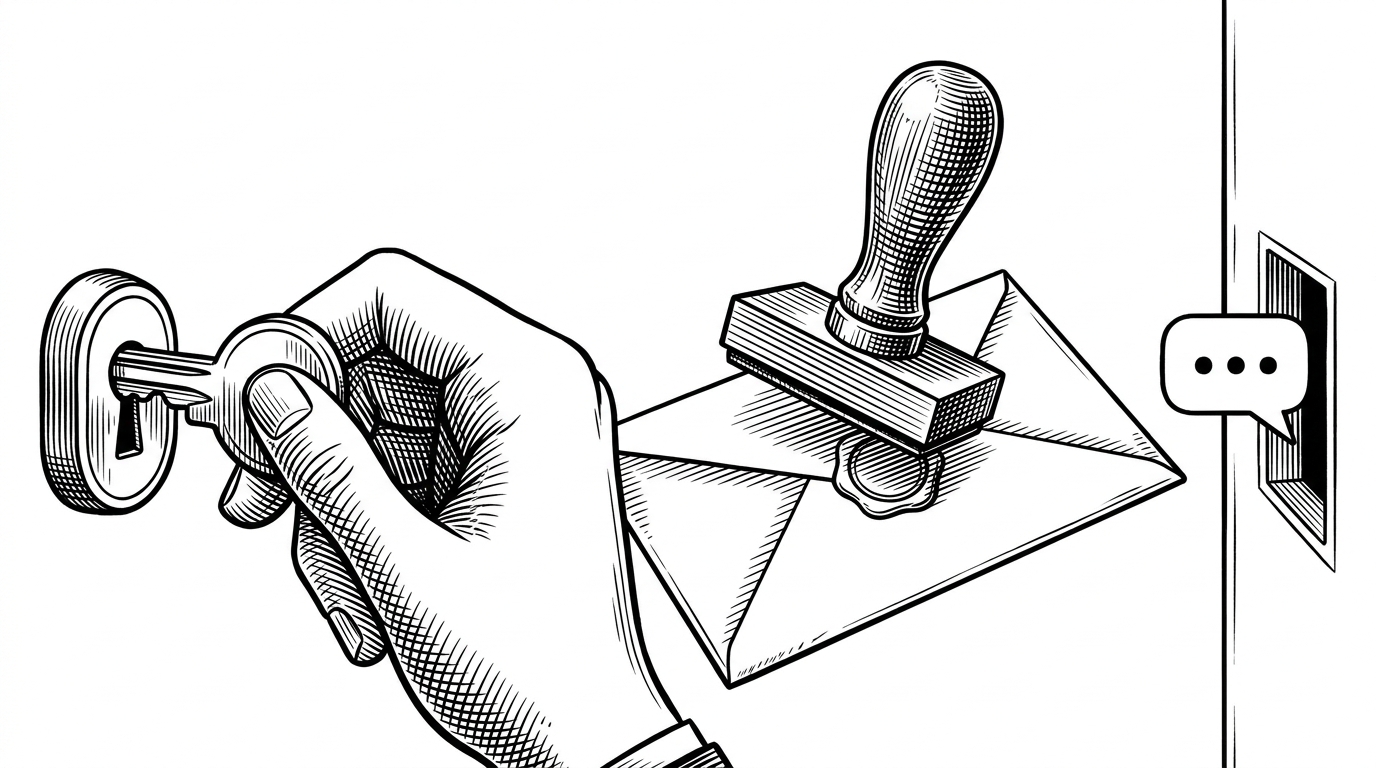
That is why a good demo does not show every moving part at once. It stages the complexity. The happy path should be obvious, and the failure modes should be visible enough that a developer knows where to look when the first run breaks.
What a Good Demo Has to Hide
The best onboarding scaffold makes the hardest chores feel ordinary. It hides secret management behind environment variables, hides refresh logic behind a clean helper, and hides event plumbing behind one or two obvious endpoints. That is not deception. It is pacing.
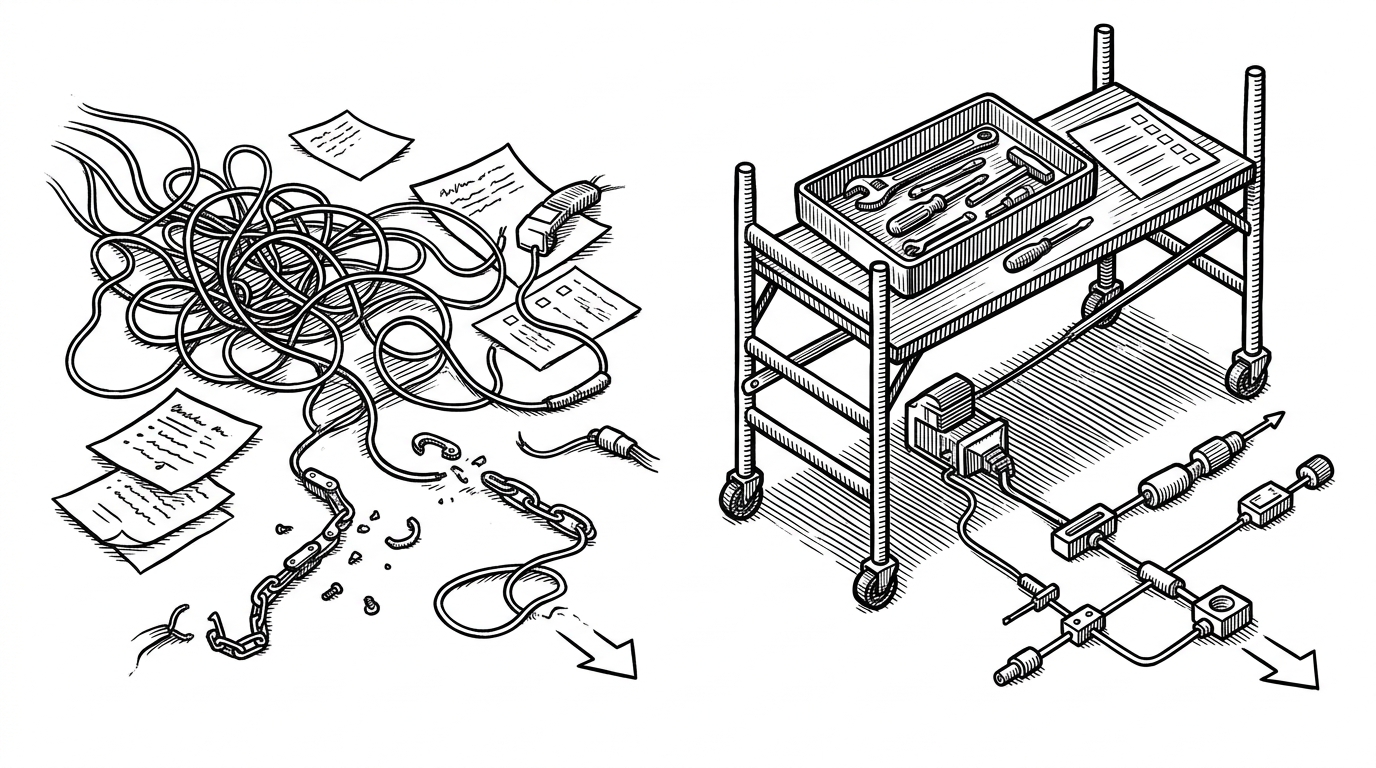
That is the real difference between a sample and a sample worth shipping. A weak demo proves the API exists. A strong demo proves the platform can survive a human trying to use it for the first time.
How Lark Compares
| Project | First-mile posture | What the sample teaches |
|---|---|---|
| larksuite/node-sdk-demo | A narrow scaffold around auth and event plumbing | How to get from docs to a first working bot |
| Slack Bolt samples | Opinionated and battle-tested for chat apps | How to structure events, interactivity, and bot flows |
| Microsoft Graph samples | Broad enterprise surface with many service edges | How to navigate a large cross-product API |
| Google Workspace quickstarts | Clear service-specific happy paths | How to authorize and call one product at a time |
This is not a ranking. Each ecosystem optimizes for a different first success. Slack tends to teach bot ergonomics, Microsoft teaches breadth and navigation, Google teaches service-specific authorization, and Lark's demo needs to teach the path from a fresh clone to a trusted event loop.
The Signal in the Silence
The minimalism of larksuite/node-sdk-demo is telling. It reads like a public placeholder for an onboarding path that has to be trustworthy before it can be flashy. The repo is not trying to win with surface area.
Its real value is strategic. An official demo repo says the platform has a first mile, and the first mile matters enough to be curated. If the first successful integration feels easy, the platform gets a vote before the product does.