200 Lines to Symphony: The Minimalist Anatomy of tiny-musicgen
Stripping Meta's MusicGen down to its mathematical bones to run state-of-the-art generative audio on a laptop.
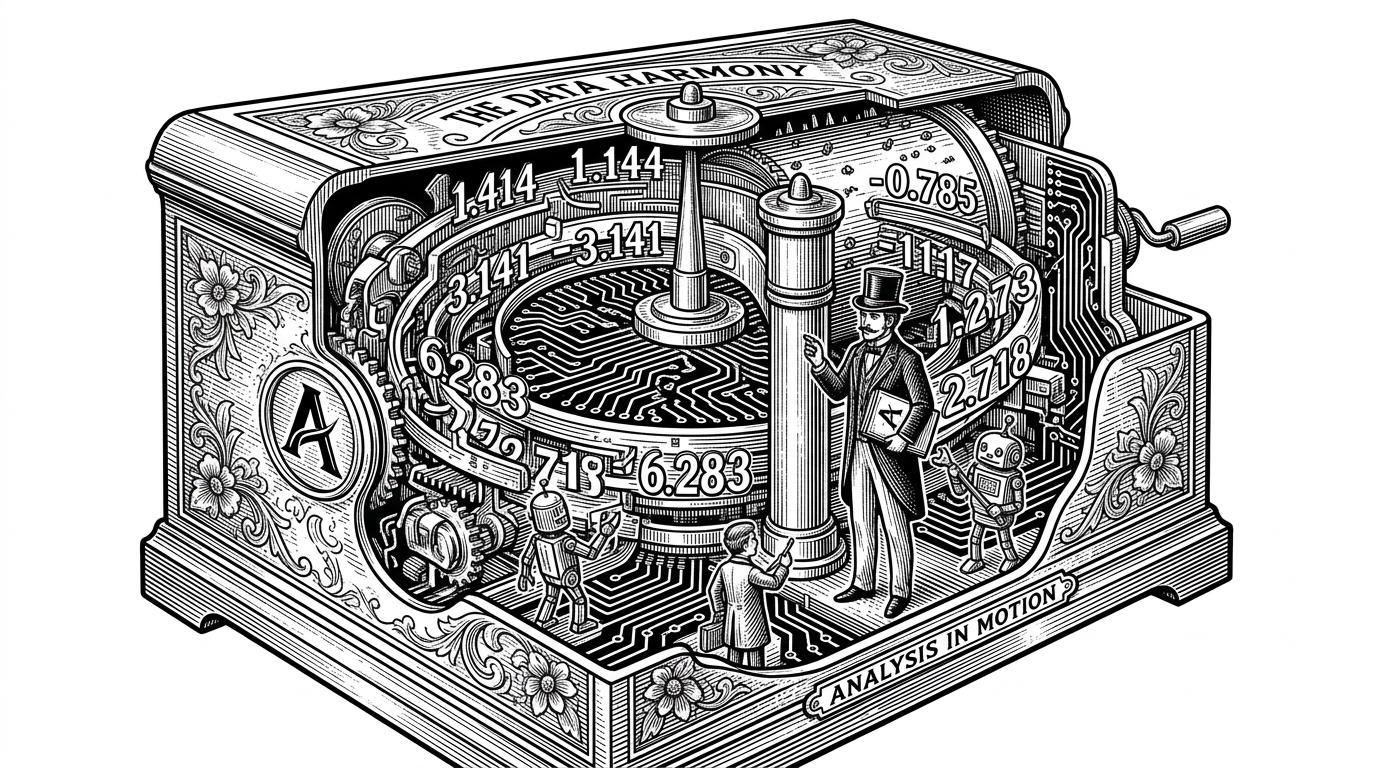

MusicGen + Encodec in Tinygrad && PyTorch. ~200 lines of code.
Most developers assume state-of-the-art audio generation requires a black box of immense complexity. Meta's official Audiocraft repository spans tens of thousands of lines of enterprise-grade Python, burying the core algorithms under layers of abstraction, configuration objects, and text-conditioning logic.
The tiny-musicgen project shatters that assumption. By stripping away everything but the essential mathematical skeleton, it proves that the engine behind modern AI music fits in a single screen of code.
The Skeleton in the Machine
To achieve this extreme density, the author embraced a radical constraint. They completely removed the text-prompting functionality that most users associate with generative AI. Without text conditioning, the model is simply fed zeros in its cross-attention layers. It is forced to hallucinate melodies based entirely on the pre-trained internal biases of its weights.
My aim was more to implement it very simply & readably, and so I've skipped any semblence of: * Flexibility/reusability in the transformer * Einsum, and other sorcery that confuses me * Conditioning the model on genre / instruments / etc - this one will just autoregressively generate random songs
By discarding the "sorcery," the project becomes a Rosetta Stone for developers wanting to understand the raw mechanics of a Transformer natively generating multi-stream discrete tokens.
A Rosetta Stone for Frameworks
The repository is bifurcated into two parallel implementations of the exact same logic. One uses industry-standard PyTorch. The other uses Tinygrad, a minimalist deep learning framework known for its lazy execution model.
Seeing the same transformer.py logic implemented side-by-side allows developers to map PyTorch's dense tensor manipulations directly to Tinygrad's explicit broadcasting loops. This dual-framework approach highlights the architectural strengths and hardware quirks of each ecosystem.
Both implementations are about ~200 lines, depending on how you count. Should note, the Tinygrad implementation is unreasonably slow on NVIDIA, but can do 2 tokens / second on my M2 MacBook.
| Feature | PyTorch Implementation | Tinygrad Implementation |
|---|---|---|
| Execution Model | Eager execution | Lazy execution (JIT compiled) |
| Attention Mechanism | xformers memory-efficient ops | Manual tensor broadcasting |
| Hardware Sweet Spot | NVIDIA GPUs | Apple Silicon (M2 Metal backend) |
| EnCodec Decoder | Native PyTorch | Hybrid (PyTorch weights loaded) |
The Magic of the Four-Stream Delay
MusicGen does not predict raw audio samples. Instead, it predicts sequences of discrete integers across four separate "codebooks" simultaneously. To make this work inside a standard autoregressive loop, the codebooks must be staggered.
This is known as the Delay Pattern. By offsetting the four streams by exactly one timestep each, the Transformer can predict codebook N at time T while “seeing” the context of codebook N-1 from that exact same time T. This clever slicing logic is orchestrated entirely within the minimalist main.py entry point.
From Latent Space to Loudspeakers
Once the Transformer outputs its matrix of integers, the music is still trapped in a compressed "latent" space at a sluggish 50Hz. To become audible music, it must be upsampled to a 32,000Hz waveform.
This relies on the EnCodec decoder. Through a series of transposed convolutions, the discrete tokens are expanded outward, filling in the acoustic details until a continuous, high-fidelity audio signal emerges.
The Local-First Manifesto
In an ecosystem dominated by massive research clusters, tiny-musicgen carves out a vital educational space. By prioritizing parameter efficiency and architectural transparency, it transforms AI music generation from a cloud-tethered API call into a hackable, local-first tool capable of running on consumer hardware.