dlssg_for_sm86: The Mod That Makes NVIDIA’s Frame Generation Run Where It Wasn’t Supposed To
A native proxy DLL, custom CUDA kernels, and a careful performance tradeoff let Ampere and Turing cards tap into DLSS Frame Generation without the official RTX 40-series gate.

- dlssg_for_sm86 matters because it rebuilds NVIDIA frame generation as a native path on unsupported cards instead of translating it into a different vendor’s stack.
- The repo’s proxy DLL design lets a game load a familiar Windows entry point while the mod intercepts DLSSG-specific requests behind the scenes.
- PTX routing and architecture-specific kernels are the real enablers, because they let the driver JIT work locally for SM86 and SM75.
- HardwareBilinear shows the project’s real tradeoff: it can spend less GPU time, but it does so by giving up some exactness.
The lock NVIDIA didn’t want you to think about
NVIDIA drew a bright line around DLSS Frame Generation. Officially, the feature belonged to newer silicon. This repo treats that line as a software boundary, not a law of nature.
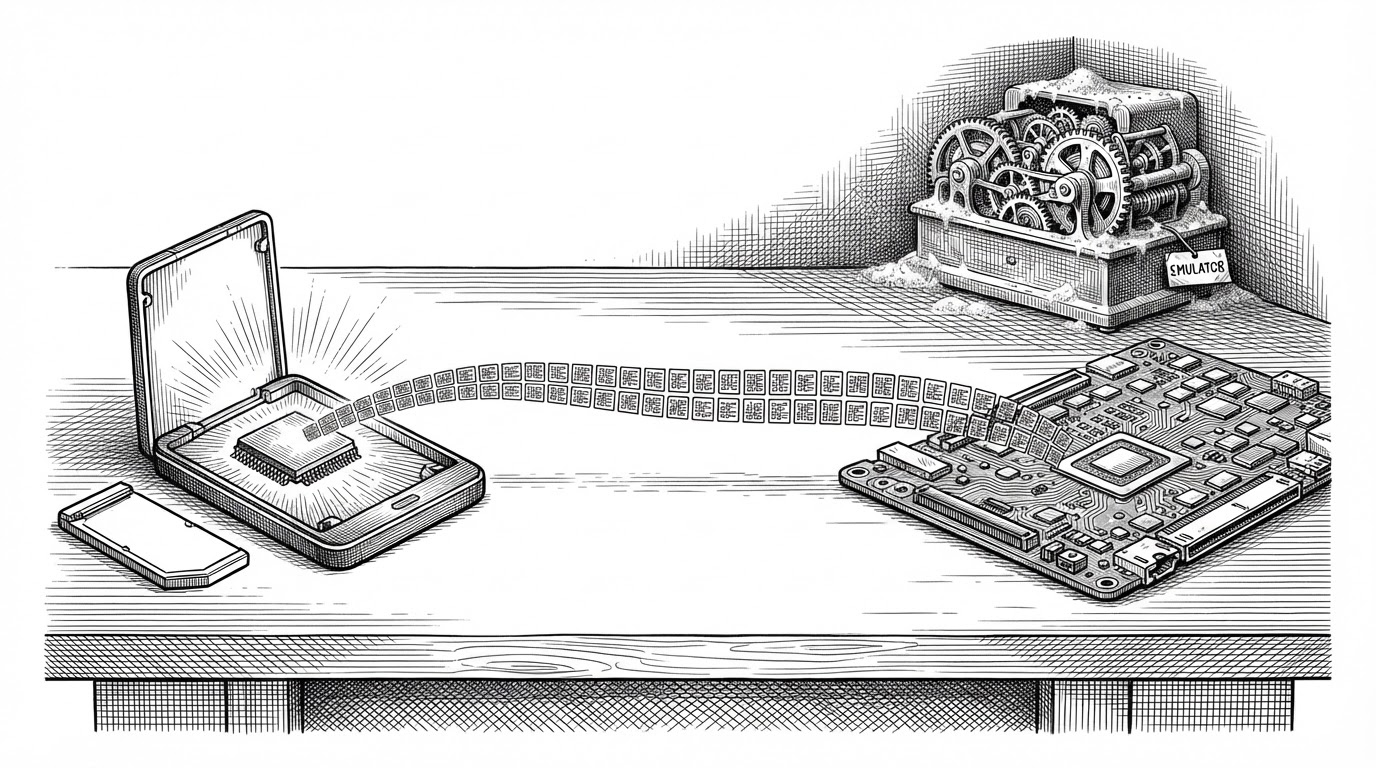
That is why `sdli1995/dlssg_for_sm86` is interesting. It claims to bring NVIDIA’s own frame-generation path to RTX 30-series and RTX 20-series cards, without translating the feature into FSR3 and without depending on the original shipped DLL.
SM86 route targets RTX 30-series GPUs; SM75 targets RTX 20-series GPUs. Physical validation currently uses RTX 3080 Ti.
That distinction matters. A translation layer can be useful, but this repo’s pitch is sharper: make unsupported NVIDIA hardware behave like it belongs on the native NVIDIA path.
From proxy DLL to native runtime
The project started in the familiar modder’s zone: drop in a DLL, intercept what the game loads, and forward the ordinary calls while catching the special ones. But the current implementation is more ambitious than a wrapper around an unpacked vendor binary.
The repo’s documentation describes a native host that embeds the qualified kernel replacements, decoder, pair, merge, residual-chain, and image fusions directly. In other words, the project is not simply passing through to a hidden vendor runtime. It is reconstructing enough of the runtime path to stand on its own.
That is the technical leap. It turns a feature gate into an implementation problem.
How the drop-in mod gets into the game
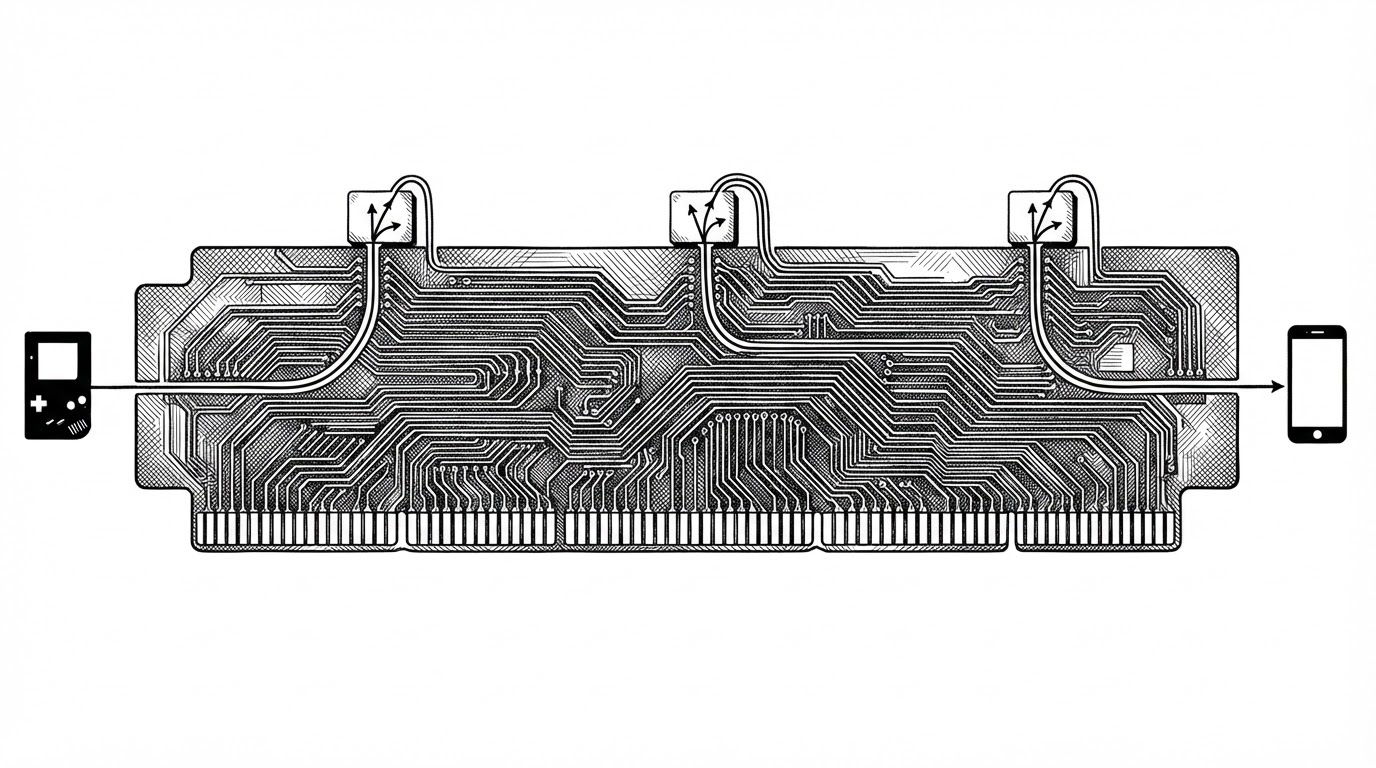
The entry point is the part most users never think about. Games commonly load `version.dll`, and some load other system libraries instead. This repo uses that habit against the platform by placing a proxy DLL in the game directory, where the game loads it before the real system library.
; Typical setup pattern
Game.exe
├─ version.dll        ; proxy entry point
├─ dlssg_sm86.ini     ; routing and performance config
└─ altnative/
   ├─ dxgi.dll
   └─ winhttp.dll
Once the proxy is in place, ordinary Windows calls can be forwarded to the real DLL while DLSSG-specific requests get intercepted and redirected. The same pattern can be adapted for games that do not touch `version.dll`, which is why the repo keeps alternates in `altnative/`.
This is one of the oldest tricks in PC modding, but the interesting part here is what the proxy eventually hands off to: native compute paths tuned for different GPU generations.
Why PTX, routing, and kernel fusion matter

This is where the repo stops being a neat proxy trick and becomes a compute story. The configuration file points `Router=SM86/SM75` at the right architectural path, and `KernelImage=PTX` tells the driver to JIT-compile the portable intermediate code locally.
That matters because PTX buys flexibility. Instead of shipping a separate binary for every possible driver and GPU combination, the project hands the driver a portable kernel image and lets NVIDIA’s stack do the last-mile compilation work.
The documentation also points to optimized convolutions, decoder, pair, merge, and residual-chain fusions. Those are the sort of low-level changes that usually disappear into a benchmark chart, but here they are the reason the mod can chase real performance instead of just functional parity.
The native host integrates the qualified exact kernel replacements, decoder, pair, merge, residual-chain and image fusions; hardware bilinear is optional.
The speed vs. accuracy bargain
| Mode | What it optimizes for | What you give up | Why it matters |
|---|---|---|---|
| Exact | Byte-for-byte fidelity | GPU time | Best when you care about matching reference output |
| Fast with HardwareBilinear | Throughput | Some exactness | Best when frame generation cost is the bottleneck |
| Native route without translation | NVIDIA’s own runtime path | Compatibility work | Best when you want NVIDIA-style output on unsupported cards |
The most revealing toggle in the project is `HardwareBilinear`. It is easy to read as a footnote, but it is really the thesis in miniature. One path tries to match the reference output exactly. The other chooses speed by letting the hardware sampler do more of the work.
That is the right kind of compromise for this repo. It does not sell magic. It decides where to spend GPU time, then exposes the choice plainly.
What makes this different from FSR3 unlocks
| Project | Target hardware | Backend | Native NVIDIA runtime | Main tradeoff |
|---|---|---|---|---|
| Official DLSSG | Supported RTX hardware | NVIDIA shipped stack | Yes | Hardware gate |
| dlssg-to-fsr3 | Wide compatibility | FSR3 translation | No | Different interpolation model |
| dlssg_for_sm86 | RTX 20 and 30 series | Native NVIDIA path | Yes, as implemented by the mod | Trust, complexity, and unofficial support |
This comparison is the real editorial point. `dlssg-to-fsr3` is about translation. `dlssg_for_sm86` is about making NVIDIA’s own stack run where NVIDIA did not officially bless it.
That changes how people evaluate the output. Frame pacing, artifacts, and image character are not generic “frame generation” questions. They depend on which backend is doing the interpolation and how native that backend really is.
What the numbers suggest, and what they do not
The project reports aggressive modes, including 2x, 3x, and 4x generation paths, along with performance numbers that show real gains in frame delivery. That is the appeal, and it is not trivial on Ampere or Turing hardware.
But higher output FPS is not the same thing as lower latency. Frame generation can make motion look smoother while still adding compute overhead, and the repo’s own mode switches make that tradeoff visible rather than hidden.
That honesty is useful. It keeps the article from collapsing into a simple “old GPU good now” story.
The trust problem every reader should notice
A proxy DLL in a game directory is always going to trigger a security reflex, and this repo deserves that reflex. Users are asked to run a modded binary, watch for antivirus alerts, and trust code that sits directly in the game’s load path.
That does not make the project illegitimate. It does mean the engineering story and the trust story are inseparable. For a mod like this, distribution, transparency, and provenance are part of the product.
Your game now supports DLSS multiframegen on your RTX 30 card. Video proof of it running on an RTX 3080 12GB: https://www.youtube.com/watch?v=KNVr5pHAygI
That is the tension at the heart of `dlssg_for_sm86`. It is clever enough to be impressive, and invasive enough to demand skepticism. Both reactions are correct.