`mern-social`: The MERN Social Graph, Explained in Plain Code
A book companion project that doubles as a readable blueprint for follower relationships, feed generation, SSR, and the trade-offs behind a deliberately simple social app.
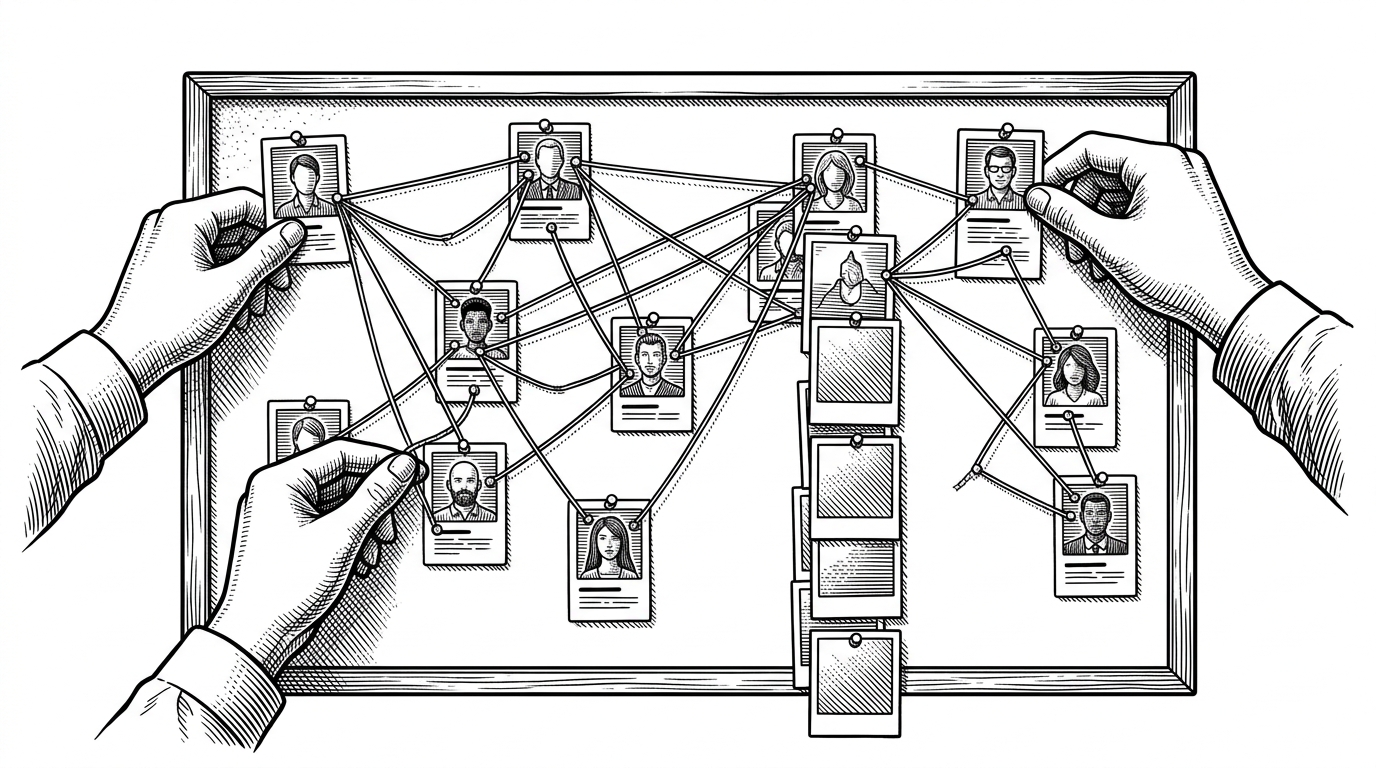
- `mern-social` is most useful as a teaching machine because it turns social networking into a graph you can actually read.
- Its follow system duplicates relationship data on purpose, trading write complexity for simple queries and obvious behavior.
- The newsfeed logic works like a relational query in NoSQL clothing, which makes the app feel less magical and more instructive.
- SSR, auth, and UI choices are there to complete the system, but the real value is how legible the whole stack stays.
The quickest way to understand mern-social is to stop thinking of it as a demo app. It is a lesson plan with a social feed attached.
That matters because the repo does something rare. It shows how a modern social app can be built from a small set of readable primitives: follower arrays, a feed query, server rendering, and auth that does not hide its seams.
The app is really a lesson in social graphs
The best entry point is the follow system. It is the clearest expression of the repo’s design philosophy: keep the model visible, keep the data shape simple, and let the code teach the relationship between users instead of abstracting it away.
Follow someone, update two sides, keep the model simple
The follow action uses a pragmatic duplication pattern. When one user follows another, the app updates both the current user’s following array and the target user’s followers array. That makes writes slightly more expensive, but it keeps reads easy and the data model legible.
// server/controllers/user.controller.js
// follow relationship is written to both users

exports.addFollowing = (req, res, next) => {
  User.findByIdAndUpdate(
    req.body.userId,
    { $push: { following: req.body.followId } },
    { new: true }
  )
  .then(result => {
    req.profile.password = undefined;
    req.profile.salt = undefined;
    res.json(result);
  })
  .catch(err => next(err));
};

exports.addFollower = (req, res, next) => {
  User.findByIdAndUpdate(
    req.body.followId,
    { $push: { followers: req.body.userId } },
    { new: true }
  )
  .then(result => {
    result.password = undefined;
    result.salt = undefined;
    res.json(result);
  })
  .catch(err => next(err));
};
That pattern is not clever. It is readable. And for a teaching repo, readable is the point.

The feed is a relational query wearing NoSQL clothes
Once the graph is in place, the feed logic reads like something from a database textbook. Find the posts written by people you follow. Sort them by creation date. Populate the author and comment data so the result is ready for display.
| Problem | What the repo does | Why it helps |
|---|---|---|
| Feed generation | Query posts where `postedBy` is in the following list | Makes the relationship logic explicit |
| Sorting | Order by `created` | Keeps the newest content first |
| Hydration of data | Populate author and comments | Returns display-ready results without extra client hops |
SSR is the project’s quiet power move
The server-rendered entry path is where the repo starts to feel more production-shaped than most tutorials. renderToString, Material-UI’s ServerStyleSheets, and client-side hydrate() make the first paint clean and the transition to the browser smooth.
This project is the complete code for the application built in the book 'MERN Quick Start Guide'.
That quote frames the repo correctly. It is not trying to be a platform. It is trying to be a complete, legible implementation that you can study end to end.
Authentication is intentionally redundant
The auth story is deliberately a little messy in a useful way. The server sets a JWT cookie, while the client can also store and attach the token from session storage. That redundancy makes the system flexible, even if it is not the sleekest possible design.
// server/controllers/auth.controller.js
res.cookie('t', token, { expire: new Date() + 9999 });

// client/helpers/auth-helper.js
if (typeof window !== 'undefined') {
  sessionStorage.setItem('jwt', data.token);
}

// client/api/api-user.js
headers['Authorization'] = `Bearer ${jwt}`;| Approach | Strength | Cost |
|---|---|---|
| Cookie-based token | Works naturally for browser sessions | Adds server and browser coordination |
| Session storage plus header | Simple for API calls and client helpers | Duplicates token handling logic |
| Purely server-managed auth | Cleaner authority boundary | Less flexible for mixed client flows |
The repo teaches by staying legible
The broader architecture follows a controller-route-model shape that experienced developers will recognize immediately. That is a feature, not a limitation. It keeps each step visible enough that a reader can trace a request without decoding framework magic.
| Pattern | Effect on the reader | Trade-off |
|---|---|---|
| Controller-route-model | Easy to trace behavior | Less abstraction, more repetition |
| Explicit error handling | Failures are visible | More boilerplate |
| Familiar libraries | Faster mental mapping | Less novelty |
That readability is the teaching strategy. The repo wants you to learn the shape of a real app, not memorize a clever pattern.
Where the design choices get opinionated
Some choices are clearly optimized for simplicity over scale. Storing images as Buffers in MongoDB keeps the stack self-contained, but it also pushes media and database concerns into the same place. Material-UI helps the UI stay coherent, while the older React and Webpack stack reflects the project’s era more than current fashion.
| Choice | Why it works here | What it costs |
|---|---|---|
| Image Buffers in MongoDB | Fewer external dependencies | Database bloat and scaling friction |
| Material-UI heavy styling | Consistent look and fast UI assembly | More framework coupling |
| Older React and Webpack stack | Matches the book and keeps the repo stable | Not the modern default for new projects |
Those trade-offs are not mistakes in the context of the repo. They are the price of a codebase that is trying to teach, not dazzle.
Why this still matters among newer tutorials and boilerplates
Compared with newer tutorial repos and hosted social app platforms, `mern-social` is less about speed to launch and more about comprehension. It gives you a complete system you can read, not just a service you can click together.
| Option | What you get | What you lose |
|---|---|---|
| `mern-social` | A full MERN app with visible plumbing | Modern polish and current-stack defaults |
| Generic boilerplate | Fast starting point | Less narrative structure and less guidance |
| Hosted social platform | Instant infrastructure | Control over the architecture and learning value |
That is why the project still earns attention. It teaches the architecture of a social app by refusing to hide the architecture.