starlingbank/developer-resources: the README that turned a bank into a platform
A curated map of SDKs, starter kits, and community tools that shows how Starling’s API escaped the app and started living in terminals, chat windows, menu bars, and budgeting software.
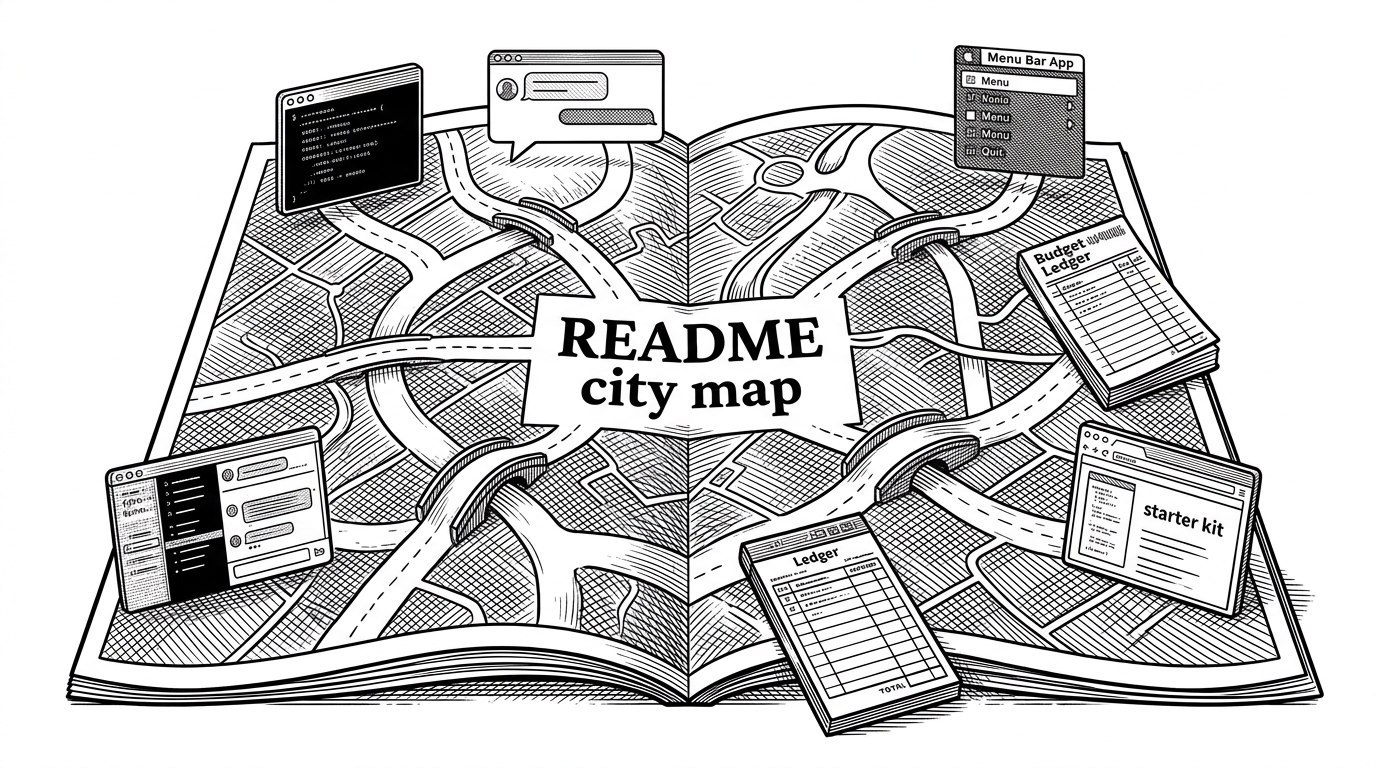
- This repository is a public control panel for a banking platform, not a conventional codebase.
- Starling turns curation into product design by putting official tools and community projects in one trusted place.
- Starter kits and webhook examples matter because they shorten the path to a first successful integration.
- The real contrast is between a living ecosystem map and the static docs pages most banks settle for.
The README that behaves like a platform
The strangest thing about starlingbank/developer-resources is how little software it contains. That is exactly why it matters. The repository behaves like a public control panel for Starling’s developer ecosystem, and the README is the interface.
That line lands because the repo is not trying to impress you with mechanics. It is trying to lower the friction between curiosity and first use. For a bank, that is a meaningful product decision, not a documentation flourish.
What Starling is actually curating
The structure is simple on purpose. A root README carries the narrative, while `.github/CODEOWNERS` keeps the source of truth under Starling’s control. The bank is not handing the wheel to the crowd, but it is clearly inviting the crowd to extend the map.
The categories tell the story. Official tools include the JavaScript SDK and Web App Starter Kit. Community entries broaden the reach with Java, .NET Standard, Rust, Swift, and a set of projects that push the API into very different environments.
How one API fans out into many surfaces
The best way to read the repository is by surface, not by language. A single banking API can show up in a terminal, a menu bar, a chat window, a budgeting app, or a spreadsheet workflow. Once you see that pattern, the list stops looking like miscellany and starts looking like product strategy.
That spread matters because each surface solves a different job. A menu bar balance app is about glanceability. A CLI is about automation and power users. A budgeting sync tool is about reducing manual work. A chatbot or browser starter kit is about meeting developers where they already are.

Why the starter kits matter more than the SDK list
SDKs are table stakes. Starter kits are the real conversion tool. They collapse the gap between reading about an API and seeing it work in a browser, which is where most developer interest usually dies.
Webhook examples do the same thing on the backend side. They turn abstract integration advice into a concrete handshake, which is the part of fintech onboarding that usually creates drag. The repo quietly optimizes for first success, not just first impression.
| Dimension | Starling developer-resources | Typical bank developer portal | Generic awesome list |
|---|---|---|---|
| Primary purpose | Curate a living ecosystem around one API | Document endpoints and compliance details | Aggregate links without a strong product opinion |
| Who controls it | Starling, with clear governance | The bank, usually behind a login wall | A maintainer or community group |
| What it foregrounds | Starter kits, SDKs, webhook examples, and community surfaces | Reference docs and authentication flows | Breadth of projects and discovery |
| How onboarding works | It points developers toward the shortest path to a working integration | It often starts with policy, credentials, and static docs | It leaves the reader to self-navigate |
| Why developers trust it | Official resources sit beside community tools under one curated roof | Trust comes from institutional authority, not ecosystem shape | Trust depends on the maintainer’s taste |
| What makes it unusual | It treats curation as product design | It behaves like a conventional portal | It is broad, but rarely opinionated |
That comparison is the point. Starling is not just publishing an API. It is shaping the way developers discover, try, and extend that API across tools and languages.
What this says about bank-as-platform
The repository reads like a public artifact of platform thinking. The bank is not only exposing endpoints. It is also endorsing use cases, setting expectations, and making the ecosystem legible enough for people to build around it. That is why the README feels like the product surface.
Most bank developer pages stop at documentation. Starling goes one step further and turns the ecosystem itself into a navigable object. When the map is this good, the map becomes part of the platform.