The Standard Library for AI Agents: Inside sickn33/antigravity-awesome-skills
How a massive collection of Markdown files turned prompt engineering into a versioned, installable dependency tree for the agentic era.
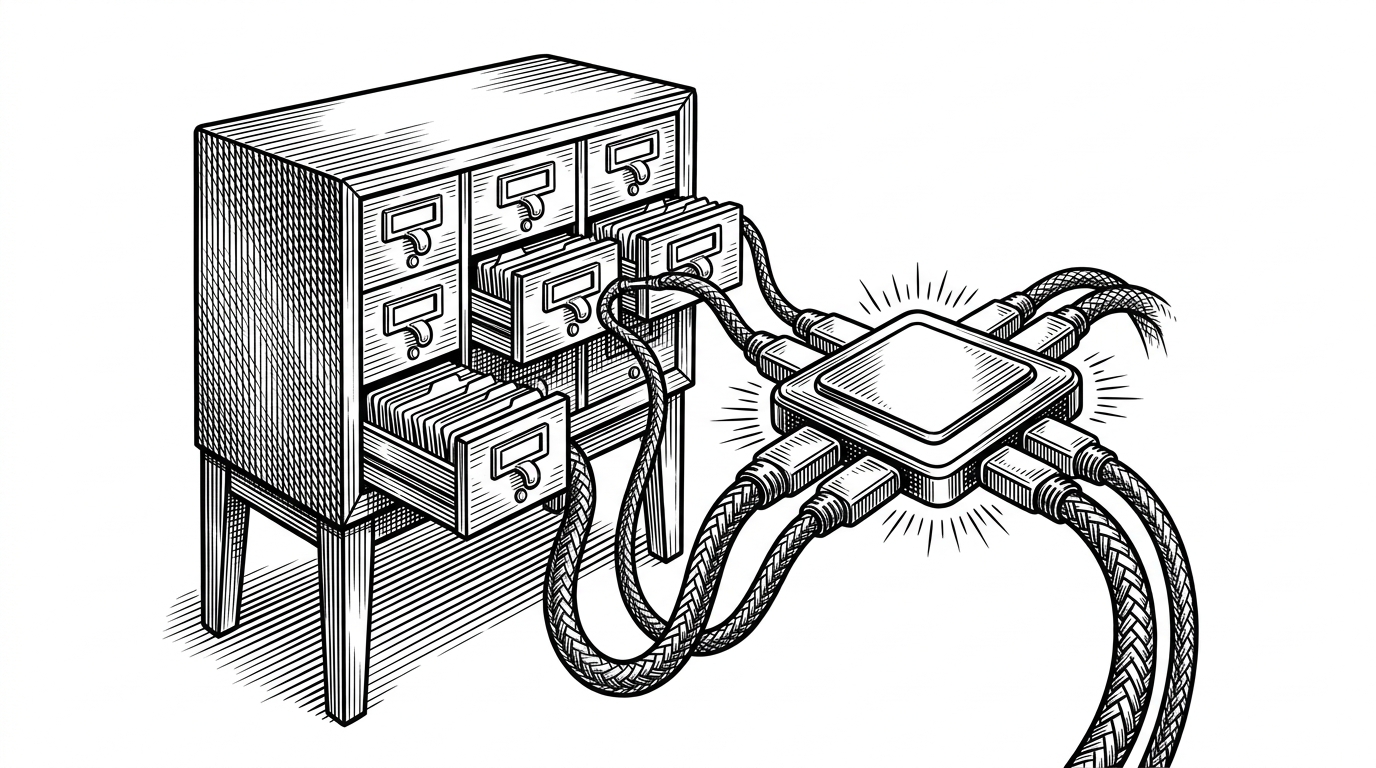
- The repository transforms fragmented markdown prompts into an NPM-installable standard library for AI agents.
- An intent-recognition registry uses fuzzy triggers to allow LLMs to autonomously select the right tool without human intervention.
- Multi-step workflows compile plain-text English into Directed Acyclic Graphs (DAGs) for complex task orchestration.
- Aggregating hundreds of community skills has sparked a new open-source debate over the licensing and attribution of plain-text AI instructions.
The End of Copy-Paste
For years, developers have treated prompt engineering as an art form. We saved clever snippets in Notion docs, pasted them into ChatGPT, and hoped for the best. The "Awesome List" was the peak of this era: massive Markdown files filled with links to other Markdown files. It was static, manual, and prone to breaking silently.
The sickn33/antigravity-awesome-skills project kills the Awesome List. It packages over 1,300 plain-text instructions into an npm distributed CLI tool. English is now treated as a first-class software dependency. You can install a text file to teach an AI how to code.
| Legacy Awesome Lists | Agentic Package Manager |
|---|---|
| Static Markdown | NPM installable |
| Manual copy and paste | CLI invoked |
| Human-read | Machine-read (triggers) |
| No versioning | Semantic versioning |
| Breaks silently | Python-validated schemas |
The Intent Registry Engine
The engine room of this repository is not the Markdown files themselves. It is the sophisticated JSON registry that coordinates them. The project acts as a database mapping human-readable skill names to file paths, categories, and execution triggers.
By providing an array of fuzzy triggers in data/catalog.json, the system helps an LLM autonomously invoke the right tool. If a user asks an agent to audit authentication logic, the agent scans the registry for keywords like stride or owasp and pulls the corresponding security skill.
{
  "id": "007-security-audit",
  "name": "Security Audit Framework",
  "path": "skills/security/007-security-audit.md",
  "triggers": ["stride", "pasta", "owasp", "auth audit"]
}Compiling English into Workflows
Single-shot prompts are fragile. To execute complex tasks, agents need orchestration. The workflows.json implementation moves the project beyond isolated skills by creating Directed Acyclic Graphs (DAGs) of instructions.
An agent uses these predefined chains to autonomously execute multi-step processes. A workflow like "ship-saas-mvp" chains together planning, building, and testing modules, effectively turning the AI from a junior coder into a project manager.
Defensive Prompting and Risk Labels
When agents execute code autonomously, security is paramount. The repository implements a security-first approach through its sync:risk-labels script. This metadata labels every skill as safe or unknown.
This acts as an Android-style permission manifest. Before an agent executes a terminal command derived from a Markdown file, it checks the risk metadata. This is a critical step toward a secure ecosystem for autonomous execution.
The Aggregation Machine
The project's explosive growth is fueled by an aggressive aggregation strategy. It ingests hundreds of skills from other community repositories. This scale provides massive utility but also generates friction.
Open-source original authors have noted their prompt files being absorbed into the larger standard library. This highlights the emerging "plagiarism vs. aggregation" debate in AI. The ecosystem is still figuring out how to license and attribute plain-text instructions.
没想到连 Skill 都难逃洗稿的命运。 前两天在 Skill sh 上查看自己的 Skill 下载数据时,发现 daily-news-report 这个 Skill 的下载量居然比我自己的仓库还高,感觉有些奇怪,便顺手查了一下来源。 结果发现流量都来自 GitHub 上的 antigravity-awesome-skills 仓库——点进去一看,就是把我的 Skill https://t.co/W4VtAnKva6