GridCraft Rebuilt Excel in Rust and Turned Every Command Into an API
A clean-room spreadsheet where one engine drives a desktop GUI, a browser build, a CLI, and an MCP server for AI agents.
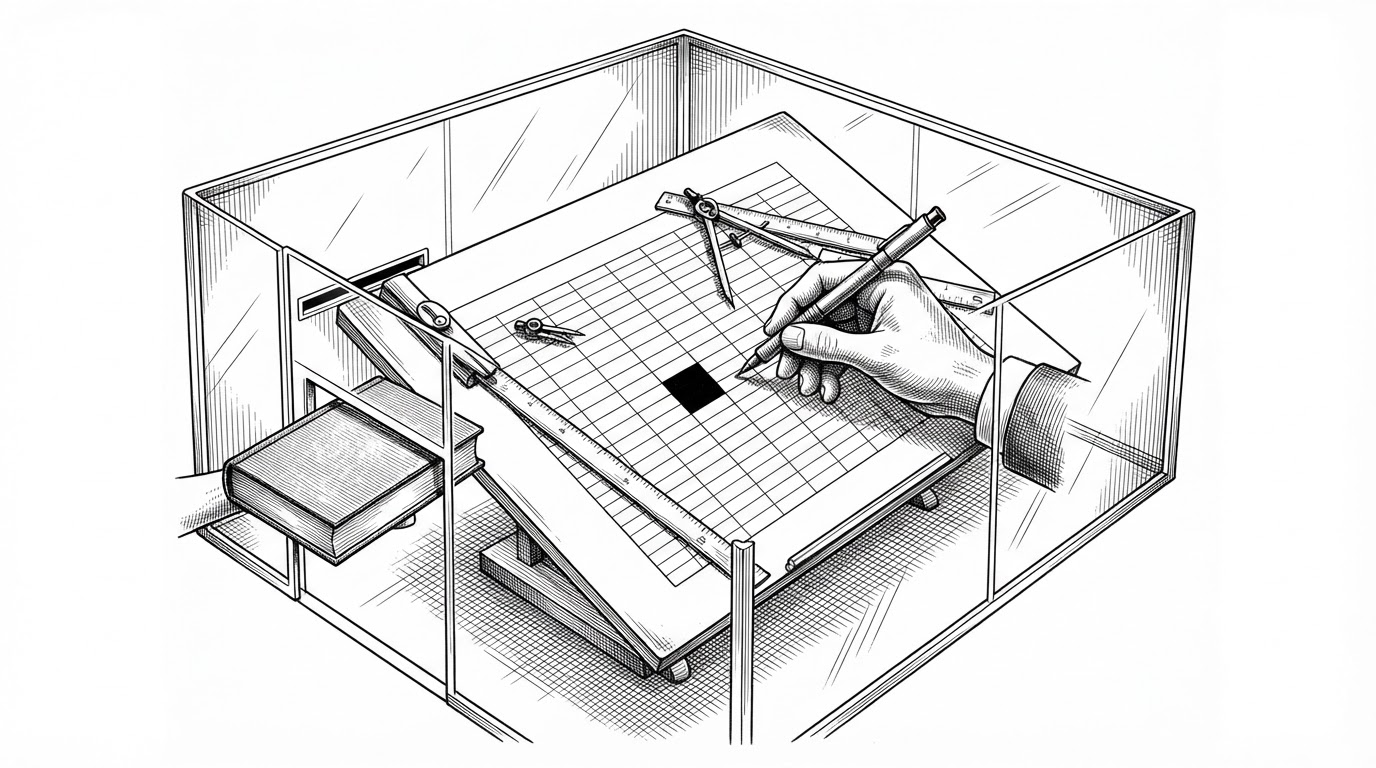
- GridCraft treats the spreadsheet engine as the product and every interface as a thin client of it, so the desktop GUI, browser build, CLI, and an MCP server all speak the same command vocabulary.
- The project bans panics, unwraps, and unsafe code at the compiler level, a data-integrity stance for software that eats arbitrary user input.
- Where Excel silently shows 0 for an unresolved circular reference, GridCraft keeps the error explicit as a first-class value.
- It is genuinely alpha: the project estimates roughly half of real-work readiness and recommends mature tools for exchanging complex workbooks.
One Engine, Four Front Doors
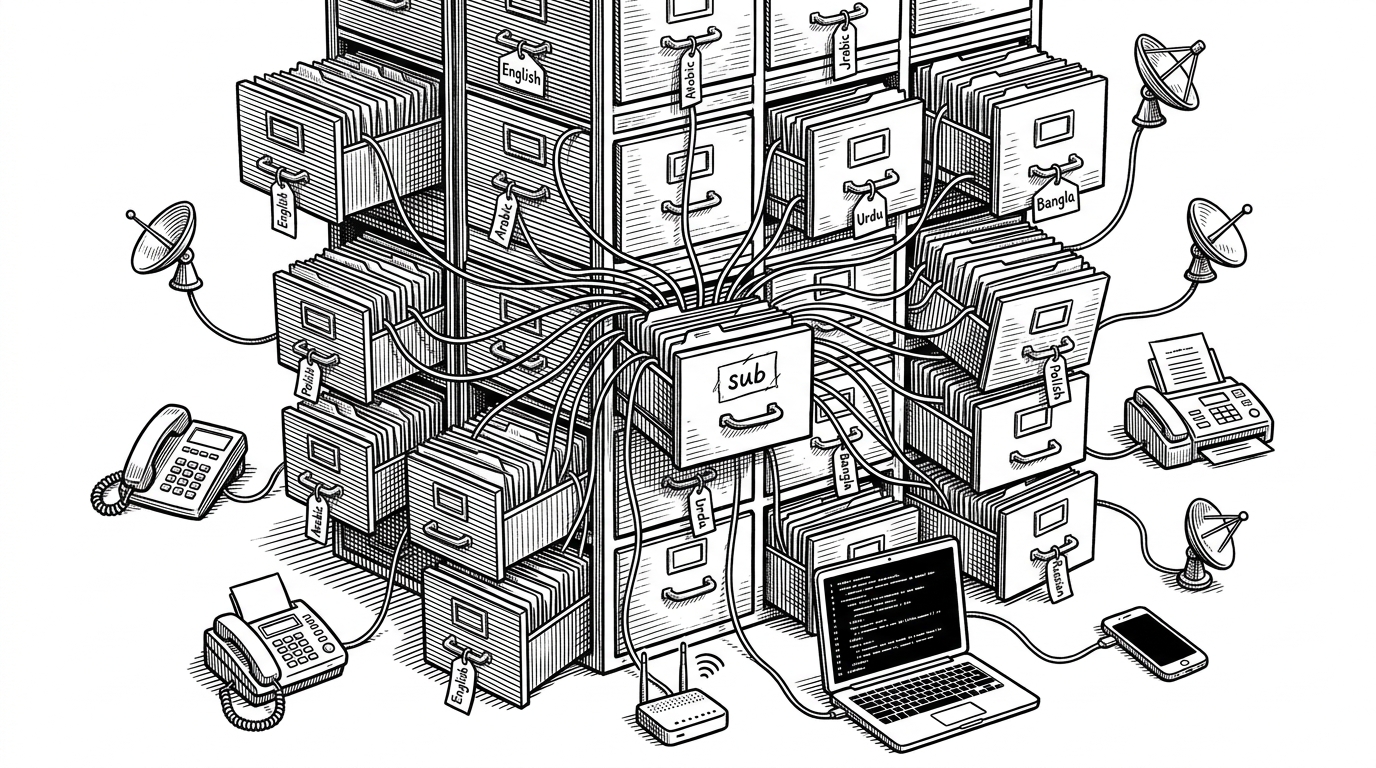
Press Enter in the GridCraft desktop app and a command object fires. That exact object could just as easily have arrived from a browser tab, a shell script, or an AI agent talking over the Model Context Protocol. The desktop window is not the application. It is one of four front doors onto the same engine.
The four heads are a native desktop app built on eframe and egui, the same UI compiled to WebAssembly for the browser, a headless gridcraft-cli, and an MCP server for agents. Behind all of them sits crates/engine, which exposes a Session type and more than twenty command modules. Below that, crates/core holds the coordinate system, values, and error types with no workspace dependencies at all. The engine is the single integration layer, and everything else is a rendering of it.
Most "AI plus spreadsheet" projects bolt an assistant onto a legacy engine. GridCraft inverts that. It built the engine first and made agent-drivability a first-class requirement rather than a plugin, which is why the same verbs that move a cell in the GUI can move one from a language model.
A fast, open-source, clean-room take on the Excel workflow.
A Studio, Three Office Clones, and a Clean Room
GridCraft comes from ArtCraft, a studio led by Brandon Thomas, and it shipped alongside two siblings: WordCraft for documents and DeckCraft for presentations. All three are Rust rewrites of the Office formats, published under the storytold GitHub organization. GridCraft handles the spreadsheet.
The "clean-room" label is doing real work. It means the XLSX behavior is reproduced from specification and observation rather than copied code. For a file format this old and this idiosyncratic, that is the harder path. Excel's coercion rules, its date serials, its error semantics, and its bijective column naming are all quirky enough that reproducing them from a spec is its own kind of research project.
The project's own framing is deliberately humble about where it stands. The repository labels GridCraft alpha and says the core workflow works end to end while depth, fidelity, and file compatibility are still rough. That framing matters for everything that follows: this is a live experiment, not a finished replacement.
No subscription, no licence server, no telemetry.
What Actually Runs When You Press Enter
A command in GridCraft is data, not a method call buried in a UI handler. It enters through one of the four heads, passes into the Session, mutates a copy-on-write snapshot of the workbook, and triggers a recalculation that ripples only through the cells that actually depend on the change.
That last part is why it stays fast. The engine maintains a dependency graph, so editing A1 does not recompute the whole sheet. It recomputes A1's transitive dependents and nothing else. The grid itself is virtualized, drawing only the cells in view. Together those two choices are what let a from-scratch spreadsheet feel responsive rather than sluggish.
The diagram below makes the architecture concrete. Send a command from any front door and watch it travel into the Session, mutate the workbook, and return a response only to the door that asked.
The Spreadsheet That Refuses to Panic
The first thing a reader sees in several GridCraft source files is a lint block that bans the usual escape hatches. This is enforced by the compiler, not by convention.
#![deny(clippy::unwrap_used, clippy::expect_used, clippy::panic,
        clippy::unimplemented, clippy::todo, clippy::unreachable)]
The workspace also sets unsafe_code = "forbid" globally. For a spreadsheet, this is not a style preference. A spreadsheet eats arbitrary user input, and a panic in the formula parser is a data-loss event. Where other code reaches for .unwrap(), GridCraft reaches for unwrap_or_else, tolerates a poisoned mutex rather than crashing, and returns Option from its coordinate arithmetic using checked and saturating adds.
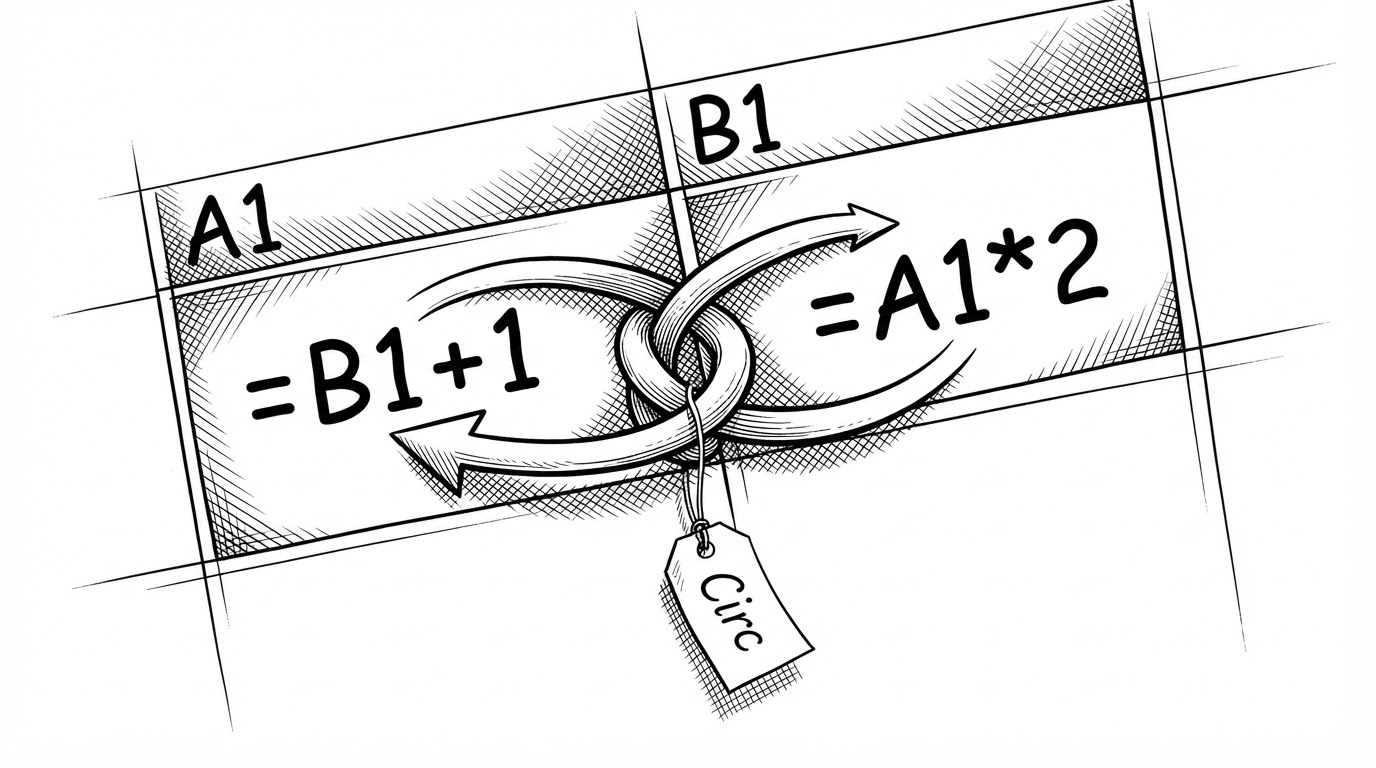
The sharpest expression of the same idea is the error type. GridCraft mirrors Excel's full error set, from #DIV/0! to #SPILL!, and adds one of its own: CellError::Circ, a circular reference that could not be resolved. Excel shows a silent 0 for this case, which is a well-known source of quietly wrong answers in real workbooks. GridCraft keeps it visible. A spreadsheet that refuses to panic and refuses to lie is one coherent stance.
Where GridCraft Sits
The honest axis here is not better or worse. It is shape. GridCraft is the only row below that is simultaneously Rust-native, WebAssembly-capable, and exposes a documented agent command surface. The mature rows win on decades of real-file fidelity.
| Project | Native stack | Agent control surface | Format focus | Maturity |
|---|---|---|---|---|
| GridCraft | Rust, egui/eframe, WASM | JSON channel, MCP server, CLI | XLSX native, CSV/TSV/JSON/HTML export | Alpha, self-reported ~50% real-work readiness |
| Excel / Microsoft 365 | Proprietary native | Copilot and add-ins | XLSX, the compatibility benchmark | Decades of production use |
| LibreOffice Calc | C++, native | None documented | ODF native, strong OOXML filters | Mature, stable release branches |
| ONLYOFFICE Desktop Editors | C++, native | None documented | OOXML compatibility focus | Mature for Office-format exchange |
| Apache OpenOffice Calc | C++, native | None documented | ODF, older OOXML support | Established but slow-moving |
| Google Sheets | Cloud, browser-first | Apps Script and API | Proprietary cloud format | Mature, real-time collaboration |
| Gnumeric | C, GTK | None documented | XLSX/ODF import and export | Longstanding, Linux-focused |
Maturity and compatibility figures for GridCraft are self-reported and dated. Treat them as project estimates, not independent test results. The alternative suite details draw on the comparative coverage at pasqualepillitteri.it.
Alpha, and Honest About It
The project publishes its own report card, and it is not flattering. The repository describes coverage of roughly 89% of its catalogued Excel ribbon commands and 513 of 523 worksheet functions, while estimating about 50% readiness for real work. A separate guide reports a slightly different function count of 501 of 523, which is a useful reminder that these numbers move and vary by source.
GridCraft is in alpha: the core workflow works end to end, but depth, fidelity and file compatibility are still rough.
The practical verdict follows from those numbers. For personal sheets, budgets, lists, smaller calculations, modern formulas, and experimentation with agent control, GridCraft is a genuinely novel proposition. For exchanging complex workbooks with Excel users, or for very large files, the mature tools remain the safe choice until real-world fidelity is independently demonstrated.
That is the interesting thing about GridCraft. It is not competing on compatibility today. It is running an experiment in what an office app looks like when being drivable by an agent is a requirement from the first commit, not a feature bolted on later.
weighted by what Excel users rely on, we estimate it is about 50% ready for real work.