Zero: The Programming Language That Teaches the Agent How to Repair Its Own Code
Zero is not trying to be the most pleasant language for humans. It is trying to be the most legible system for LLMs, with structured compiler output, embedded skills, and a syntax surface designed to reduce ambiguity.
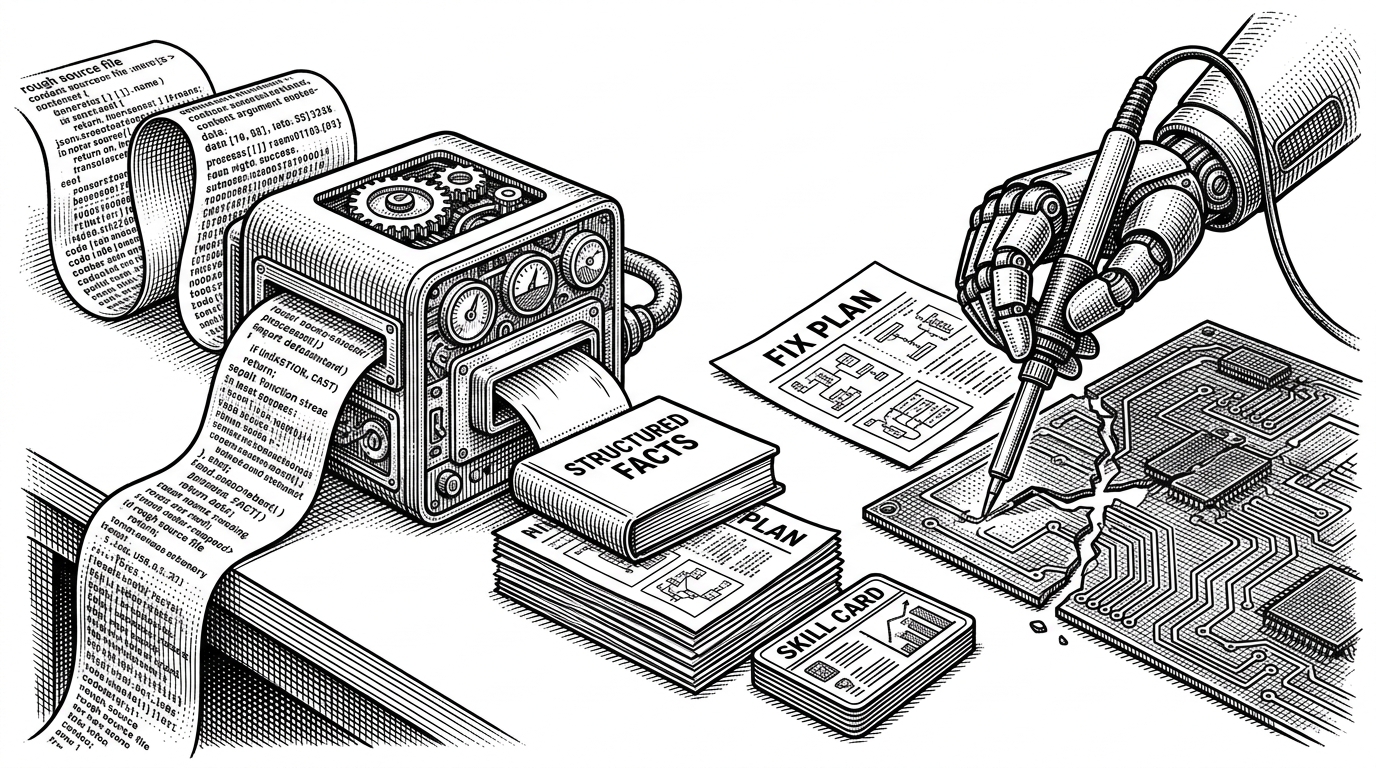
- Zero's thesis is that the compiler should emit facts and repair plans for agents, not just errors for humans.
- Its design shrinks the space of ambiguity by favoring regular syntax, explicit effects, and one obvious way to express a program.
- The project's embedded skills make documentation part of the compiler, so the tool can explain itself in the same runtime context the agent is using.
- Zero sits closer to a substrate than an orchestration library, which is why it reads like a language bet instead of another agent framework.
The compiler is not just a checker. It is a collaborator.
Zero's most unusual move is not syntax. It is output. Instead of stopping at human-readable errors, the compiler can produce structured facts and a fix plan that another program can consume. That matters because it changes the audience of the compiler from a developer at a terminal to an agent in a loop.
Zero is a programming language for agents. It's designed to make it easy to build agents that can do anything that a human can do.
That claim is bigger than diagnostics. In Zero, commands like zero check --json and zero fix --plan --json are the point. The compiler does not just say what is broken. It gives a machine-readable path to the next edit, which makes the repair loop automatable.
Zero's real product is a smaller surface area for agents
The README's design philosophy is blunt: prefer one obvious way to express most things, even when that makes code more explicit than a human might choose. That is the opposite of the syntax-rich, convenience-heavy instinct that defines many modern languages. Zero is trying to reduce the space where an LLM can get lost.
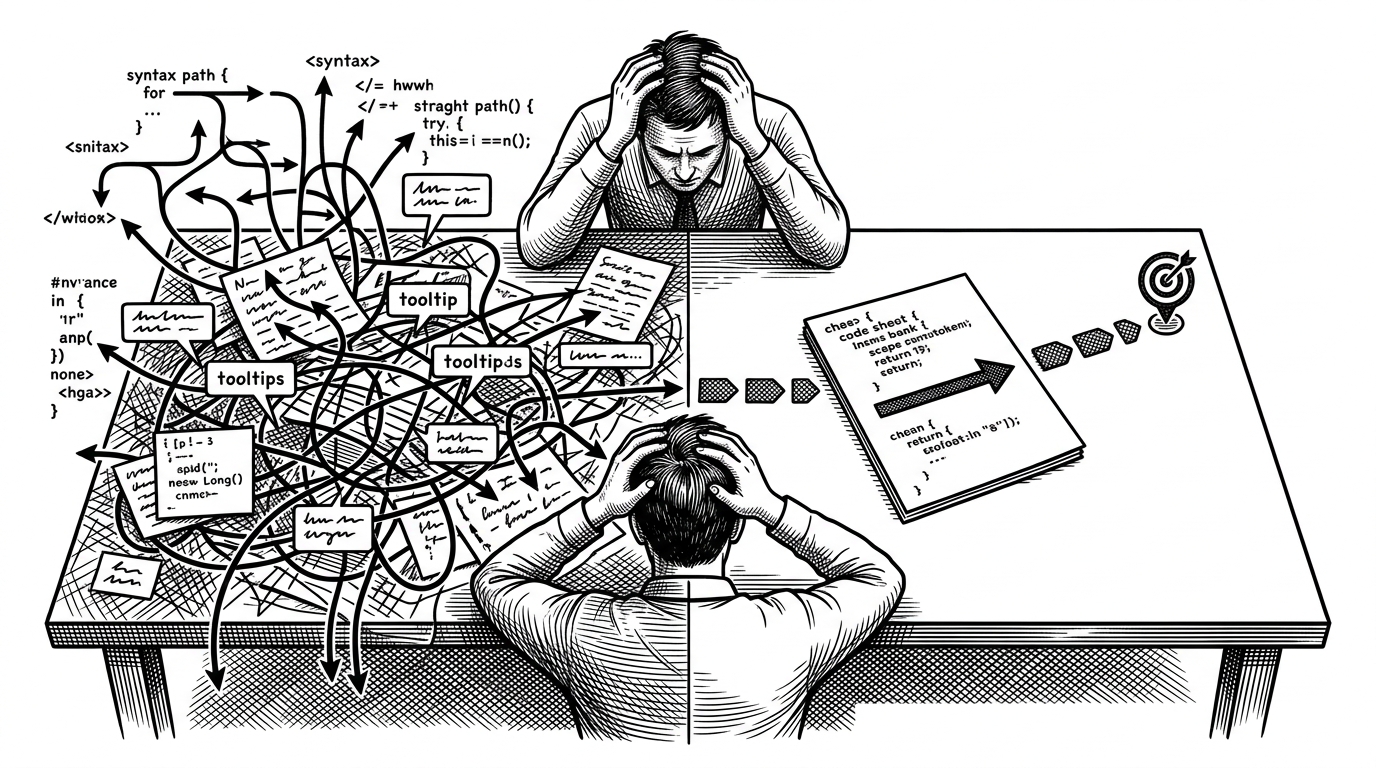
This is a language design that treats choice as risk. Fewer alternatives mean fewer hallucination paths, fewer tool misunderstandings, and fewer recovery states when the agent gets stuck. The language is not optimized for expressive freedom first. It is optimized for predictable action.
How the pipeline works: source, facts, fixes
The native compiler core is written in C, with a pipeline that moves from .0 source files through parsing, checking, borrow analysis, lowering, and emitters. The repository's conformance suite is a major clue here. It is full of positive and negative cases, including borrow violations and use-after-drop tests that define what the language must reject as carefully as what it accepts.
| Stage | Zero | Typical language toolchain |
|---|---|---|
| Parse | Regular surface, narrow syntax choices | Broader syntax, more exceptions |
| Check | Structured facts and JSON output | Plain text diagnostics |
| Repair | Fix plans designed for automation | Human reads error, edits manually |
| Safety | Borrow and drop checks locked by conformance tests | Varies by language and toolchain |
| Audience | Agent first, human second | Human first, agent later |
The important detail is not that Zero has a parser or checker. Plenty of systems do. The detail is that its output contract is designed so an agent can close the loop without translating prose into action. That is what makes the compiler feel closer to a collaborator than a gatekeeper.
The strangest feature is also the most revealing: embedded skills
Zero is a programming language for agents. It's designed to make it easy to build agents that can do anything that a human can do. Zero is a state-driven programming language. This means that you define the state of your agent and the mutators that can change that state. The orchestrator then uses an LLM to decide which mutator to call next, based on the current state and the user's input.
The embedded skills system is the most revealing part of the repo. Zero does not separate language and documentation cleanly. It embeds guidance into the compiler binary so the tool can tell the agent how to use the tool. That folds the manual into the machine.
That choice matters because the documentation stays versioned with the compiler. The agent is not reading a stale web page or generic prompt guide. It is getting the language rules from the same artifact that enforces them.
Why C, why Zig, why this much test machinery?
The engineering stack says a lot about the team's priorities. A C compiler core points toward portability and fast startup. Zig cross-compilation points toward shipping a single compiler across Linux, macOS, and Windows without a build-system drama tax. The size of the conformance suite says the project wants to be small in surface area, not small in seriousness.
| Choice | What it signals | Why it fits Zero | |||
|---|---|---|---|---|---|
| C compiler core | Low-level control and fast boot | Agents need a small, distributable tool | Zig cross-compilation | Portable distribution from one CI path | Useful when the compiler must run everywhere |
| Conformance suite | Strict behavioral contract | Agents need deterministic failures and stable edges | |||
| Embedded skills | Docs live with the binary | The tool can explain itself in context |
This is where the project stops looking like a demo. A toy can show a prompt loop. A serious system builds around reproducibility, failure modes, and test coverage that make behavior hard to misread. Zero is trying to be the second thing.
Where Zero sits in the agent framework landscape
Zero is not trying to be another orchestration library. That is the key comparison. LangChain, AutoGPT, BabyAGI, and Semantic Kernel are all about composing agent behavior from the outside. Zero wants to define the inside.
| Project | Primary abstraction | Main user | Output style | Role |
|---|---|---|---|---|
| Zero | Language and compiler substrate | Agent | Structured facts, fix plans, skills | Defines the shape of reasoning |
| LangChain | Composable chains and tools | Developer | Library objects and prompts | Orchestrates calls |
| AutoGPT / BabyAGI | Task loop | Developer and operator | Task progression | Demonstrates autonomy |
| Semantic Kernel | Skills and plugins | Developer | SDK abstractions | Integrates LLMs into apps |
That distinction is why Zero reads as a language bet. If orchestration libraries are the middleware of the agent era, Zero is trying to be the grammar underneath them. It wants to make codebases legible to agents the way good type systems make them legible to humans.
The bet behind Zero
Zero is betting that the next productivity jump in programming will come from making software more machine-legible, not merely more human-friendly. That is a real trade-off. You give up some expressive looseness so the compiler can produce fewer surprises and better instructions for the systems that will increasingly maintain the code.
That is the uncomfortable part, and the interesting part. Zero suggests that the most valuable abstraction in the agent era may not be a prettier language or a smarter prompt wrapper. It may be a tighter contract between source code, compiler facts, and the machine that has to act on them.