ZeroLang: The Programming Language Built for Agents, Not Humans
Vercel’s experimental compiler rethinks diagnostics, repair, and language design around AI systems that read structured output better than prose.
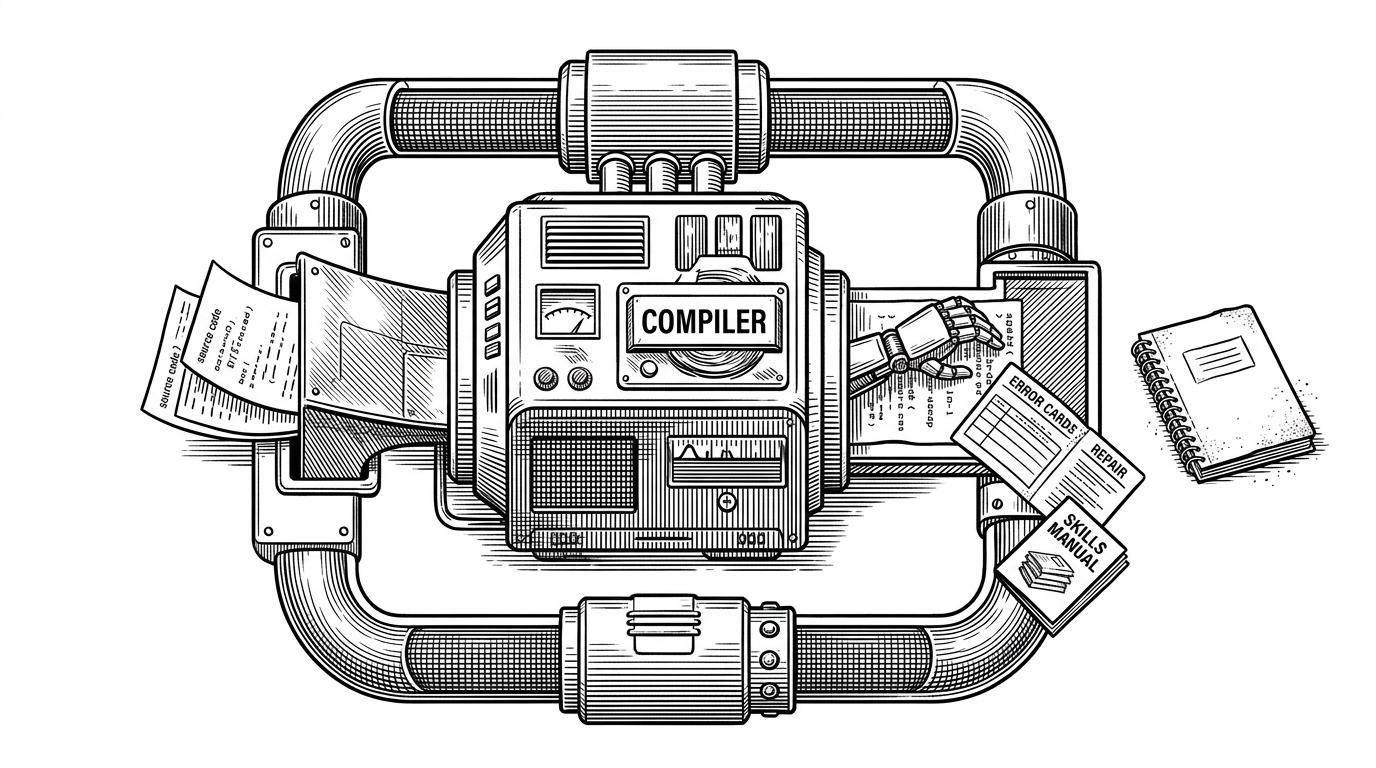
- Zero treats the compiler as a machine-readable partner, not a text-only referee.
- Its biggest bet is that structured diagnostics and embedded skills can shrink the gap between an error and a fix.
- The language intentionally favors regularity, explicit capabilities, and predictable memory over human-facing flourish.
- Zero is less a replacement for Rust or Zig than a reorientation of the toolchain around agentic code repair.
Most programming languages assume the first reader is a person. Zero starts somewhere else. It assumes an agent will compile, inspect, repair, and compile again, and it shapes the whole stack around that loop.
That sounds subtle until you look at the output. Zero does not just print prose errors and hope an LLM can infer the rest. It emits structured diagnostics, repair metadata, and version-matched guidance that a machine can consume directly.
The Compiler That Talks Back in JSON
The most useful way to read Zero is as a feedback system. Source code enters, the compiler analyzes it, and the result is not just pass or fail. It produces machine-readable facts that point toward the next edit.
I wanted a systems language that was faster, smaller, and easier for agents to use and repair. Explicit capabilities. JSON diagnostics. Typed safe fixes. Made for agents on day zero.
That quote gets at the design center. Zero is not trying to make the compiler friendlier in the usual sense. It is trying to make the compiler legible to the thing doing the repetitive work.
Why Zero Rejects Human Ergonomics as the Default
Zero’s syntax and semantics lean hard into regularity. Fewer special cases means fewer surprises for an agent that is sampling a language model over and over inside a repair loop. Verbose can be a feature when the reader is a machine.
The tradeoff is clear. A human may prefer shorthand and idiom. Zero prefers explicit capabilities, predictable control flow, and a surface area that resists misreadings.
Inside the Native Compiler
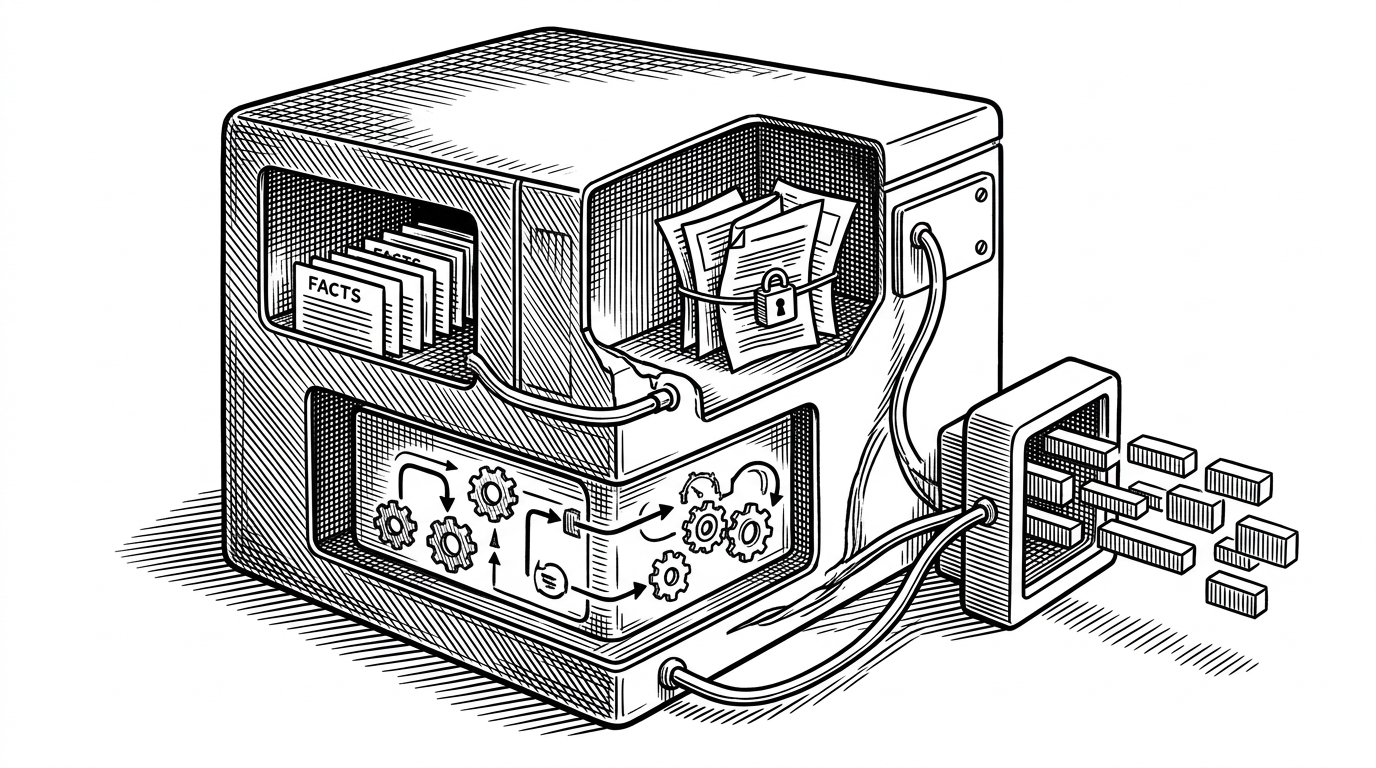
Under the hood, Zero is unusually direct. The native compiler is written in C11, uses arena allocation patterns, and avoids the heavy runtime layers that often hide what a build is doing. That matters because determinism is part of the product.
The repo structure reinforces the point. There is a native compiler, conformance fixtures, benchmarks, and tooling to embed skill data into the binary. This is not a research toy with a thin shell around a language sketch. It is a compiler built to be inspected.
source code -> parse -> analyze -> structured diagnostics
                         -> repair plan
                         -> embedded skills
                         -> agent patches code -> recompile
The key technical choice is to keep output structured. When a compiler can emit JSON diagnostics, graph data, and repair guidance, an agent does not need to translate prose into action. It can act on the data directly.
The Real Trick: Skills Embedded in the Binary
Zero’s most distinctive idea is that the compiler ships with its own guidance. The skills system embeds version-matched help inside the binary, so an agent is not left to guess from stale docs or old blog posts.
That is a small phrase with a big consequence. It turns documentation into part of the executable contract. The agent does not browse for the manual. It queries the same version of the language it is actually compiling against.
This is the design move that makes Zero feel new. It is not just that the compiler knows more. It is that the compiler can hand that knowledge back in a form an agent can immediately use.
Borrow Checking, But Make It Agent-Friendly
Zero also leans into explicit memory discipline. The borrow checker and provenance tracking aim to preserve safety without forcing the whole language into Rust’s complexity profile.
That does not make it Rust-lite. It makes it easier to see where data came from, what can still use it, and why a change failed. For an agent, that visibility is the difference between a useful failure and a dead end.
| Dimension | Zero | Rust | Zig | Go |
|---|---|---|---|---|
| Primary user | Agent first | Human systems programmer | Human systems programmer | Human developer |
| Diagnostics | Structured facts and repair metadata | Rich human-facing errors | Straightforward errors | Plain errors |
| Guidance model | Embedded skills in the binary | External docs and compiler messages | External docs | External docs |
| Memory model | Explicit and predictable | Strict safety with ownership | Manual control | Garbage collected |
| Design priority | Repairability in an agent loop | Safety and rigor | Simplicity and control | Productivity and adoption |
The comparison is not about winners. It is about center of gravity. Rust, Zig, and Go all optimize for human developers. Zero optimizes for a system that compiles, diagnoses, and repairs in a closed loop.
What This Says About Vercel’s Bet
Zero is an experiment, but the strategy behind it is legible. If more software is going to be drafted and revised by agents, the compiler becomes part of the interface layer for AI work, not just a build step.
That is the larger bet. Zero is trying to make code generation less fragile by making the language easier for machines to learn, inspect, and fix on the fly. In that sense, it is less a replacement for existing systems languages than a wager on what their successors will need to communicate with.
If the next software stack is going to be co-authored by agents, Zero is one answer to a hard question: what should a language look like when the primary reader is not human at all?