VIctory-Belobug-AMD: VIctory Ports an Xbox Instead of Emulating It
The Belobug fork runs a console title as a native Windows process by recompiling its shaders and reimplementing its API surface, not by copying the console's memory every frame.
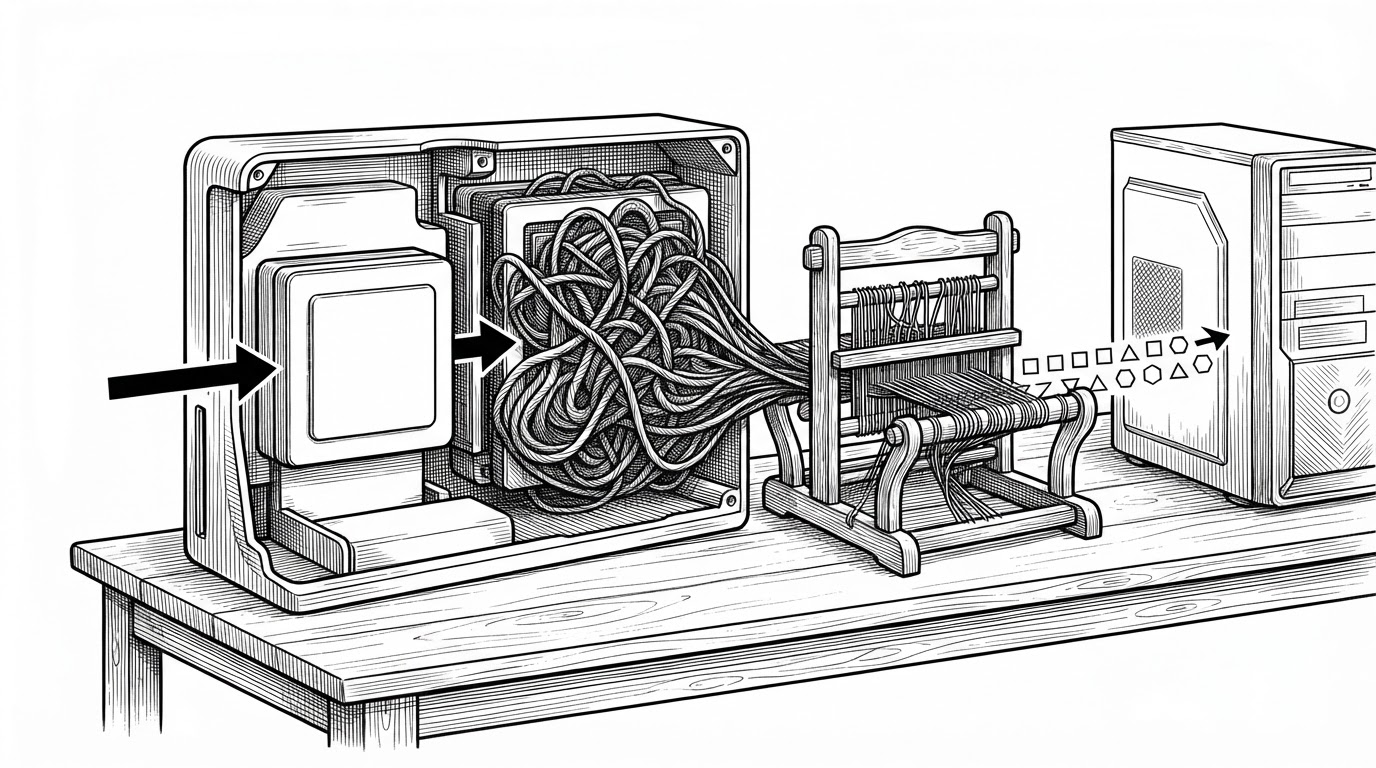
- The console's own CPU code runs natively on a Windows PC, so the real work is recompiling its GPU shaders and reimplementing its API surface.
- VIctory patches the title's renderer instead of copying console shared memory every frame, which is why the project rejects the word emulator.
- The CLI stages reverse engineering into discrete commands so each step can be run, measured, and debugged in isolation.
- It renders a lit open world at roughly 3 to 5 FPS, which is exactly the gap between booting and being a port.
The CPU Is the Easy Part
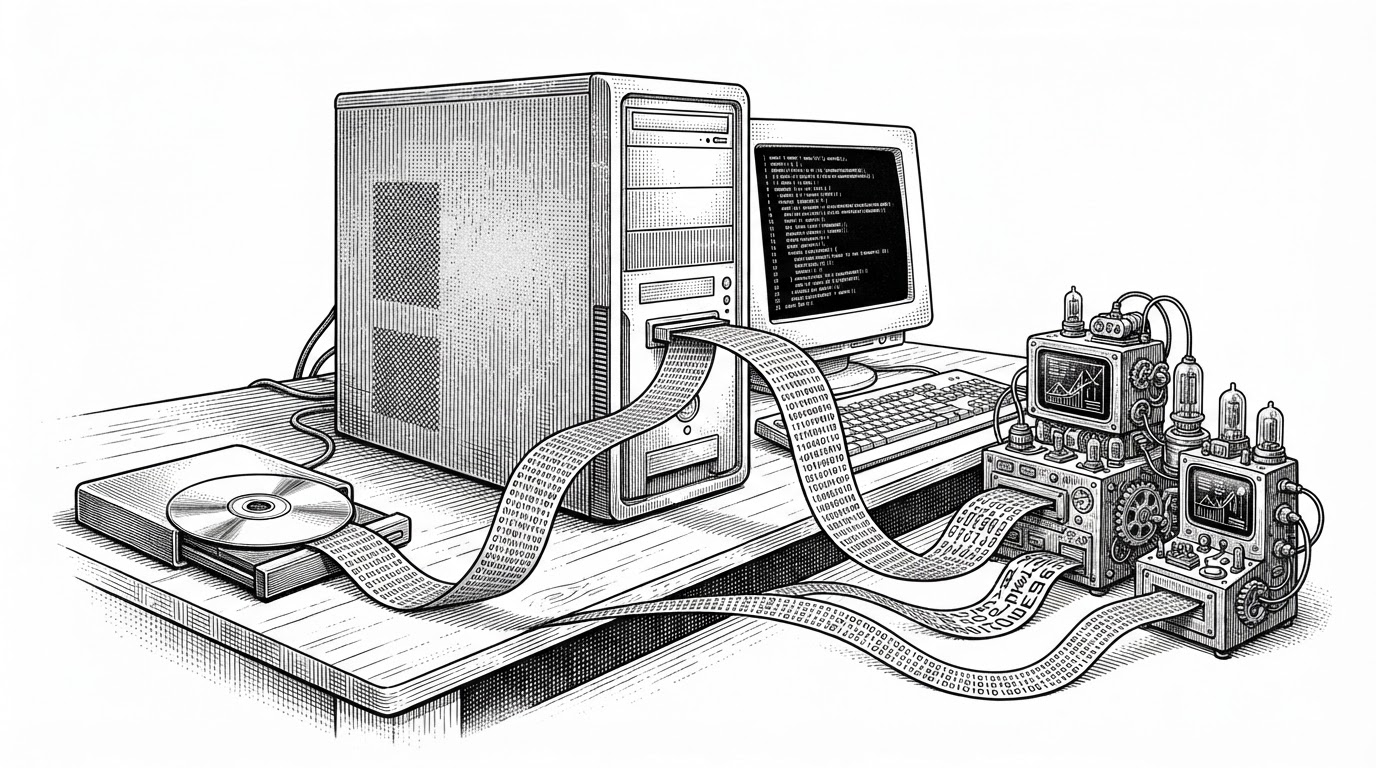
The first surprise of running a console title on a PC is that the CPU is not the problem. Xbox Series binaries are compiled for Zen 2, which is x86-64. So the layer does not interpret the game's code, and it does not translate it instruction by instruction. It runs the title's own machine code directly on your processor.
The only thing standing in the way is a feature check. The runner refuses to start unless the host CPU exposes AVX2, the vector instruction set that Zen 2 supports and that the console build assumes it can lean on. That is the entire gate. If your chip speaks the same dialect, the game's code just runs.
if !is_x86_feature_detected!("avx2") {
    anyhow::bail!("Xbox Series binaries are compiled for Zen 2; AVX2 is required");
}
This should reset your mental model of a console port. There is no CPU emulator here, no interpreter loop grinding through opcodes. The interesting question is not how the layer runs the game. It is what remains once the CPU is free.
The way there is porting, not emulating
Emulation Copies. Porting Rewrites.
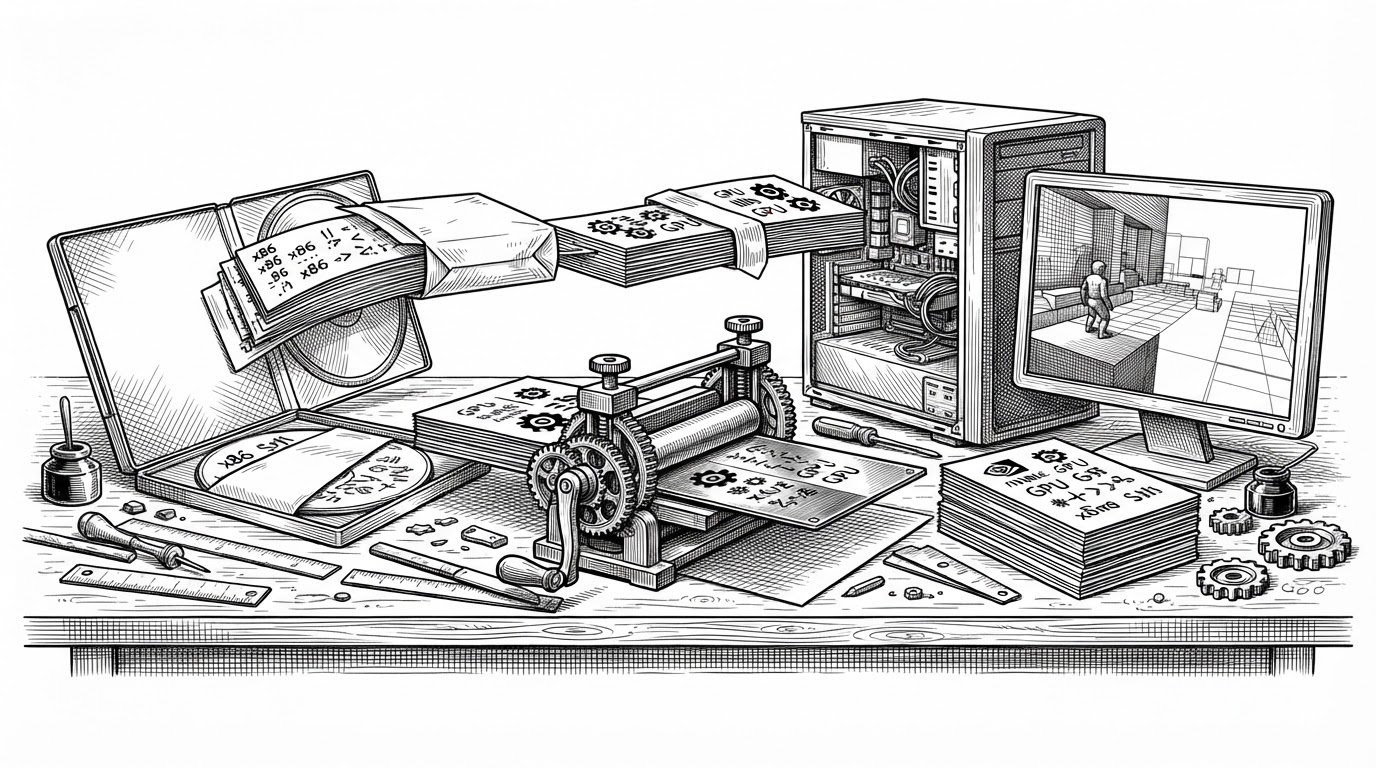
An emulator watches the console's shared memory and reproduces it every frame. It observes what the hardware did and repeats the result. That is how you get a console title to look right without understanding it: copy the state, replay the commands, present the picture.
VIctory does something else. It patches the title's renderer so it behaves the way a PC renderer does. The README states the distinction directly, and the code backs it up. Instead of mirroring console memory on a loop, the layer intercepts the GPU calls, records them, and rebuilds the rendering path around a Direct3D 12 host backend.
That reframing changes everything downstream. If you copy console memory, your per-frame cost is a copy. If you rewrite the renderer, your cost is translation, up front, and then the work can be cached, parallelized, and scheduled the way a PC game expects. The rest of the project is the consequence of that one decision.
Where the Work Actually Lives
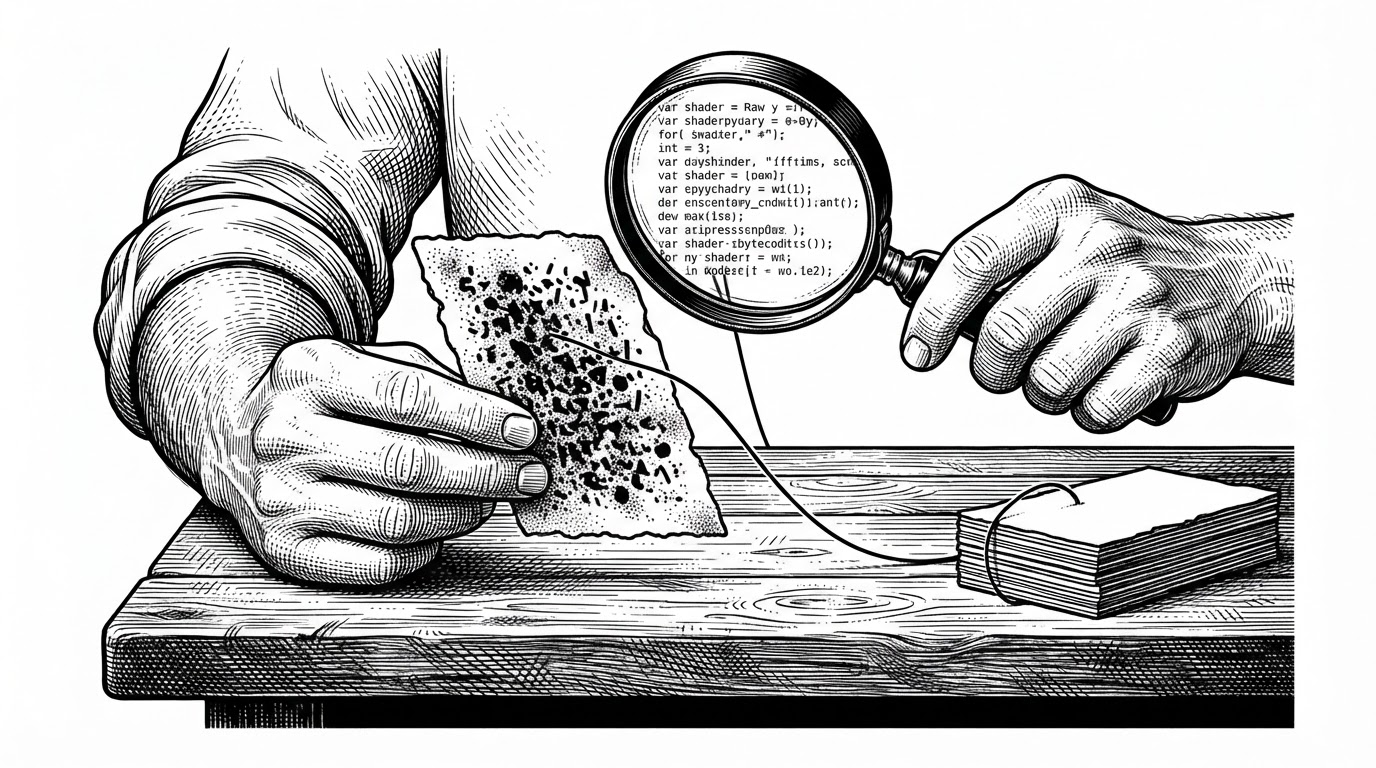
If the CPU is free, the GPU is the war. A console shader is not something a PC driver can simply accept. It arrives as console-specific bytecode, targeting a console-specific instruction set, and the driver on your PC has no idea what to do with it. You cannot hand it across and hope.
So the layer recompiles. The shader pipeline parses DXBC and DXIL, decodes the console's GFX10 instruction set, and emits fresh DXIL that a Windows driver will actually load. The emitted shader is then validated against the Windows SDK's dxil.dll, which is the ground truth for whether the output is legal. If validation fails, the shader never reaches the driver.
This is the intellectual core of the project, and it is the piece you can least afford to get wrong. Every unique shader in the title has to survive parse, decode, emit, and validate before it can render a single pixel. Once it does, it goes into a persistent cache, and the next time the game asks for it, the expensive part is already done.
A Workbench, Not a Runtime
Most compatibility layers ship as a launcher. You double-click, you wait, the game starts or it does not. VIctory ships as a set of discrete commands instead, and that choice tells you who built it: people studying a binary, not people shipping a product.
Each stage of the process is its own subcommand. You can analyze the inputs, ask the translator what it can handle, fill the shader cache, build the driver pipelines ahead of time, and only then run the title. Every step can be run, measured, and debugged on its own, which is exactly what you want when you are reverse-engineering a renderer rather than just launching it.
| Subcommand | Purpose |
|---|---|
| inspect | Analyze a title binary's structure and exports |
| census | Survey what the layer sees in the input |
| translate | Report which shaders the translator can handle |
| shaders | Fill the persistent shader cache |
| warm | Build driver pipelines ahead of time |
| run | Execute the title |
There are smaller tells of the same instinct. The warm command carries a hidden argument that lets a parent process re-invoke itself as a worker, a process-isolation trick you only build if you have been burned by a pipeline build taking the whole session down with it. And the help text is not marketing copy. It is operational knowledge, written down where the person running the command will find it.
One Fork in a Crowd
This is not a ground-up project. It is a fork of a fork, and the lineage is the honest way to understand what it adds. The upstream VIctory supplied the loader, runtime services, Direct3D 12 backend, and shader recompiler. Belobug's branch started from fxceless's tree and layers AMD-oriented, performance-focused work on top: parallel translation of recorded calls, asynchronous submission, shader-write readback, texture uploads on a dedicated copy queue.
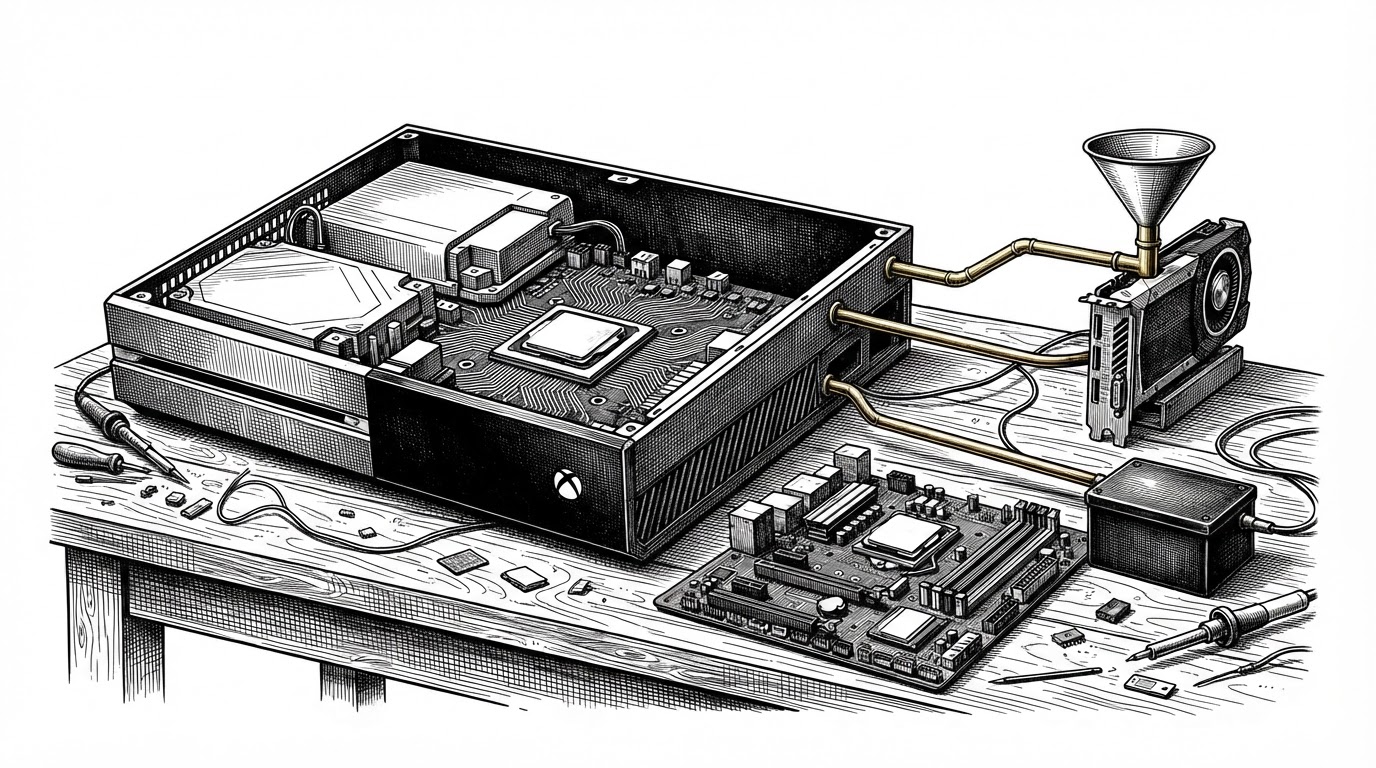
The credits read like a community ledger. Ray-tracing fixes, cube gradients, and sparse textures come from DexNom. Page-view write guards and title memory reads come from myokex. Other adjacent work is credited to FQY55kai and ZJOU-VICTORY. Belobug's own contribution is the branch itself: making the whole thing run well on AMD Radeon hardware, which shares an architectural heritage with the console the title was built for.
| Project | Relationship | Distinction |
|---|---|---|
| Marvisak/VIctory | Upstream foundation | Supplies loader, runtime services, D3D12 backend, shader recompiler |
| fxceless/victory-fork | Direct precursor | Belobug's fork started from this tree |
| DexNom/VIctory | Credited contributor | Ray-tracing fixes, cube gradients, sparse textures |
| myokex/victory-amd | Credited contributor | Page-view write guards, title memory reads |
| FQY55kai/ZJOU-VICTORY | Credited contributor | Adjacent community work |
| Belobug/VIctory-Belobug-AMD | Subject | AMD-oriented, performance-focused branch |
One caveat worth stating plainly: the FPS figures floating around these projects come from different GPUs, different builds, different scenes, and different settings. They are reported community measurements, not a controlled comparison. Ranking them against each other would be reading noise as signal.
What It Actually Does Today
Here is the honest status. The Belobug build renders a lit open world and progresses through missions. It also runs at roughly 3 to 5 FPS, shows visual defects, and demands a lot of memory. At the time it was reported, it had been tried on one machine. The README's own summary is blunt: it is not playable yet.
- Roughly 3 to 5 FPS in the tested open-world scene
- Tested on a single AMD Radeon machine at the time of reporting
- Renders a lit open world and progresses through missions
- README status: not playable yet
That gap is the real subject. Booting and rendering a lit world is a genuine engineering achievement, and it is also a long way from a port. The CPU already runs the game's code natively. The shaders already recompile. What remains is the unglamorous part: making all of it fast enough that a person would want to play it.
The repository contains no game files, code, or assets, and it is not affiliated with the publisher. You supply your own copy. What the project supplies is the layer, the translator, and the workbench, all pointed at a target that is currently measured in single-digit frames. Whether it closes that distance is the question worth watching.