taste-skill-showcase-1: The repo that teaches AI agents taste
A Next.js showcase where <code>.agent/skills/taste-skill/SKILL.md</code> acts like a design system for the coder, not just the interface.

- The showcase looks like a normal Next.js site, but its real product is a skill file that governs the agent's design choices.
- <code>.agent/skills/taste-skill/SKILL.md</code> turns taste into a versioned policy layer with explicit bans, defaults, and layout preferences.
- The repo's real shift is from prompt luck to reusable constraints, which makes AI-made frontend more consistent and easier to govern.
- The broader bet is that design systems will increasingly live where code is generated, not only where humans consume components.
At first glance, taste-skill-showcase-1 looks like a tidy Next.js demo. That is the decoy. The real product is a file aimed at the builder, not the visitor: .agent/skills/taste-skill/SKILL.md.
That matters because AI frontend work usually fails in the same dull ways. The spacing is fine, the copy is fine, and the result still feels generic. This repo attacks the part most teams leave to chance: the agent's taste defaults.
The hidden product lives in .agent/skills/taste-skill/SKILL.md
Leonxlnx frames taste-skill as a way to give AI good taste and stop it from generating boring, generic slop. This showcase is the proof case. It lets you see what happens when the skill is not a prompt suggestion but the thing shaping the build.
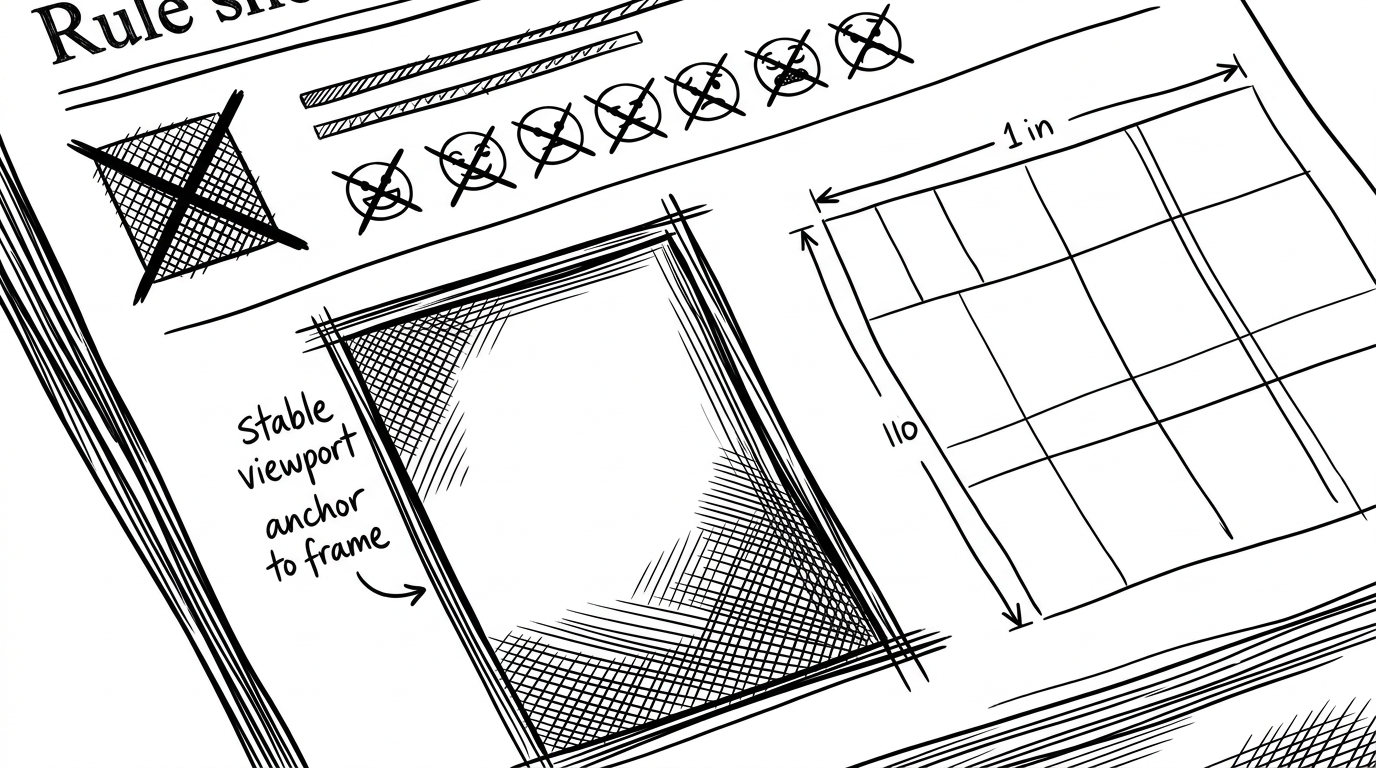
Taste becomes rules
The rules are specific enough to matter. They push toward neutral palettes, stable viewport behavior, grid-first layouts, and deterministic typography. They also ban a handful of the most common AI shortcuts, which is why the output avoids the shiny sameness that makes so many generated pages blur together.
That is the most useful lesson in the repo. Taste is not a mysterious attribute that appears after enough retries. It is a contract that can be written down, versioned, and fed back into the agent.
Every shadow, every spring constant, every pixel offset - hand-tuned. No defaults.
How the skill changes the output
Read the pipeline left to right. Base model habits enter first, then the skill file narrows the space of acceptable moves, then those constraints show up as concrete UI decisions. The surprise is not that the result looks cleaner. It is that the repo makes the cleaner output repeatable.
That is why the .agent folder matters. It moves design control one layer earlier, from what should this screen look like to what should the builder be allowed to do.
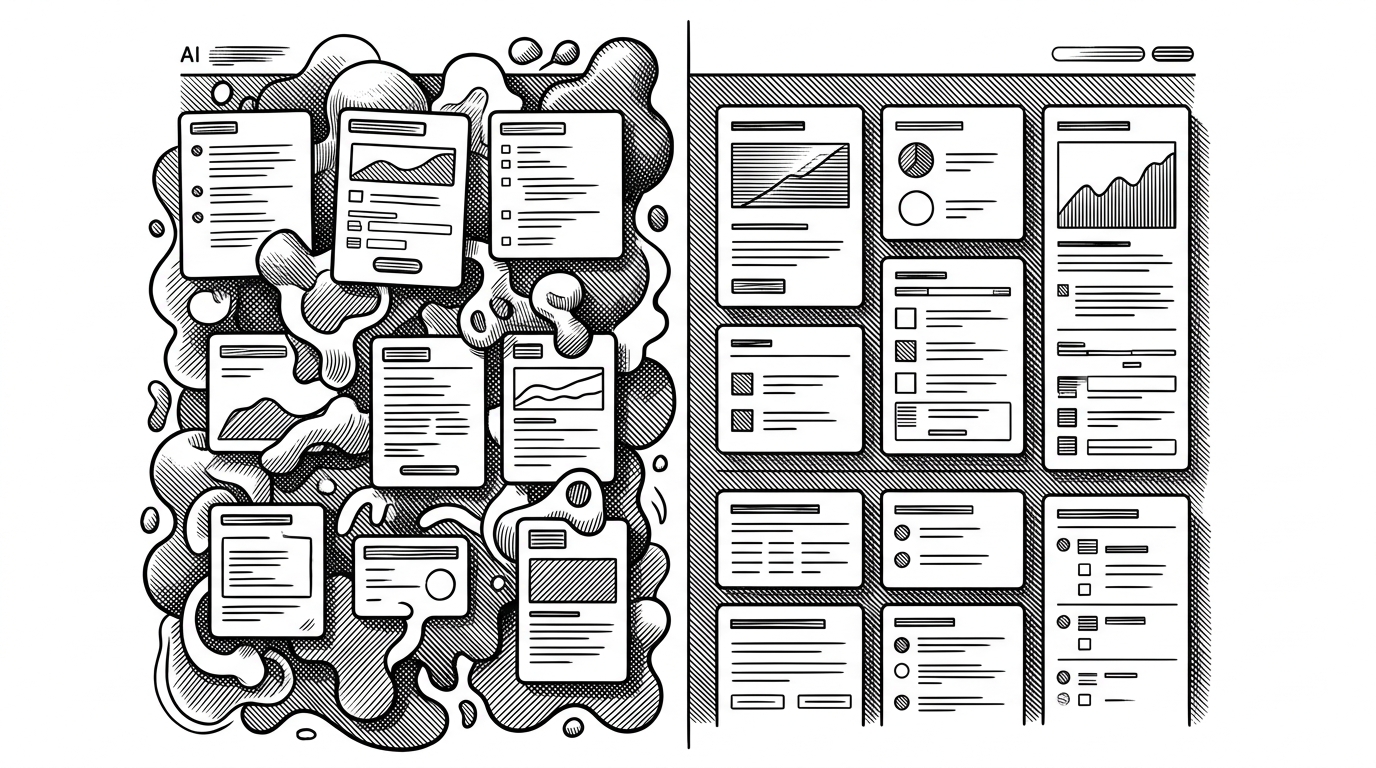
What this looks like next to ordinary AI workflows
The comparison is not subtle. Prompt-only coding is fast, but it drifts. Ad hoc local rules are precise, but they are easy to forget. A skill file sits between those extremes: portable enough to reuse, explicit enough to audit, and opinionated enough to keep the output from sliding back to default AI UI.
| Approach | Where taste lives | What it buys | What breaks |
|---|---|---|---|
| Prompt-only AI coding | Inside a one-off instruction | Fast to try | Easy to drift |
| Project-local skill files | In versioned agent-readable rules | Portable and enforceable | Only as good as the rules |
| Traditional design systems | In components, tokens, and docs | Strong consistency | Built for humans first, not agents |
That is the real significance of taste-skill-showcase-1. It is not just a demo of a sharper landing page. It is a prototype for a new kind of frontend governance, where taste is encoded once and applied every time the agent writes.