ZeroAI: The Persistent Rust Daemon Turning Android into an Autonomous Agent OS
Moving beyond the chat window to build a sovereign, hardware-secured intelligence that lives in the background of your pocket.

- ZeroAI uses a persistent Rust daemon to transform Android devices into always-on autonomous agent servers.
- The specialized ZeroClaw core enables complex LLM orchestration within a sub-5MB memory footprint.
- A deterministic derivation engine translates psychometric models into consistent agent personalities across different AI providers.
- The system secures sensitive API credentials using hardware-backed encryption through the Android Keystore and StrongBox.
The Daemon in the Machine
Most mobile AI applications are passive wrappers. They wait for a user prompt, send a request to a cloud provider, and print the response. ZeroAI upends this model by treating the Android device not as a client, but as a sovereign server node. At its core is the ZeroAIDaemonService, a persistent background service that survives Android's aggressive battery management to provide a continuous heartbeat for the agent.
This daemon architecture allows the AI to operate autonomously. It can monitor external channels like Telegram or Discord, execute scheduled cron jobs, and process complex multi-step reasoning tasks while the phone sits idle in a pocket. By binding the agent's lifecycle to the OS rather than a UI process, ZeroAI transforms the smartphone into an always-on intelligence hub.
The Zero-Overhead Bridge
Running a complex LLM orchestration engine in standard Kotlin would quickly drain a mobile battery. To solve this, ZeroAI delegates all heavy lifting to a specialized native core called ZeroClaw. Written entirely in Rust, this core handles the provider abstractions, tool execution, and the Rhai scripting engine within a sub-5MB memory footprint.
The challenge lies in communication. Passing complex state between the JVM and native Rust code is traditionally fraught with performance bottlenecks and memory leaks. ZeroAI uses UniFFI to automatically generate type-safe Kotlin bindings. This bridge allows the Android frontend to interact with the Rust daemon asynchronously using Kotlin Coroutines, ensuring the UI remains perfectly fluid while the native layer crunches data.
Coding a Personality
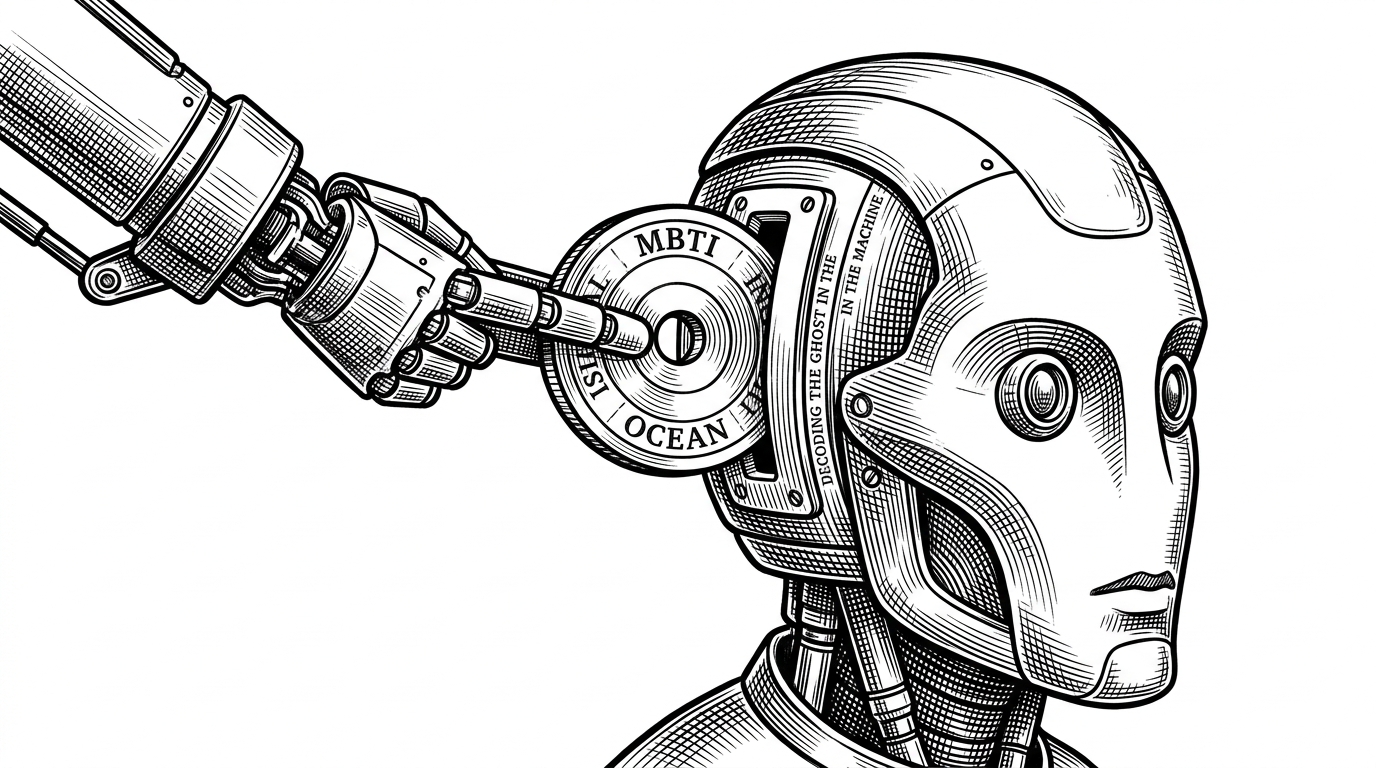
ZeroAI rejects the standard practice of defining an agent's persona through a single, brittle system prompt. Instead, it employs the AieosDerivationEngine. This component acts as a deterministic personality factory. It maps human-readable archetypes into a strict JSON schema that defines the agent's fundamental cognitive parameters.
When a user selects an archetype, the engine calculates specific psychometric scores based on the OCEAN model (Openness, Conscientiousness, Extraversion, Agreeableness, Neuroticism) and Myers-Briggs types. These values are then translated into "Neural Matrix weights" that govern how the Rust daemon formats its internal reasoning and tool selection. The result is a highly consistent, reproducible agent identity that persists regardless of which underlying LLM provider is active.
The Vault: Security by Default
Because an autonomous agent requires access to sensitive API keys and personal data to function, security cannot be an afterthought. ZeroAI implements an industrial-grade security model rarely seen in consumer AI tools. It leverages the Android Keystore and StrongBox to encrypt all credentials at rest using AES-256-GCM.
The system is built with graceful degradation in mind. If the hardware-backed keystore becomes corrupted, the repository falls back to a software-encrypted state, and eventually to an in-memory store. This ensures the daemon never writes plaintext secrets to the disk. Furthermore, a proactive log sanitizer automatically strips bearer tokens and API keys before any debugging information leaves the device.
| Feature | ZeroAI (Rust/Android) | Agent Zero (Python/Desktop) | Jan (C++/Desktop) |
|---|---|---|---|
| Architecture | Native OS Daemon | Dynamic Scripting | Local Inference GUI |
| Memory Footprint | < 5MB (Core) | High (Python runtime) | High (Local Weights) |
| Persistence | Always-on background | Session-based | Session-based |
| Security Model | Hardware Enclave (StrongBox) | Standard OS permissions | Standard OS permissions |
The Efficiency Frontier
The local-first AI landscape is currently dominated by heavy Python frameworks. While excellent for research, they are fundamentally unsuited for low-power edge devices. ZeroAI's reliance on the ZeroClaw Rust core represents a radical shift toward extreme efficiency. By stripping away interpreters and heavy runtimes, it achieves a footprint small enough to run on legacy hardware.
This efficiency opens the door to a new paradigm of computing. Instead of discarding old Android phones, developers can repurpose them as sovereign, low-power AI nodes. ZeroAI proves that true autonomous intelligence does not require a server rack; it just requires a ruthlessly optimized foundation.