TrekTrails: The Travel App That Still Builds Its Own Security, Captcha, and Data Layer
A Spring MVC monolith that shows the whole request pipeline in plain sight, from form submission to JSP output, with hand-rolled logic at nearly every step.
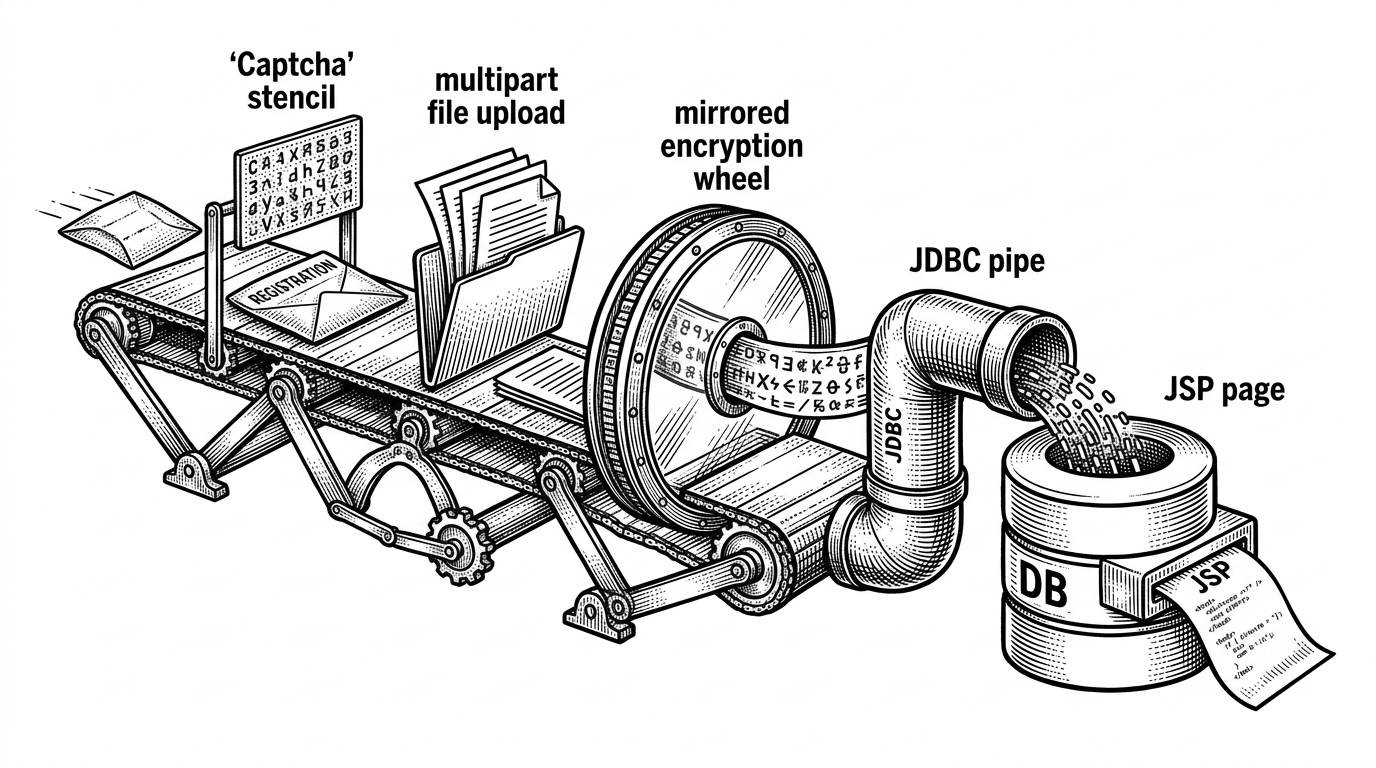
- TrekTrails is most revealing when you trace one registration request through its custom captcha, upload, encryption, JDBC, and JSP steps.
- The codebase is organized like a readable Spring MVC tutorial, which makes its seams easier to study than in a modern Boot app.
- Its hand-built security and data layers are educational, but they also show why contemporary web development moved toward standard libraries and framework defaults.
- The project matters less as a travel product than as a working specimen of how older Java web stacks were assembled.
The app is easiest to understand through one request
The fastest way into TrekTrails is not the travel domain. It is the save_regi path in HomeController, where one form submission has to survive captcha validation, password matching, multipart file handling, custom encryption, and a raw database write before it comes back as a JSP response.
That sequence is the whole article in miniature. You can see the request move from browser to controller to utility classes to MySQL and then back out through Spring MVC’s view resolver, with almost every step exposed instead of hidden.
A monolith with clear, almost textbook seams
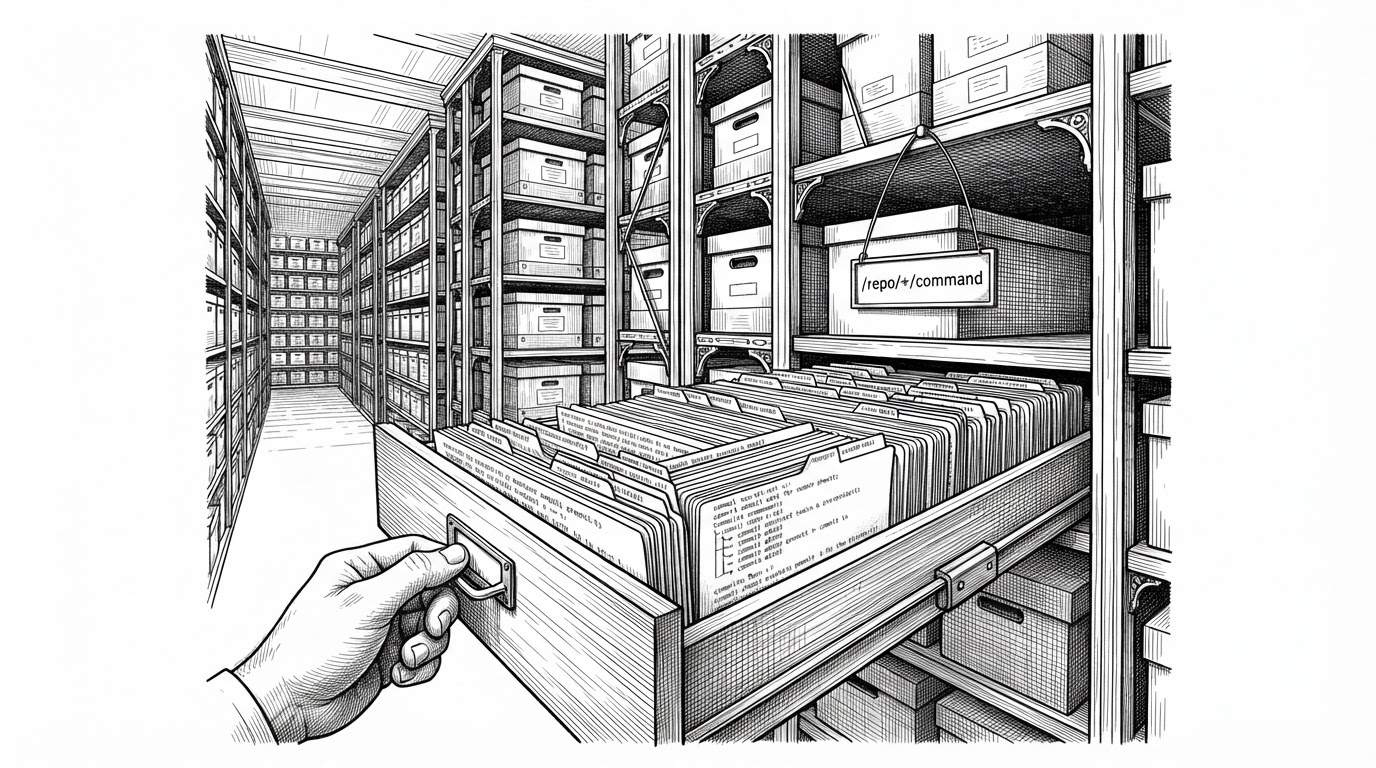
TrekTrails is a monolith, but it is not an opaque one. The tree is easy to read: controller handles requests, modules holds utilities like encryption and mail, config wires Spring, and WEB-INF/views contains role-based JSP pages.
That structure matters because the repo still shows the seams. In a lot of modern apps, the framework hides those transitions. Here, the boundaries are visible enough to teach from.
| Area | TrekTrails | Modern Spring Boot app |
|---|---|---|
| Startup | web.xml plus Java config | Convention-based Boot startup |
| Views | JSP under WEB-INF | Thymeleaf, React, or API-first rendering |
| Data access | Raw JDBC via DBmanager | JPA, Spring Data, or repository abstractions |
| Security | Custom captcha and custom encryption | Standard auth, CSRF, and password libraries |
| Session logic | Manual role checks in controllers | Framework security filters and annotations |
The interesting part is what the app does by hand
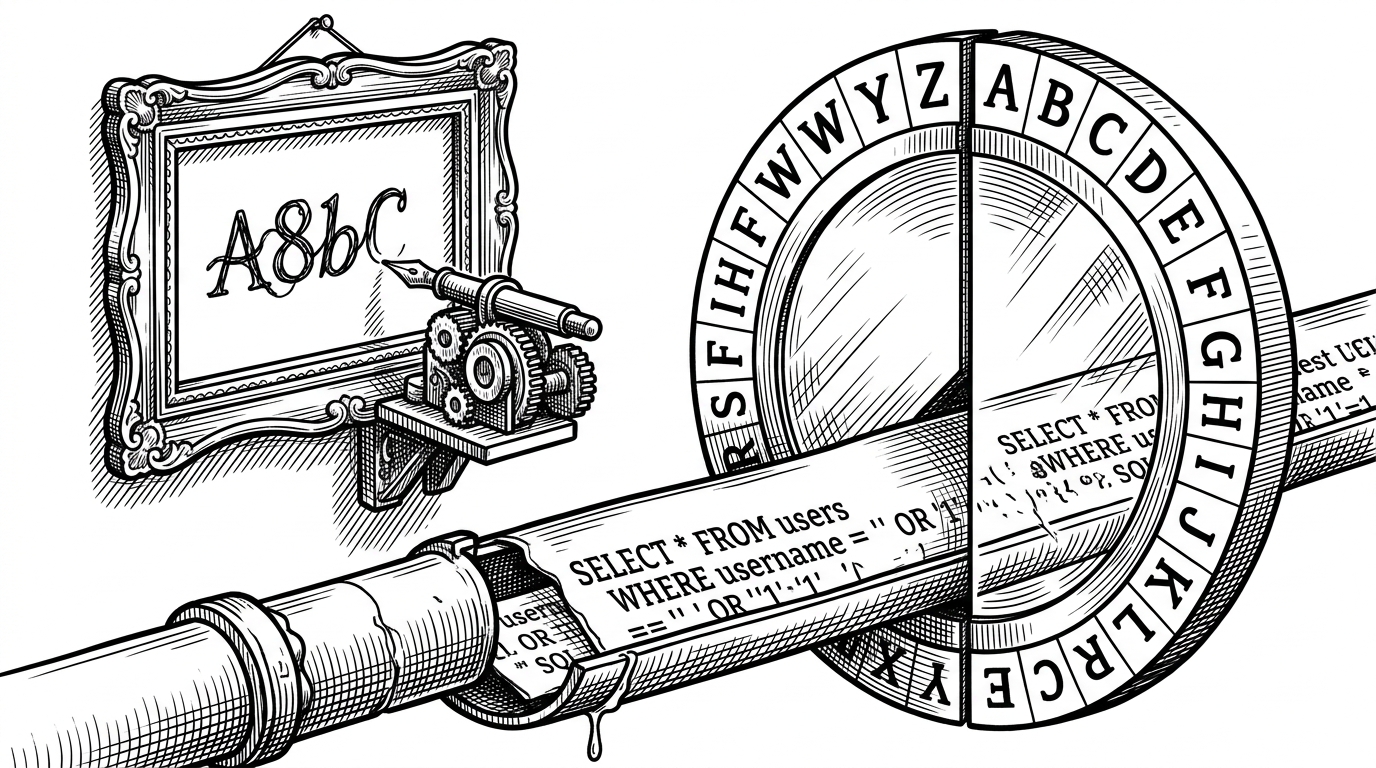
The repo’s identity lives in the utility classes. Captcha draws its own challenge image. EncryptionManager rolls its own character shifting. Mailer wraps SMTP setup. DBmanager talks directly to MySQL with string-built SQL.
That is not accidental clutter. It is the project’s worldview. The app treats each problem as something to be implemented directly, which makes the code useful as a learning artifact even when the choices would be risky in production.
Security is where the time capsule turns into a warning label
This is the part where the old stack stops feeling quaint. String concatenation in SQL means the database layer has the shape of an injection risk. A custom Caesar-style cipher is not a substitute for modern password handling. Hardcoded credentials and manual session checks turn operational hygiene into application logic.
None of that makes the repository worthless. It makes it historically legible. TrekTrails captures a period when many Java web apps were assembled by hand, and that hand-built quality is exactly why the security story is so easy to learn from.
| Practice | TrekTrails | Modern expectation |
|---|---|---|
| Passwords and secrets | Custom character shifting and hardcoded values | Hashing with bcrypt, Argon2, and secret managers |
| Database writes | Concatenated SQL strings | Prepared statements and repository APIs |
| Captcha | In-house image generation | Managed service or vetted library |
| Authorization | Controller-level session checks | Centralized security configuration |
| Uploads | Direct multipart handling | Validated storage and file policy |
Spring is present, but not yet invisible
TrekTrails sits in a transitional moment. web.xml still bootstraps the app, but Java configuration takes over for things like view resolution and multipart setup. That hybrid shape is what makes the repo such a clean bridge between older Spring and the Boot era.
You can see the framework maturing without fully abstracting the application away from the developer. The result is practical, readable, and a little exposed, which is exactly why it works as an explainer.
| Layer | Older Spring style | TrekTrails hybrid |
|---|---|---|
| Bootstrapping | Mostly XML | web.xml plus annotation config |
| View resolution | Explicit servlet config | InternalResourceViewResolver in Java config |
| File uploads | Manual servlet setup | CommonsMultipartResolver bean |
| Application shape | Framework first | Framework plus handwritten plumbing |
Why this repo matters anyway
TrekTrails is valuable because it shows how web apps actually work when the abstractions are removed. The request path is visible. The security story is visible. The database layer is visible. That visibility is rare, and it makes the repository useful to students, engineers crossing into Java web development, and anyone who wants the stack laid out in plain sight.
As a travel app, it is straightforward. As an artifact, it is better than that. It is a compact tutorial on a pre-Boot Spring MVC world, plus a warning about the trade-offs that world made along the way.