Gitiles: The Anti-GitHub Browser Built for Giant Repos
A deep dive into the read-only Git viewer that trades features for speed, clarity, and scale, and why that tradeoff is the whole point.
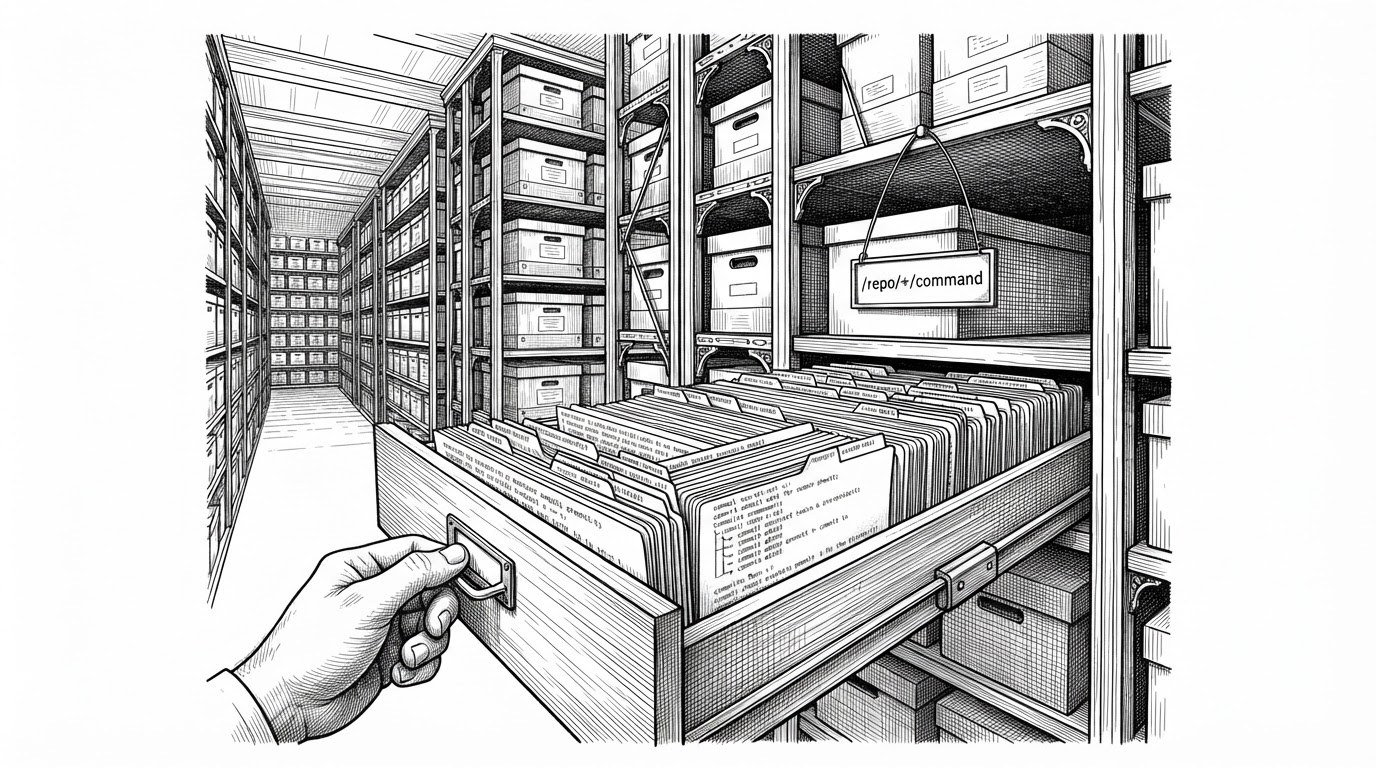
- Gitiles is not a weaker forge, it is a sharper one-purpose browser for repos that are too large to feel friendly in a feature-heavy UI.
- Its most distinctive design move is the URL grammar, where a `+` separator turns ambiguous Git paths into explicit request structure.
- Gitiles keeps one rendering pipeline for humans and machines, which lets HTML, JSON, and text all come from the same server-side core.
- Its Markdown support is not a side feature, it is part of the same idea of treating a repository as both code and durable documentation.
Gitiles looks almost ascetic until you remember where it lives: in places like AOSP and Chromium, where the problem is not how to add more surface area, but how to make enormous repositories feel readable at all. The project answers that with refusal. No social layer, no client-side app shell, no write workflow, no sprawling product logic. Just a read-only browser that stays out of the way.
Gitiles is a simple repository browser for Git repositories, built on JGit. Its guiding principle is simplicity: it has no formal access controls, no write access, no fancy Javascript, etc.
Why a Bare-Bones Git Browser Still Matters
That README line is not marketing minimalism. It is the product spec. Gitiles is useful precisely because it refuses to become a forge, and because it keeps every request on a short leash: parse the path, resolve the repo, render the view, get out.
That design matters most when repos get huge. In a repository browser, every extra layer of JavaScript, client state, and feature coupling adds latency, fragility, and mental overhead. Gitiles keeps the surface small so the underlying tree can stay navigable.
From Request to Repo: How Gitiles Routes a Page
The routing pipeline is the first place where the architecture shows its hand. `GitilesFilter` and `ViewFilter` break a request into structured parts, then `GitilesView` holds that state before `DispatchFilter` sends it to the right servlet. The trick is not just cleanliness. It is that Gitiles makes repo names, revisions, paths, and commands explicit instead of letting the URL collapse into ambiguity.

The Real Trick: One Servlet, Many Output Formats
`BaseServlet` is where Gitiles quietly becomes both a browser and a lightweight interface for machines. The same request can surface as HTML, JSON, or plain text through `?format=`, which means the rendering logic does not fork just because the consumer changed. Humans get pages. Tools get data. The core stays the same.
Request
  -> GitilesFilter
  -> ViewFilter
  -> GitilesView
  -> DispatchFilter
  -> BaseServlet
       -> HTML
       -> JSON
       -> TEXT
That matters because it keeps the system honest. Gitiles does not have a front-end app that invents one path for people and another path for automation. It has a single server-side truth, then multiple output forms layered on top of it.
Why Markdown Feels Native Here
The `doc/` package is the second surprise. Gitiles is not only a code browser. It is also a documentation browser that treats Markdown as a first-class citizen, with rooted links that resolve inside the repository instead of pretending the repo is a filesystem clone. That makes documentation feel like part of the tree, not an attachment to it.
This is where the project becomes more than a viewer. A repository can act like a living handbook, where code and docs travel together through the same URL model, the same rendering path, and the same server-side discipline.
What Gitiles Refuses to Be
Gitiles sits in a narrow lane beside cgit, Gitweb, GitBlit, and the more ambitious forges like Gitea and Forgejo. The comparison is not about who has the most buttons. It is about what each tool thinks a repository browser should be.
| Project | Primary goal | Rendering model | Client-side JS | Write or hosting features | Best fit |
|---|---|---|---|---|---|
| Gitiles | Stateless read-only browsing at huge scale | Server-rendered Java with JGit | None or minimal | No write access, no social layer | Very large Java-centric Git environments |
| cgit | Fast native browsing | Server-rendered C | None | Read-only browser | Lean browsing for traditional Git hosting |
| Gitweb | Ubiquitous legacy browser | Server-rendered Perl | None | Basic browsing | Simple default installs and compatibility |
| GitBlit | Java repo hosting and management | Server-rendered Java | Limited | Hosting and user management | Teams that want a Java-native server with more features |
| Gitea / Forgejo | Full forge | Server-rendered app with richer product surface | Some | Issues, PRs, users, orgs | General-purpose lightweight hosting |
Gitiles wins only when restraint is the feature. If you need collaboration, identities, issues, or a modern product surface, that is the wrong tradeoff. If you need a browser that is hard to break, easy to embed, and comfortable in massive Java-backed Git estates, it is hard to beat.
Why This Architecture Scales
The scaling story is not magical. It is disciplined. A Java servlet stack, JGit as the engine, server-side templates, and no client app to hydrate all reduce moving parts. That means fewer failure modes, simpler embedding in existing systems, and a UI that does not get slower just because the repository got bigger.
Gitiles also leans into cacheable server behavior and a maintenance-oriented roadmap. That is less exciting than a feature launch, but more durable. For a browser that exists to make enormous repositories legible, durability is the feature.