VoxCPM: The TTS Model That Skips Audio Tokens Entirely
OpenBMB’s tokenizer-free speech system turns text, voice descriptions, and short reference clips into continuous, high-fidelity speech.
- VoxCPM’s main bet is architectural, because it treats speech as a continuous generative problem instead of a token-reconstruction problem.
- The model’s most interesting feature is not cloning, but voice design from text, which turns TTS into a promptable creative tool.
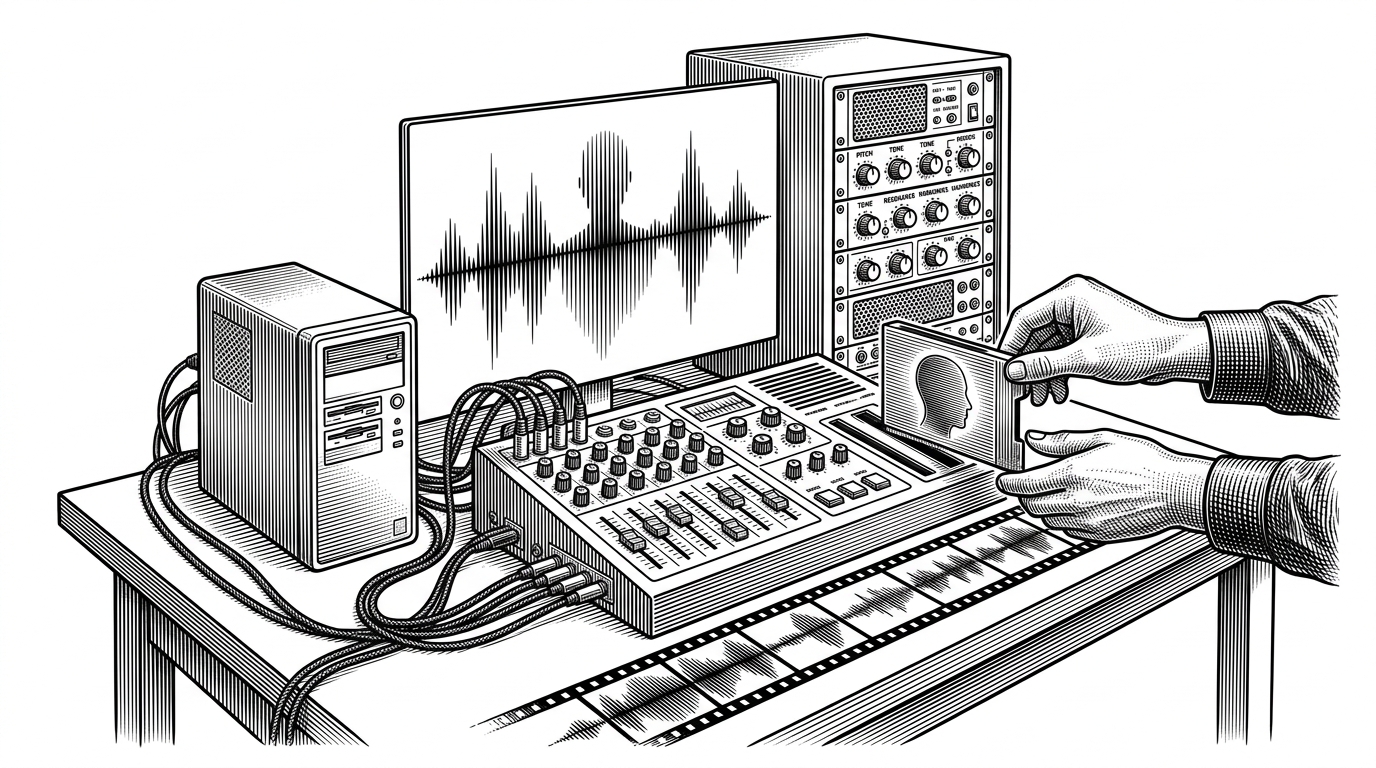
- Its asymmetric audio VAE and flow matching decoder are doing product work as much as model work by pushing toward 48kHz output from 16kHz reference audio.
- VoxCPM is best understood as a self-hostable alternative to token-based TTS systems that tries to trade discrete-unit bottlenecks for a cleaner control surface.
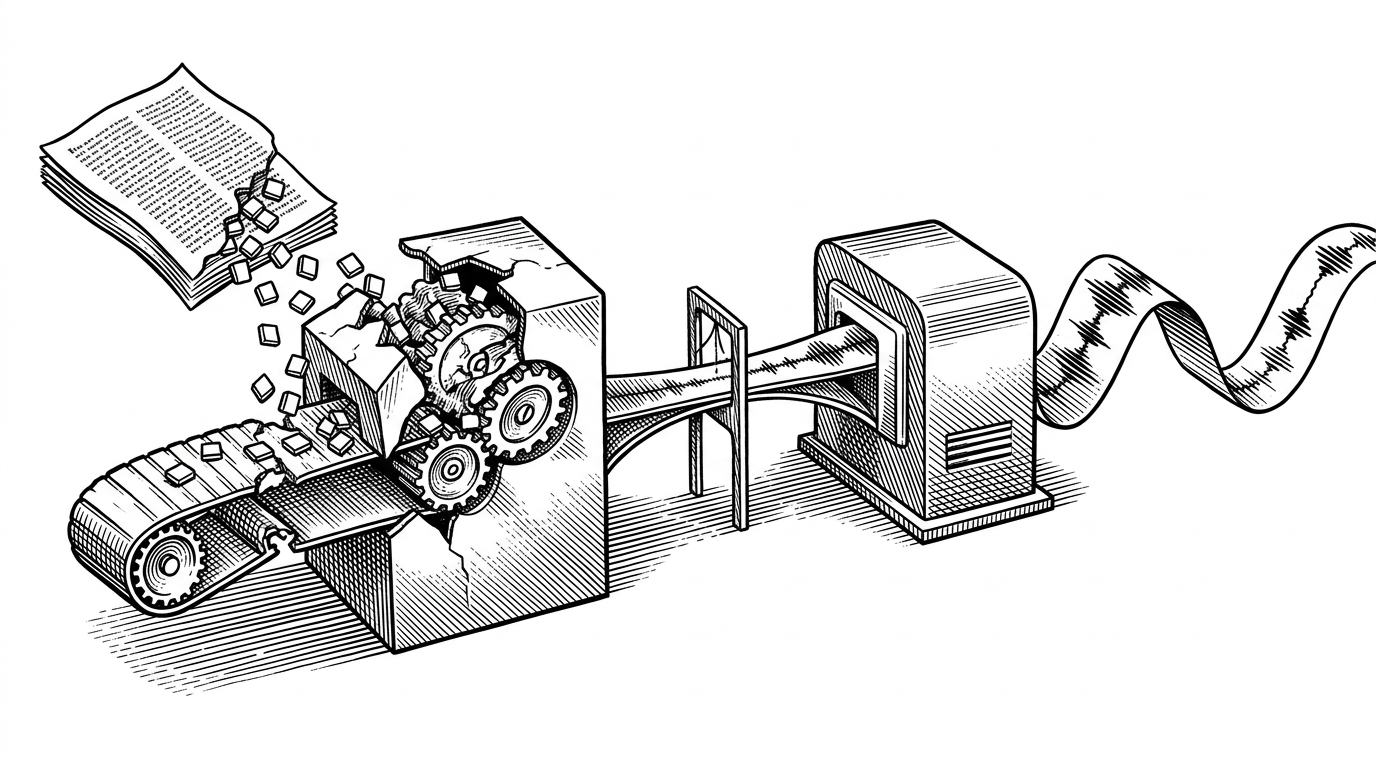
Most TTS systems still walk speech through a discrete token bottleneck. VoxCPM takes a different route. It tries to generate speech as a continuous signal, which is why the repo feels less like “another voice model” and more like a reset button for how voice systems can be built.
Why VoxCPM Feels Like a Reset Button for TTS
VoxCPM is a tokenizer-free Text-to-Speech system that directly generates continuous speech representations via an end-to-end diffusion autoregressive architecture, bypassing discrete tokenization to achieve highly natural and expressive synthesis.
That one sentence explains the project’s whole argument. If you quantize speech into discrete units first, you inherit a ceiling on detail. Tiny timing cues, breath, micro-prosody, and tonal texture all get squeezed through a smaller channel.
VoxCPM’s pitch is that the model should control voice more directly. Instead of asking it to rebuild sound from a stack of audio tokens, it learns a continuous path from text and conditions to waveform-level speech. That changes the product story too. It is not just cloning. It is closer to voice design.
The Pipeline: Text, Voice, and a Continuous Latent Bridge
The repo’s structure mirrors that story. MiniCPM handles semantics. A residual acoustic stage adds the parts language alone cannot carry. Then a local DiT decoder, paired with conditional flow matching, turns the latent state into speech features.
That is the important shift. VoxCPM does not just replace one black box with another. It replaces a brittle audio-token bridge with a more direct chain of representations, which is why the architecture reads as an attempt to make speech generation more controllable.
The Clever Part Is the Bridge, Not Just the Decoder

The scalar quantization layer matters because it is not just a compression trick. It is the translation surface between a language model’s symbolic world and the audio model’s continuous world. That makes it a bottleneck, but a useful one.
A good bottleneck is what gives a system shape. In VoxCPM, the bridge keeps the model from becoming a mushy end-to-end blob. It also makes the control story believable. Text, voice description, and reference audio all have somewhere to land.
VoxCPM2 is the latest major release — a 2B parameter model trained on over 2 million hours of multilingual speech data, now supporting 30 languages, Voice Design, Controllable Voice Cloning, and 48kHz studio-quality audio output. Built on a MiniCPM-4 backbone.
Why the Audio VAE Is Asymmetric
| Design choice | What it does | Why it matters |
|---|---|---|
| 16kHz reference in | Accepts common clip quality for prompts and cloning | Makes the input side practical |
| 48kHz output | Generates higher-fidelity speech directly | Raises the ceiling without a separate upsampler |
| Asymmetric audio VAE | Uses different input and output roles for compression and decoding | Turns super-resolution into part of the synthesis stack |
| Snake1d and causal convolutions | Capture high-frequency structure without breaking temporal flow | Helps the model preserve detail in speech |
This asymmetry is more than a spec-sheet flourish. It folds super-resolution into the product itself, so the model is not merely cloning voices at the quality of the input. It is trying to lift the output class above the input class.
That is commercially useful. Real reference clips are often imperfect. If the model can accept 16kHz input and still produce 48kHz output, the system becomes easier to deploy in messy, real-world settings.
Flow Matching Gives It Speed Without the Usual Diffusion Tax
VoxCPM uses conditional flow matching instead of a slower, more familiar diffusion setup. The practical idea is simple: learn the direction from noise to speech as a velocity field, then follow that path with fewer steps.
The repo also leans on local attention to keep long audio sequences tractable. That matters because speech is unforgiving. You do not just need the right phonemes. You need the model to keep rhythm, pacing, and consistency over time without paying an enormous compute bill.
| Approach | Sampling posture | Trade-off |
|---|---|---|
| Standard diffusion | Many refinement steps | Often slower |
| Conditional flow matching | Follows a learned velocity path | Can be faster at inference |
| Local attention | Focuses on nearby context | Helps scale long audio without global attention cost |
Voice Design Changes the Product Category
This is where VoxCPM stops looking like a cloning demo and starts looking like a creative system. The repo supports voice design from natural-language descriptions. That means the user can ask for a voice profile, not just provide a voice sample.
That shift is subtle but important. Cloning says, “make this voice again.” Voice design says, “make a voice that fits this brief.” Those are different workflows, different user expectations, and eventually different business models.
VoxCPM 🔊 a tokenizer-free, diffusion-based TTS released by OpenBMB openbmb/VoxCPM-0.5B✨ 0.5B - Apache2.0✨ Zero-Shot Voice Cloning✨ Built on miniCPM4✨ Context-Aware Speech: trained on 1.8M hrs bilingual data
The open-source angle also matters here. The project is Apache-2.0 licensed, which makes self-hosting and commercial use much easier to imagine than with a typical research release. That alone widens the audience from hobbyists to product teams.
Where VoxCPM Wins, and Where It Still Has to Prove Itself
| Axis | VoxCPM | Token-based TTS |
|---|---|---|
| Representation | Continuous latent speech | Discrete audio tokens |
| Control surface | Text, voice description, reference clip | Usually reference clip first |
| Output posture | Native 48kHz generation | Often lower sample rate or extra vocoder path |
| Core promise | Voice design and cloning in one stack | Reliable cloning through token pipelines |
| Risk | Architecture is ambitious and still needs field proof | More established and easier to reason about |
The trade-off is obvious. VoxCPM is more ambitious, but ambition comes with complexity. A token-based system can be easier to debug and easier to compare. A continuous system can be more expressive, but it has more of the model’s fate tied up in representation quality.
That is why the repo is interesting even if you never deploy it. It is making a clean bet that speech generation should feel more like continuous control than discrete reconstruction. If that bet holds, a lot of today’s TTS assumptions age quickly.