photo-abstract-editorial: A Prompt System That Turns Photos Into Their Own Visual Echo
Instead of repainting the whole image, this Codex Skill preserves the original photo and builds a disciplined abstract companion panel from its spatial facts, palette, and rhythm.
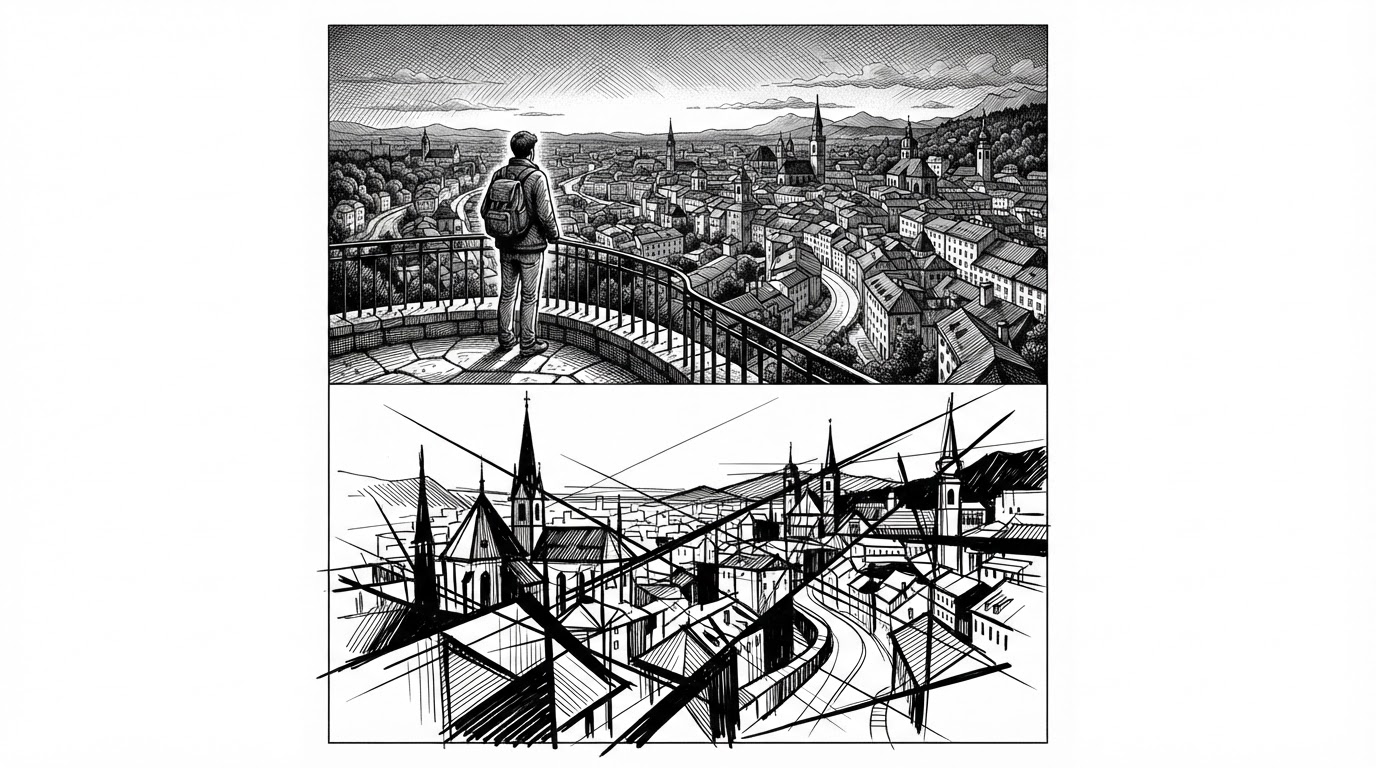
- The repo treats prompting like layout software, with rules that convert a photo into a second composition instead of a full rewrite.
- Its real trick is selective preservation, because the source image stays intact while the abstract panel is derived from the photo’s own spatial facts.
- The prompt files behave like a design system, mapping aspect ratio, composition, and mark families into repeatable instructions.
- CLEAN mode matters because it removes the usual AI clutter and makes the result feel closer to editorial print design than synthetic art.
The photo stays. The echo changes.
Most image tools try to replace the source. This repo does the opposite. It keeps the photo legible, then generates a companion panel that feels like a memory of the same scene, not a remix of it.
That small choice changes everything. The output is not a filter, not a style transfer, and not a poster template. It is a controlled diptych where the abstract half owes its existence to the photo’s geometry, occlusion, mass, and palette.
Why this is not a filter
| Approach | What it preserves | What it invents | Result |
|---|---|---|---|
| Filter or style transfer | Mostly the surface look | Global styling over the whole frame | A transformed photo |
| Generic AI prompt | Whatever the model decides | Objects, mood, composition, and style | A synthetic image with loose control |
| photo-abstract-editorial | The original photo and its legibility | A constrained companion panel derived from the photo | An editorial diptych with traceable structure |
The difference is selective preservation. The model is not asked to be creative in the open-ended sense. It is asked to read the source like a designer, then compress that reading into a second visual layer.
The prompt is doing the design work
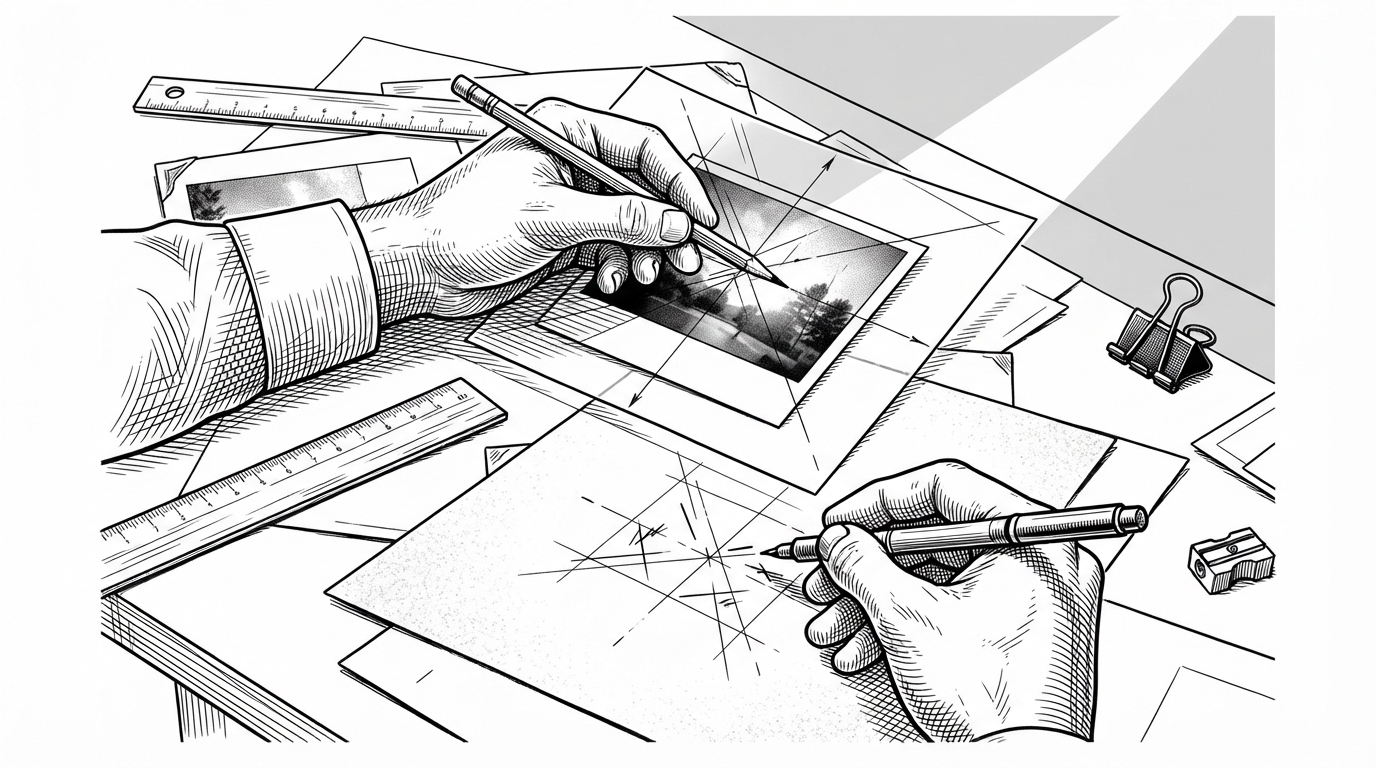
The repo’s prompt files are the real architecture. SKILL.md sets the workflow. The reference prompts turn that workflow into instructions that feel closer to a design system than a one-off prompt.
Inspect → Preserve → Reconstruct → Compose

- Inspect the image for spatial facts, not just objects.
- Preserve the original photo as the top or primary area.
- Reconstruct a memory panel from the photo’s own geometry.
- Compose both into a single editorial artwork.
That pipeline matters because it defines what the model is allowed to do. The abstract panel must be traceable to the source photo. It cannot wander off into decorative invention.
Make every abstract mark traceable to a visual fact in the source photo.
CLEAN mode is the quiet breakthrough
The project’s restraint is the point. CLEAN mode strips away the usual AI flourishes, so the output feels print-like rather than generated for novelty.
| Mode | Visual behavior | Effect |
|---|---|---|
| Loose generation | Adds texture, ornament, and surprise | Looks like AI art |
| CLEAN mode | Suppresses noise, artifacts, and decorative clutter | Looks edited, controlled, and editorial |
That restraint is harder than it sounds. AI models naturally want to fill space. The repo pushes the other way, asking the system to honor flat backgrounds, disciplined palette logic, and a composed absence of excess.
Why this skill spreads so easily
This format is made for sharing. It is easy to demo, easy to copy into a new photo, and immediately legible on social feeds because the before and after relationship is built into the composition.
That same portability creates tension. The viral shape of the idea makes it tempting to clone, package, and sell. The repo’s popularity is part proof of usefulness and part proof that the prompt itself has become a commodity.
| Pattern | What users get | What breaks |
|---|---|---|
| Generic AI art prompt | A new image every time | Weak control over composition and identity |
| photo-abstract-editorial | A repeatable photo plus memory panel system | Less freedom, more discipline |
| Marketplace skill clone | Fast distribution | Raises plagiarism and attribution issues |
Where it fits in the ecosystem
This repo sits in a narrow but important middle ground. It is more structured than a normal art prompt and more expressive than a filter. The closest competitors are general AI image tools, but they usually optimize for generation breadth, not compositional accountability.
That is why the skill matters. It shows that prompting can become a layout language when the constraints are specific enough. The model is not just making pictures. It is following editorial rules.
What the repo teaches
The bigger lesson is not about photography. It is about control. If you can define the relationship between source material and output tightly enough, prompting starts to behave like design software.
That is the interesting frontier here. Not a better filter. A better contract between input, interpretation, and composition.