clawtotalk: the shortest path from a self-hosted agent to your phone
A push-to-talk companion that makes OpenClaw feel portable without opening a public front door.
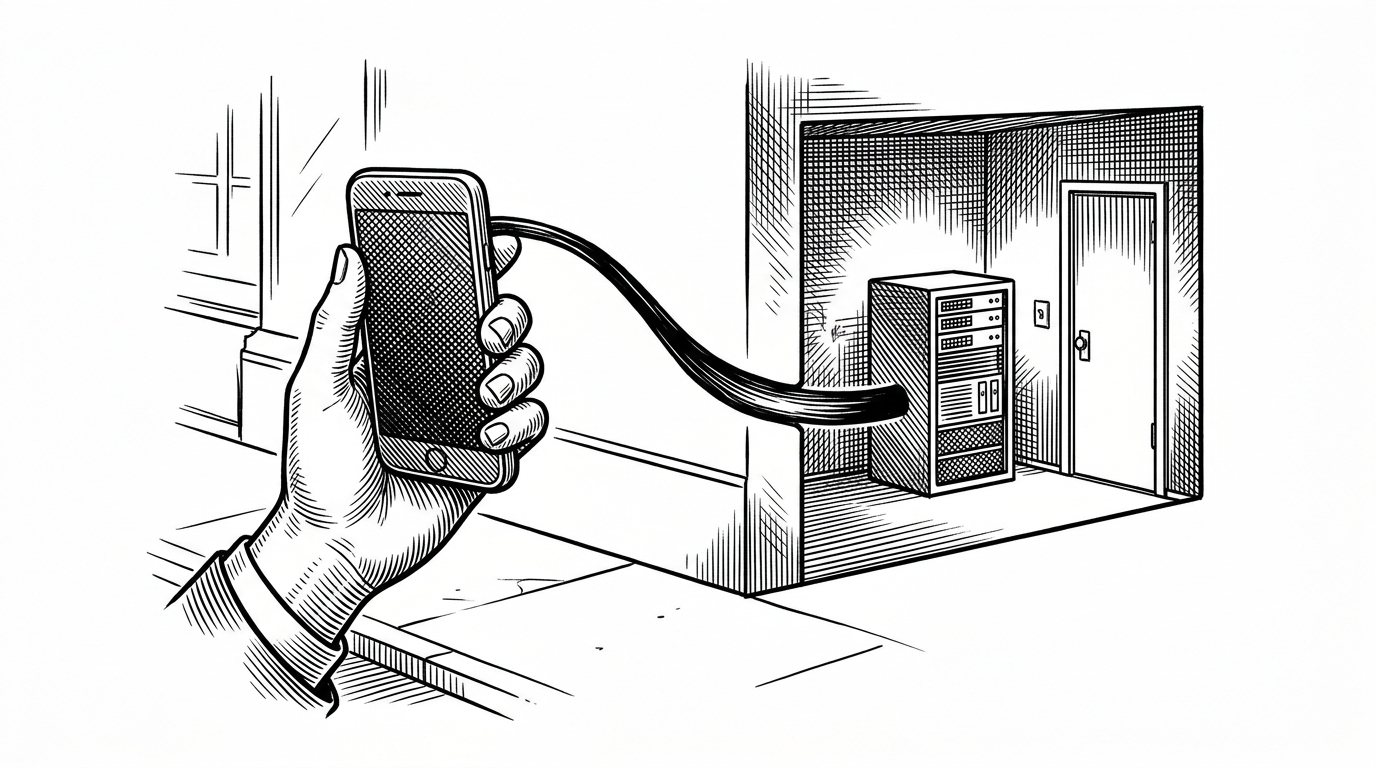
- clawtotalk is a mobile control surface for a self-hosted OpenClaw backend, not a standalone voice assistant.
- Its real innovation is the trust boundary, because the phone reaches private infrastructure without making that infrastructure public.
- Tailscale is part of the product, not just the plumbing, because it keeps the voice loop inside a private network path.
- The repo works because it is narrow enough to feel immediate, which makes it easier to use than a general-purpose browser front end.
The phone is not the app. It is the remote.
The most interesting thing about clawtotalk is that it refuses to act like a full AI product. It treats the phone as a remote control for OpenClaw, so the handset handles the speaking while the agent stays on infrastructure you own.
That changes the feel of the system. Instead of a browser tab you remember to open, you get one action: press, talk, listen, done.
What the repo actually gives you
The project page frames clawtotalk as an official free push-to-talk voice companion for OpenClaw on iOS and Android. The important detail is that it reads more like an instruction-first setup than a giant codebase.
The skill is an instruction-only guide to set up a mobile voice companion via Tailscale and OpenClaw. All referenced items (OpenClaw config, Tailscale, optional ElevenLabs key, app install) are directly relevant to that purpose.
That is the right shape for a repo like this. You are not buying a new model or a new agent framework. You are wiring a private voice path around an existing OpenClaw setup, usually by pointing at your local config, such as ~/.openclaw/openclaw.json, and adding the network and speech services it needs.
The push-to-talk loop, step by step
This part is easiest to understand as a path, not a feature list. Voice comes in, the request crosses a private boundary, the agent responds, and the answer comes back out through speech.
The diagram matters because it exposes the real bottleneck. The hard part is not speech recognition in isolation or text-to-speech in isolation. The hard part is making the round trip feel conversational while keeping the agent off the public internet.
Why Tailscale changes the product
Tailscale is not garnish here. It is the thing that lets the phone reach the agent without forcing the agent onto the open web.
That matters because voice changes the stakes. You are not clicking through a dashboard. You are talking through a device that lives in your pocket, and the trust boundary has to feel boring.
A public endpoint could work, but it would change the product. The whole appeal of clawtotalk is that the user experience stays simple while the infrastructure stays private.
Browser tab vs dedicated voice companion
| Interface | Setup burden | Privacy boundary | Best fit |
|---|---|---|---|
| clawtotalk on mobile | Medium, because you need the private network path and the speech setup | Strong, because the phone reaches a self-hosted target over Tailscale | Hands-busy voice control |
| ktamas77/clawtotalk in the browser | Lower, because a web surface is easier to launch and test | Depends on how you expose the host | Desktop use and quick experiments |
| Messaging app integration | Lowest, because users stay inside a familiar chat client | Good if the chat app already sits in your trust model | Text-first workflows and broad adoption |
The comparison is not about which surface is morally better. It is about what kind of habit you want to build. A browser tab is flexible, but a dedicated voice companion makes talking to the agent feel like a default action.
Where it fits in OpenClaw
OpenClaw is the center of gravity. clawtotalk is an edge adapter. It does not replace the agent, and it does not replace the action layer. It changes how often you reach for the system, and from where.

That is why the repo feels more like a product choice than a framework contribution. The maintainer, alvinunreal, is not trying to make voice universal. The goal is to make one private path feel obvious enough that you will actually use it.
The trade-off that makes it useful
This is an opinionated design. It depends on private networking, it depends on configured speech services, and it only really shines when you already want OpenClaw in your life.
That narrowness is the feature. A small voice shell that does one thing well is easier to trust than a general-purpose assistant that tries to be everywhere at once.
In that sense, clawtotalk is not a bigger idea than OpenClaw. It is a better doorway into it.