EasyBudgetAI: SmartKhata: The AI Ledger That Understands Hinglish, Khata, and Human Sloppiness
A deep look at how EasyBudgetAI turns chat and voice into structured expenses, matches fuzzy Indian names, and uses Redis to keep AI costs, abuse, and security under control.
- SmartKhata treats budgeting as a language problem first, then layers finance logic on top of it.
- Its real moat is the control system around AI, with dedupe, rate limits, fallback parsing, and Redis doing as much work as Gemini.
- Khata matching is the repo's sharpest technical trick because Indian naming variation breaks ordinary string search.
- The project feels small in scope but unusually production-minded, which makes it more credible than a typical AI demo.
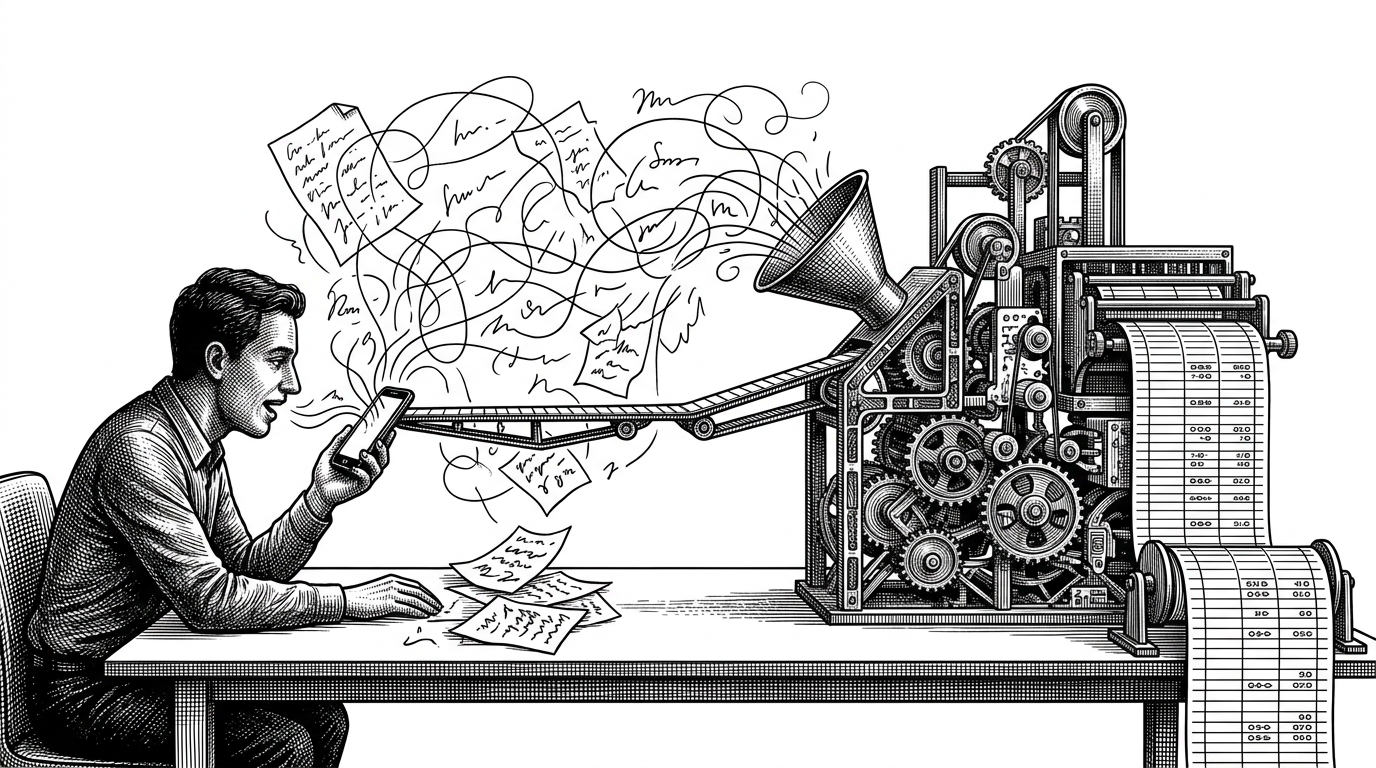
The easiest way to understand SmartKhata is to ignore the dashboard and listen to the input. A user says chai 50, auto 80, or Rahul ko 500 diye, and the app tries to turn that into durable finance data. That is not a cosmetic feature. It is the whole product.
Most budgeting tools start with forms. SmartKhata starts with the way people actually remember spending: in fragments, in Hinglish, and often in a chat thread or voice note. That matters because the hardest part of tracking money is rarely arithmetic. It is the friction of recording it at all.
Why This Budget App Starts With a Conversation
The repository frames the app as an AI-first expense tracker, but the deeper story is behavioral. It removes the need to translate human speech into a schema by hand. Instead, it tries to do that translation for you, then preserve the result as a structured ledger entry.
That is a better fit for informal finance than a traditional spreadsheet or a rigid personal finance app. Daily spending in many Indian contexts is social, fast, and messy. SmartKhata is built around that mess.
The Real Product Is a Translation Layer
At a high level, SmartKhata is a translation layer. The backend uses Gemini to parse noisy input into structured JSON, but it does not treat the model as a single point of truth. When the model fails or confidence is low, the code falls back to regex extraction. When the same message appears again, Redis can short-circuit the expensive call entirely.
That design changes the feel of the app. The AI is visible, but it is not allowed to be irresponsible. The repo treats model output as one layer in a larger control loop, which is exactly what production software should do when the input is messy and the cost of being wrong is real.
How It Stays Cheap, Fast, and Hard to Break
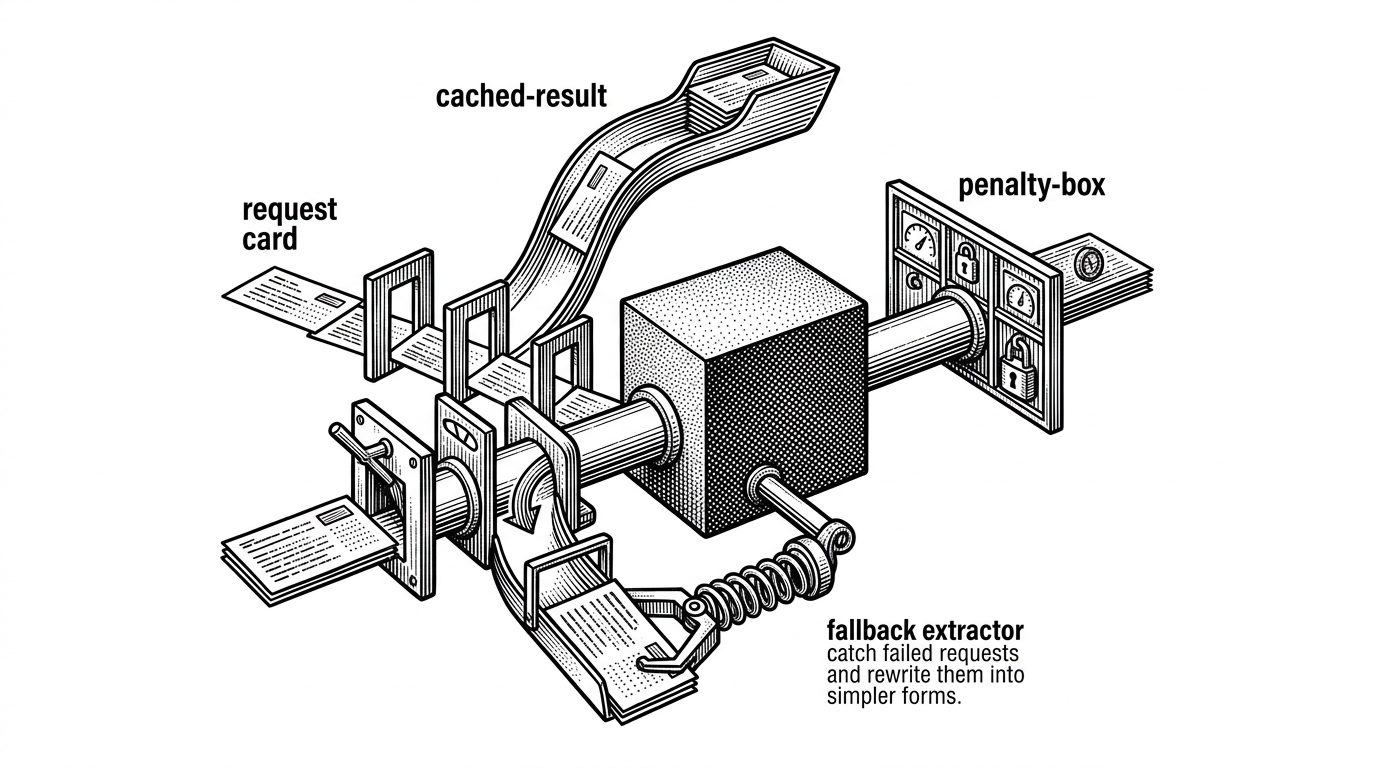
The repo's strongest engineering signal is its defensive posture. Before hitting the model, the app hashes normalized input, checks for duplicates, and applies multi-tier rate limits. That includes burst control, per-user limits, a global cap, and a cooldown penalty box. Redis is doing a lot of work here, and that is a good sign.
There is also security discipline that many AI demos skip entirely. The backend includes CSRF protection, JWT refresh handling, and middleware wrappers that keep failures contained. This is what makes the codebase feel like a system rather than a prototype.
Khata Matching Is the Hidden Hard Problem
The most interesting technical problem in SmartKhata is not expense categorization. It is party matching. In a khata workflow, the same person may appear as Rahul, Rahul bhai, Rohan, or a phonetic near-variant typed in a hurry. Plain string matching fails immediately.
| Problem | Naive search | SmartKhata approach |
|---|---|---|
| Name variation | Misses aliases and spelling drift | Combines Levenshtein distance with phonetic normalization |
| Indian naming patterns | Treats suffixes and honorifics as noise only | Uses first-name bias to keep the right person linked |
| User behavior | Assumes consistent spelling | Accepts messy, conversational entry |
| Outcome | Duplicate parties and broken ledgers | Stable khata records across real-world usage |
SmartKhata's matcher is built for the way informal finance actually works. The code combines edit distance with phonetic scoring, then nudges the result with first-name preference when it is useful. That sounds small. It is not. In a ledger system, misidentifying a person corrupts the record graph.
The result is a system that understands the social life of a ledger. It is not just reconciling numbers. It is reconciling people.
A Backend That Can Be an API or a Bot
One of the cleanest architectural choices sits in the entry point. The backend can boot as a standard API server or as a Telegram bot, depending on environment configuration. That makes the same business logic usable across web and messaging workflows without splitting the codebase in two.
That polymorphism is a practical deployment pattern for an app like this. Users may want a web dashboard for review and analytics, but the actual entry point can live in chat. SmartKhata does not force those behaviors to compete.
How SmartKhata Compares
| Project | Strength | Input model | AI strategy | Best fit |
|---|---|---|---|---|
| SmartKhata | Conversational Hinglish finance | Chat and voice | Gemini plus fallback parsing plus Redis gates | Informal ledgers and multilingual expense entry |
| Firefly III | Mature bookkeeping | Forms and rules | No native AI focus | Detailed self-hosted accounting |
| Sure | Personal finance OS | Institution-linked aggregation | Not centered on chat parsing | Broader net-worth and account linking |
| MoneyMatter | AI-native finance tooling | Assistant-style workflows | MCP-oriented model connectivity | Users who want flexible LLM integration |
| Spritan/expense_tracker | Lightweight AI tracker | Simple natural language input | Gemini with simpler storage | Small demo-style expense capture |
The comparison makes the niche obvious. SmartKhata is not trying to out-build Firefly III or replace a full financial OS. It is aiming at a narrower, sharper problem: informal, multilingual money talk that needs to become structured data with minimal friction.
That focus gives it a clear identity. It is less a finance suite than a conversion engine for khata workflows.
Why This Repo Feels Bigger Than Its Size
The codebase reads like a project with production instincts. It uses modern ES modules, Zod validation, Redis-backed state and security layers, and a frontend stack that is modern without being exotic. The docs are detailed, the backend is defensive, and the AI layer is not treated as magic.
That combination is rare in small open-source repos. Many projects can demo the feature. Fewer can explain how they avoid duplicate requests, handle fallback parsing, or keep a chatbot-style workflow from becoming expensive and brittle. SmartKhata does all three.
That is why the project stands out. It is not just an AI budgeting app. It is a compact system for turning human mess into financial structure, with enough discipline around the edges to make the idea believable.