open-claude: The Open-Source Race to Rebuild Claude’s Harness
The real product is not the model. It is the loop around it: prompts, artifacts, sandboxing, and the control layer that makes an AI tool feel usable.
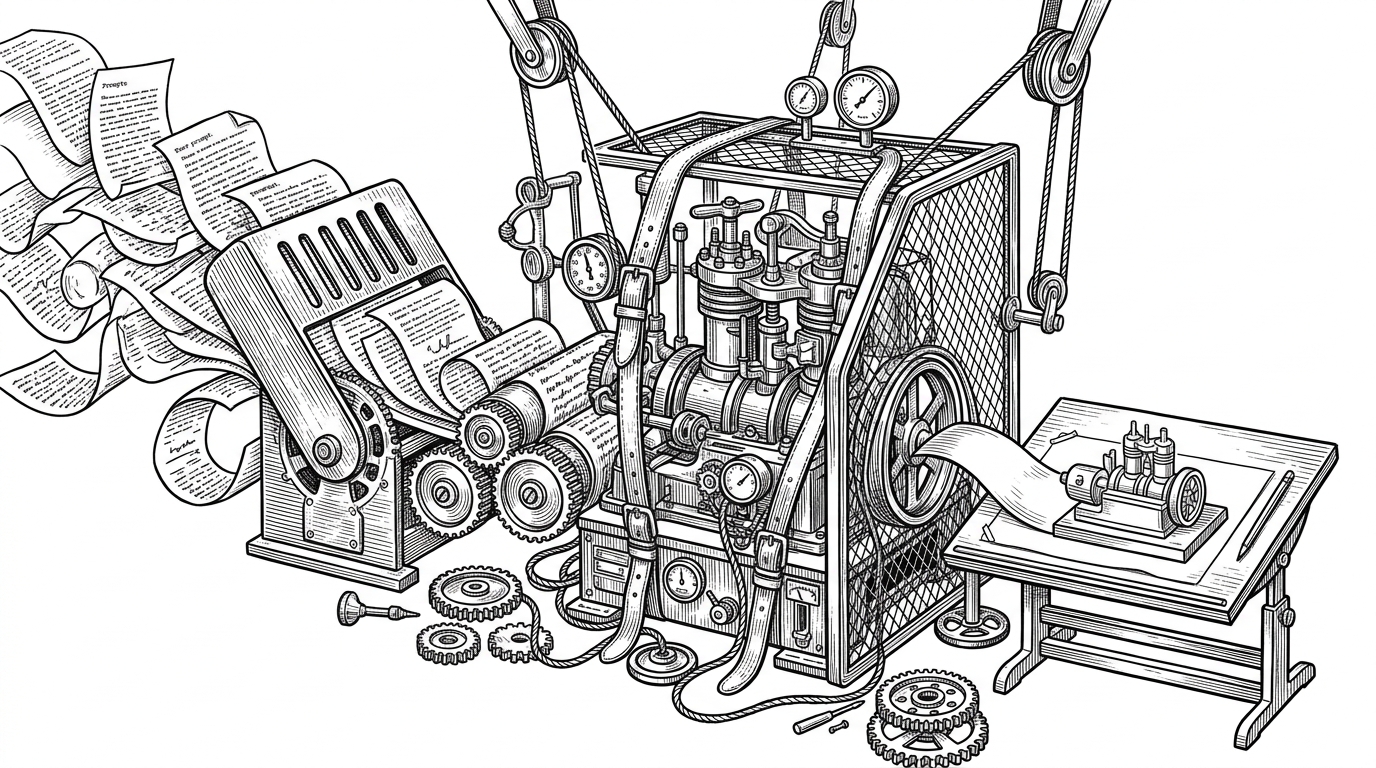
- open-claude matters less as a finished app than as proof that the moat in AI coding tools has shifted to the harness around the model.
- The most valuable parts of the category are the loop, the sandbox, and the artifact surface that turn text generation into a working environment.
- Open-source projects are now competing on control, portability, and UI coherence, not just on raw model access.
- A real contender will need deeper architecture, tighter artifact fidelity, and enough community traction to become a standard.
The harness is the product
The public footprint attached to evinjohnn/open-claude is thin. That is exactly why it is interesting. You can read it less as a mature codebase and more as a signal that the next fight in AI coding is not about who has the smartest model, but who can turn a model into a place people actually want to work.
That shift is easy to miss because model demos still dominate the conversation. But the value moves fast once the model becomes a commodity. The thing that starts to matter is the harness: the orchestration layer, the sandbox, the artifact renderer, the feedback loop, and the UI that keeps all of it coherent.
On March 31, 2026, a missing.npmignore entry shipped 512,000 lines of unobfuscated TypeScript to the public npm registry. Within hours, the entire internal architecture of Anthropic’s Claude Code — the agent harness connecting LLMs to tools, file systems, and task workflows — was laid bare for the world to study.
Why this category matters now
The Claude Code leak made the harness legible. Suddenly, the open-source community could see that the product was not just prompt engineering. It was a tight loop between the model, the filesystem, the terminal, and a UI that made complex work feel tractable.
That explains why the response was not a single clone. It was a cluster of projects attacking the same surface from different angles. Some optimized for portability, some for orchestration, some for config and runtime control, and some for a more general agent experience beyond coding.
ECC has evolved from a personal config pack into what its maintainer now calls an “agent harness performance optimization system” spanning Claude Code, OpenAI Codex, Cursor, and OpenCode.
What open-claude is trying to recreate
If open-claude becomes more than a name, its target is not a chat box. It is a coherent workspace where a user can ask for work, watch the system plan it, see outputs rendered as artifacts, and keep steering the loop without losing context.
That is a different product thesis from a raw CLI wrapper. The experience has to make the model feel continuous, not episodic. You want chat, file access, preview, and control to feel like one moving surface instead of four disconnected tools.
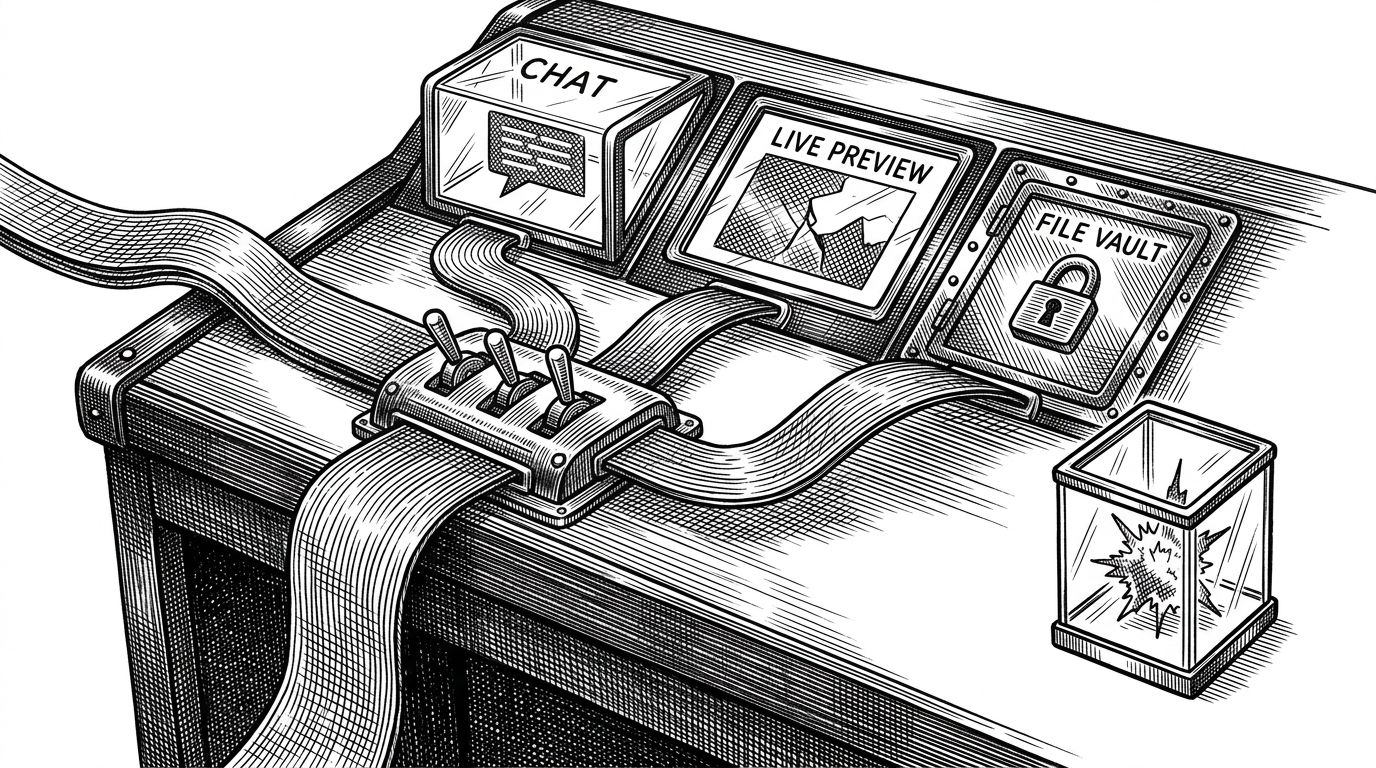
Inside the loop: prompt, plan, artifact, feedback
This is the useful abstraction. A user request enters as a prompt, the system turns it into a plan, the model produces an artifact or action, and the result is rendered back into the interface so the next turn can improve it. The quality of the loop is what separates a clever demo from a tool people trust.
The sandbox boundary is the key technical decision. Once the model is allowed to produce live code, markup, or previews, the system has to contain failure by default. That means the artifact renderer cannot just be a display surface. It has to be isolated enough to fail safely and clear enough to keep the user in control.
open-claude vs the alternatives
| Project | Optimizes for | Where it wins |
|---|---|---|
| open-claude | Open-source harness thesis | Signals the shift from model to experience layer, even if the public footprint is still thin |
| Claude Code | Terminal-native coding agent | Sets the reference point for repository-aware loops, refactors, and workflow depth |
| OpenCode | Model-agnostic CLI | Wins on portability and freedom from a closed ecosystem |
| ECC | Harness tuning layer | Optimizes the experience around existing agents instead of replacing them |
| OpenClaw | Messaging-first orchestration | Broadens the agent idea beyond coding into general life automation |
That map is the point. The competition is not just about raw intelligence. It is about whether a project can make a model feel like a durable workspace, one that is auditable, portable, and good enough to return to tomorrow.
What would make this real
For open-claude to become more than a signal, it would need visible depth in four places: a clear adapter layer for different models, a robust sandbox around generated artifacts, a faithful rendering path for code and previews, and enough tests and documentation to make the harness trustworthy.
That is the real bar for this category. The winning project will not just copy Claude's surface. It will prove that the surrounding system is better at helping a person finish work, safer at handling generated output, and open enough that the community can keep extending it.