troyvis: Troy-VIS: Turning Any Text Prompt Into a Real-Time Video Track
Google Research’s open-vocabulary video segmentation stack pairs language grounding, memory, and deployment-minded engineering so the hard part is not just accuracy, but speed.
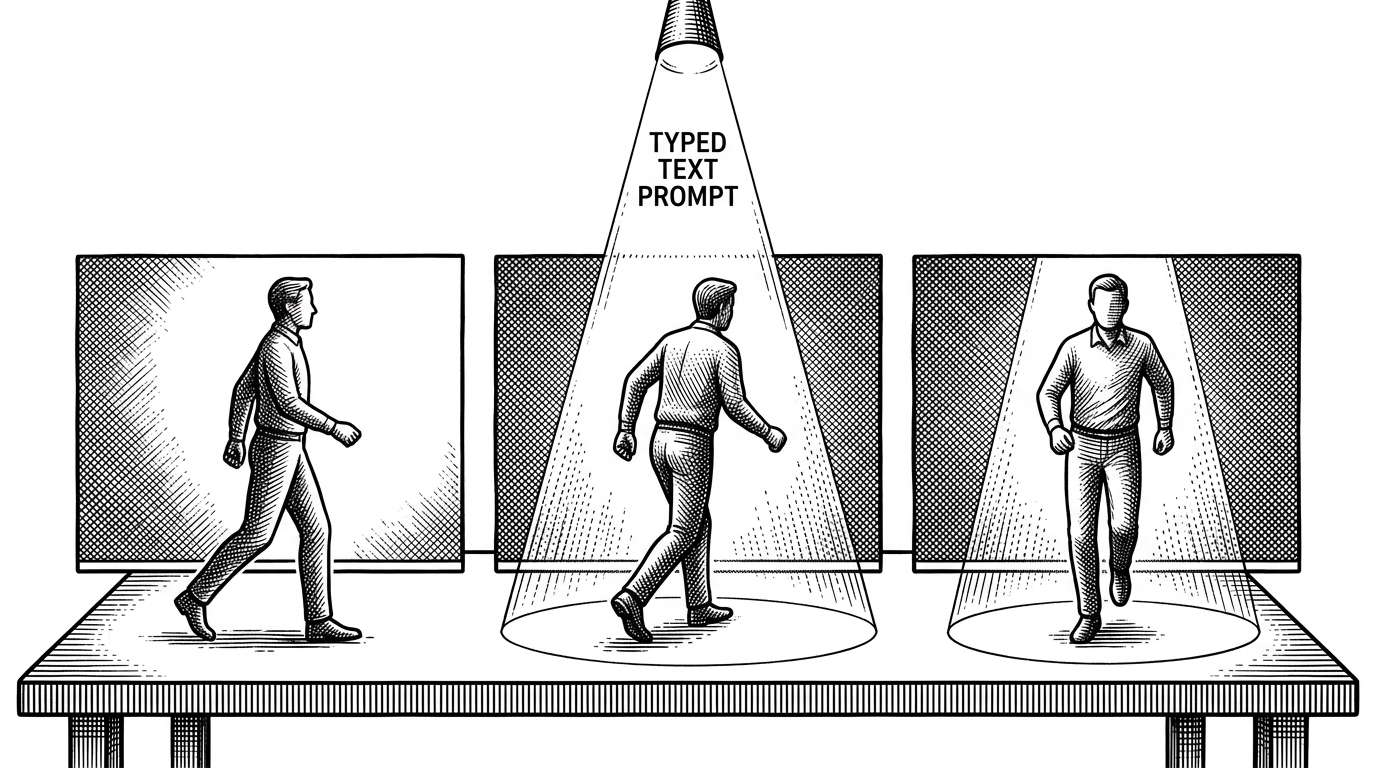
- Troy-VIS matters because it treats open-vocabulary video segmentation as a runtime problem, not just a benchmark problem.
- Its speed comes from architectural choices that preserve temporal identity without turning the inference path into a research prototype.
- The data pipeline is part of the product, because mixing datasets and synthesizing pseudo-video is what makes broad vocabulary tracking feasible.
- The repo’s real differentiator is not only that it sees many classes, but that it keeps them usable at real-time speed.
A model that tracks what you name
Most video segmentation systems still feel like closed libraries. They know their classes, they know their limits, and they fail politely when the object is outside the script. Troy-VIS takes a broader bet: give it text, and it should find and track the thing you meant, even if that category was never the point of the original dataset.
Troy-VIS is the first efficient foundation model family for open-vocabulary object perception. It can detect and segment objects of any class in images and track objects of any class in videos.
That framing is the real hook. The repo is not promising a nicer demo on a narrow benchmark. It is trying to make open-vocabulary video instance segmentation feel like a practical interface: name the object, then keep that object stable as the video moves.
The trick is not just language, it is time
Open-vocabulary is only half the problem. The other half is identity. Once the model has grounded a prompt, it has to preserve that match across motion, blur, and occlusion without re-solving the entire scene from scratch on every frame.
That is why the paper’s speed story matters. The repo points to three ingredients that make the system feel deployable: a decoupled attention feature enhancer, Flash Embedding Memory, and kernel interpolation. Together, they reduce the cost of moving information through the model and exploit the fact that video is not a random sequence of images.
In this paper, we address the challenge of performing open-vocabulary video instance segmentation (OV-VIS) in real-time. We analyze the computational bottlenecks of state-of-the-art foundation models that performs OV-VIS, and propose a new method, TROY-VIS, that significantly improves processing speed while maintaining high accuracy.
How Troy-VIS is assembled
Under the hood, the repo is organized like a system, not a demo. The core EVAP architecture coordinates a vision backbone, text encoding, feature fusion, and set-based prediction. The codebase supports multiple backbones, including Swin, ResNet, InternImage, and EVA variants, which tells you the team is treating the visual encoder as a tunable component rather than a single fixed bet.
The split between training and deployment is equally important. The deployment variants, including the DPL files, strip away training-only machinery such as the Hungarian matcher and criterion logic so inference stays lean. That is a quiet but meaningful signal: this repo is designed to be run, not just studied.
The text side is not an afterthought either. The model can project CLIP-style embeddings into visual feature space, then fuse them early enough that the prompt influences how the image is interpreted, not just how the final class label is chosen.
Why the data pipeline is part of the product