img2threejs: When Image-to-3D Becomes Code-to-3D
A zero-dependency pipeline turns a single image into procedural Three.js factories, so AI agents can rebuild, inspect, and refine 3D objects as source code instead of opaque meshes.

Rebuild the object in a reference image as a code-only, procedural, quality-gated, animation-ready Three.js model. Token-efficient image-to-3D.
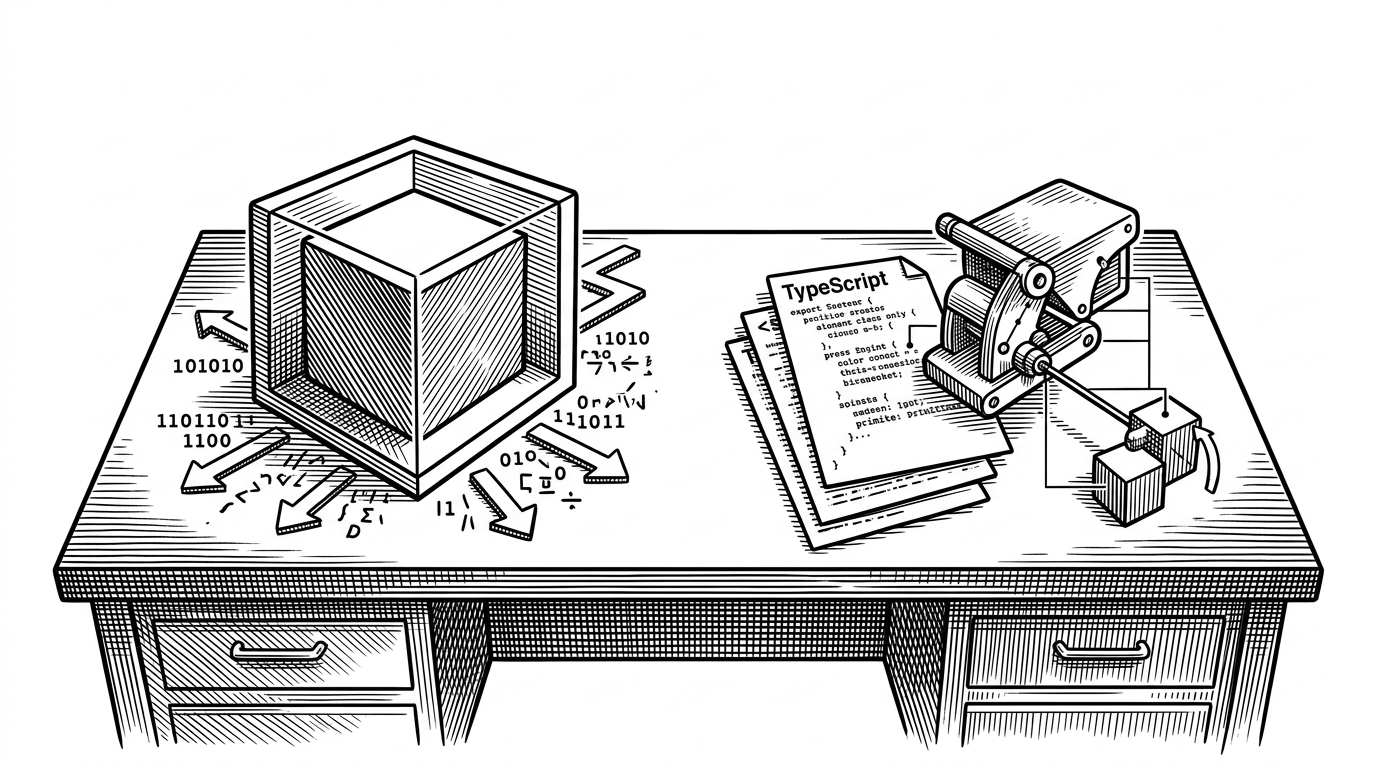
- img2threejs treats image-to-3D as a translation problem, because procedural TypeScript is easier for agents to inspect, edit, and regenerate than a binary mesh.
- Its pipeline is intentionally staged and gated, which keeps the model honest long enough to produce structure, hierarchy, and usable runtime behavior.
- The grimoire is not documentation in the usual sense, but a vocabulary system that teaches the agent how to talk about geometry, likeness, and reconstruction.
- The project’s real bet is that LLM-native 3D should be source code first, because source code can be reviewed, revised, and animated without leaving the loop.
The model is not a mesh. It is code.
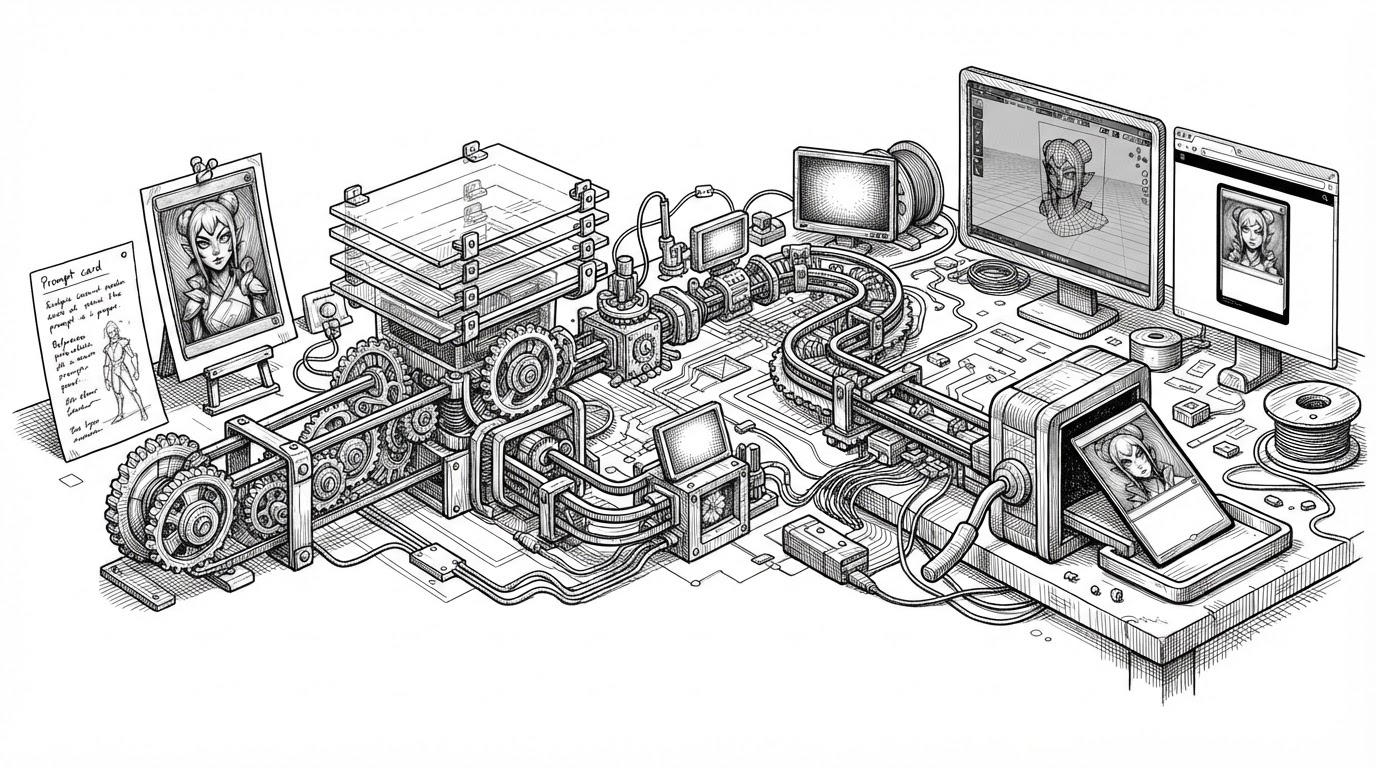
Most image-to-3D tools try to end with a file format: GLB, OBJ, maybe a tidy export for another pipeline. img2threejs takes the opposite route. It turns a reference image into TypeScript that builds the object at runtime with Three.js primitives, grouped hierarchies, and procedural hooks.
That shift matters because code is inspectable. An LLM can read it, patch it, and try again. A mesh is just an opaque blob with triangle count anxiety.
Why agents need 3D as source code
The project’s core argument is practical. Coding agents reason in text, not in hidden geometry. If the output is procedural code, the same model that wrote it can also inspect it, compress it, refactor it, and generate variations without ever crossing a file-type boundary.
| Format | What the agent sees | How easy it is to edit | Best use |
|---|---|---|---|
| Binary mesh | Triangles, buffers, opaque export | Low | Shipping assets after the fact |
| Procedural TypeScript | Readable functions, groups, pivots, materials | High | Iterating with coding assistants |
| Visual editor output | Scene graph hidden behind a UI | Medium | Designer-led composition |
This is why the comparison is not really about image-to-3D quality. It is about media. Mesh generators produce objects. img2threejs produces instructions.
The pipeline is staged on purpose
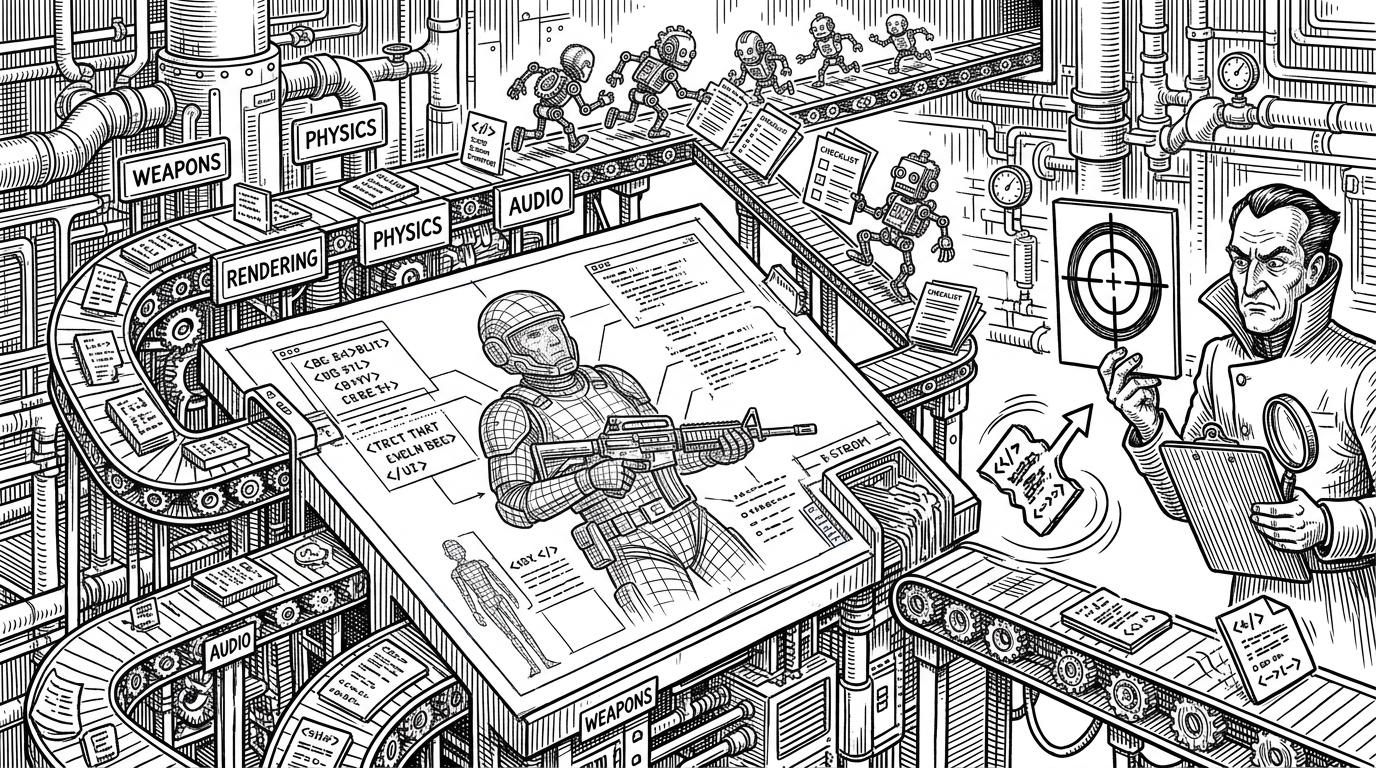
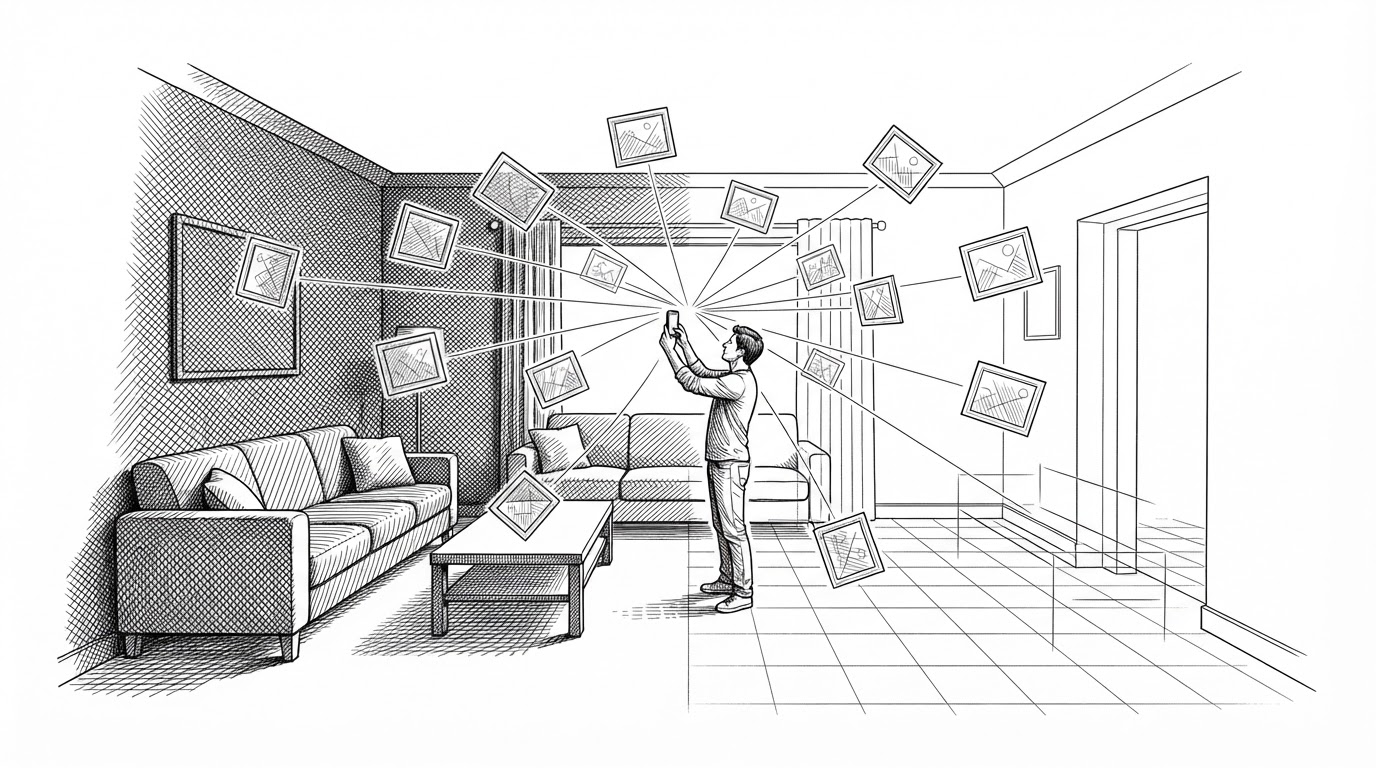
The engine room lives in forge/. The first pass probes the image at a low level, then scaffolds landmarks, estimates camera pose, extracts evidence for lighting and materials, and only then moves toward code generation. The point is not speed. The point is discipline.
The grimoire is the real secret
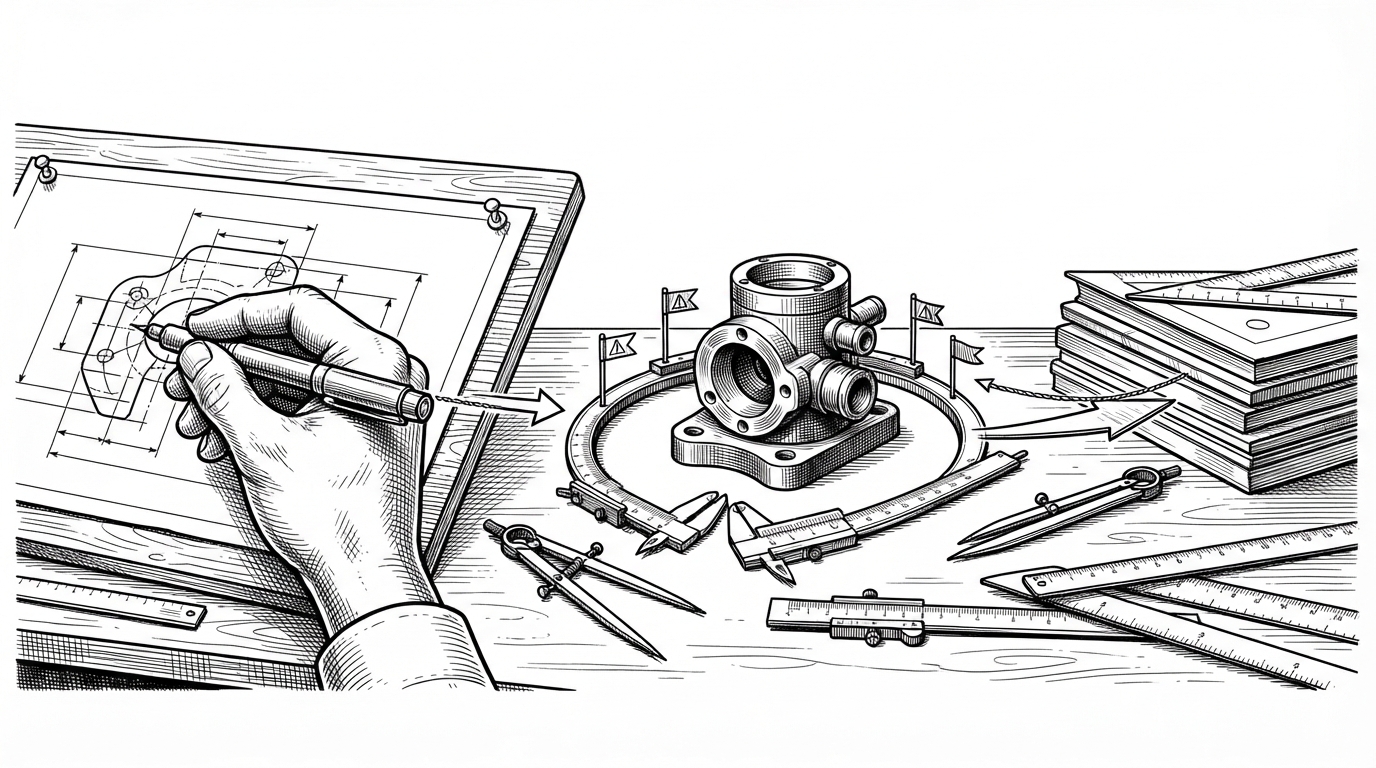
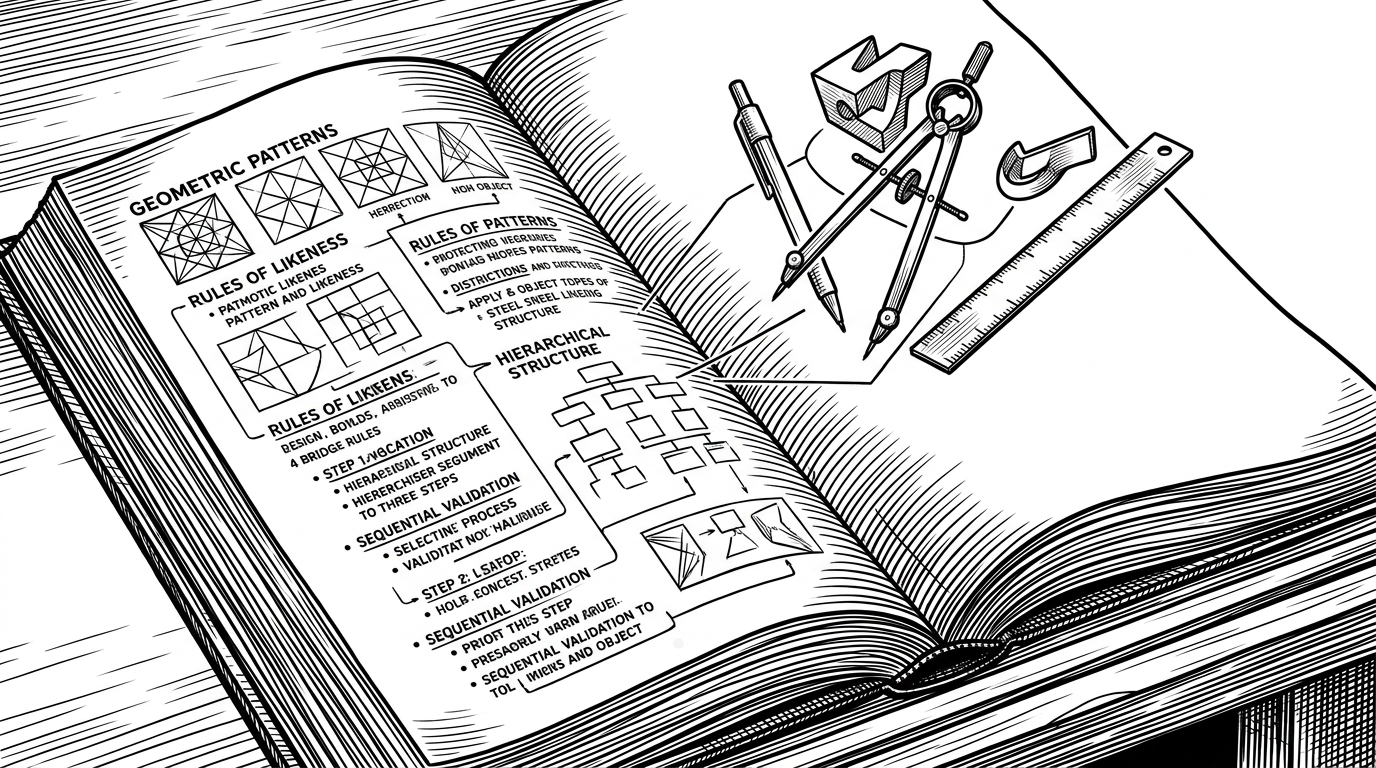
The grimoire/ folder is where the project teaches itself a vocabulary. It is not just a documentation layer. It is the language the agent uses to describe bevels, rivets, hierarchy, likeness, and validation in a way that can be repeated across objects.
That matters because reconstruction fails when the model improvises. A shared prompt language narrows the search space. It gives the system a way to say, "this part is a hinge," instead of vaguely hoping the shape looks hinged.
# Standard-library-only image probing is the kind of constraint that changes the whole toolchain.
# The point is portability in locked-down agent environments.
import struct
import zlib

def read_png_dimensions(path):
    with open(path, 'rb') as f:
        sig = f.read(8)
        if sig != b'\x89PNG\r\n\x1a\n':
            raise ValueError('Not a PNG')
        length = struct.unpack('>I', f.read(4))[0]
        chunk_type = f.read(4)
        if chunk_type != b'IHDR':
            raise ValueError('Missing IHDR')
        width, height = struct.unpack('>II', f.read(8))
        return width, height
The no-dependency constraint is not a gimmick
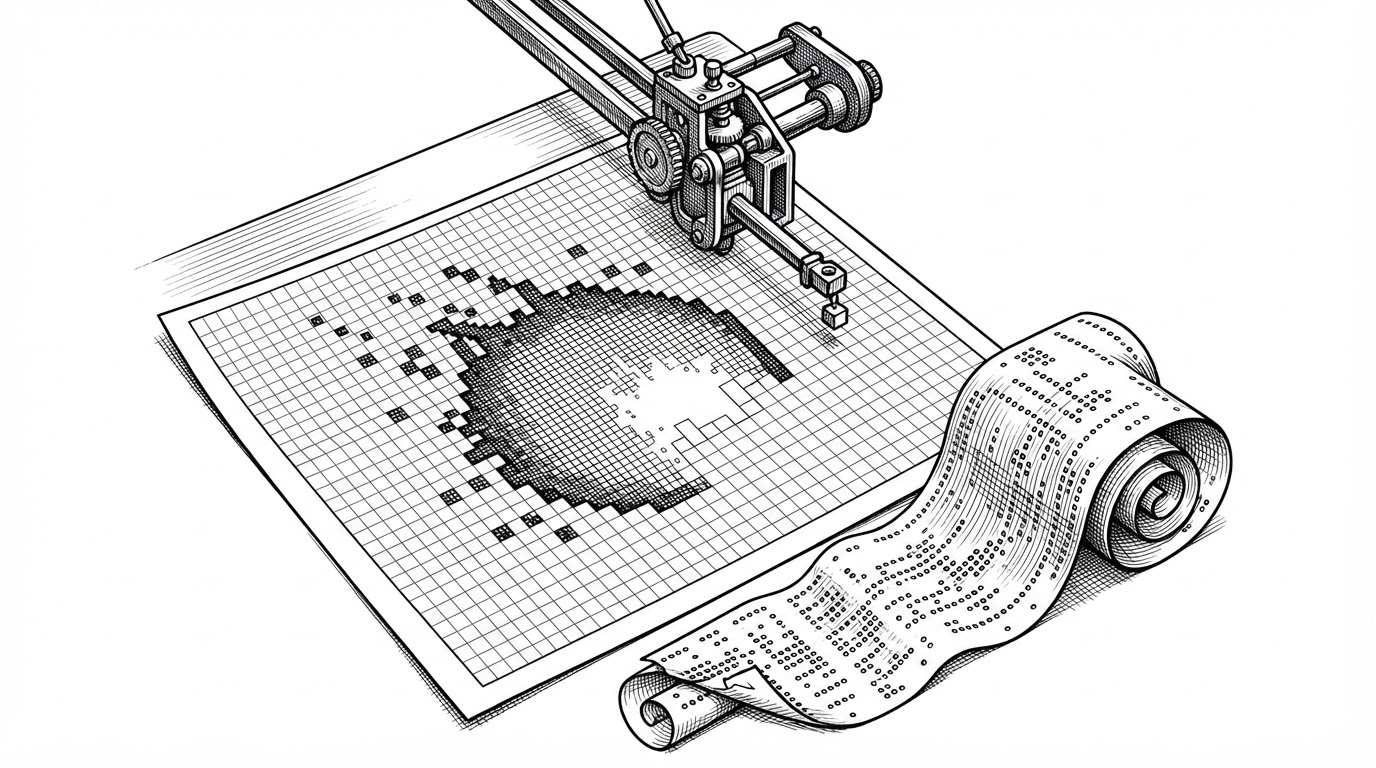
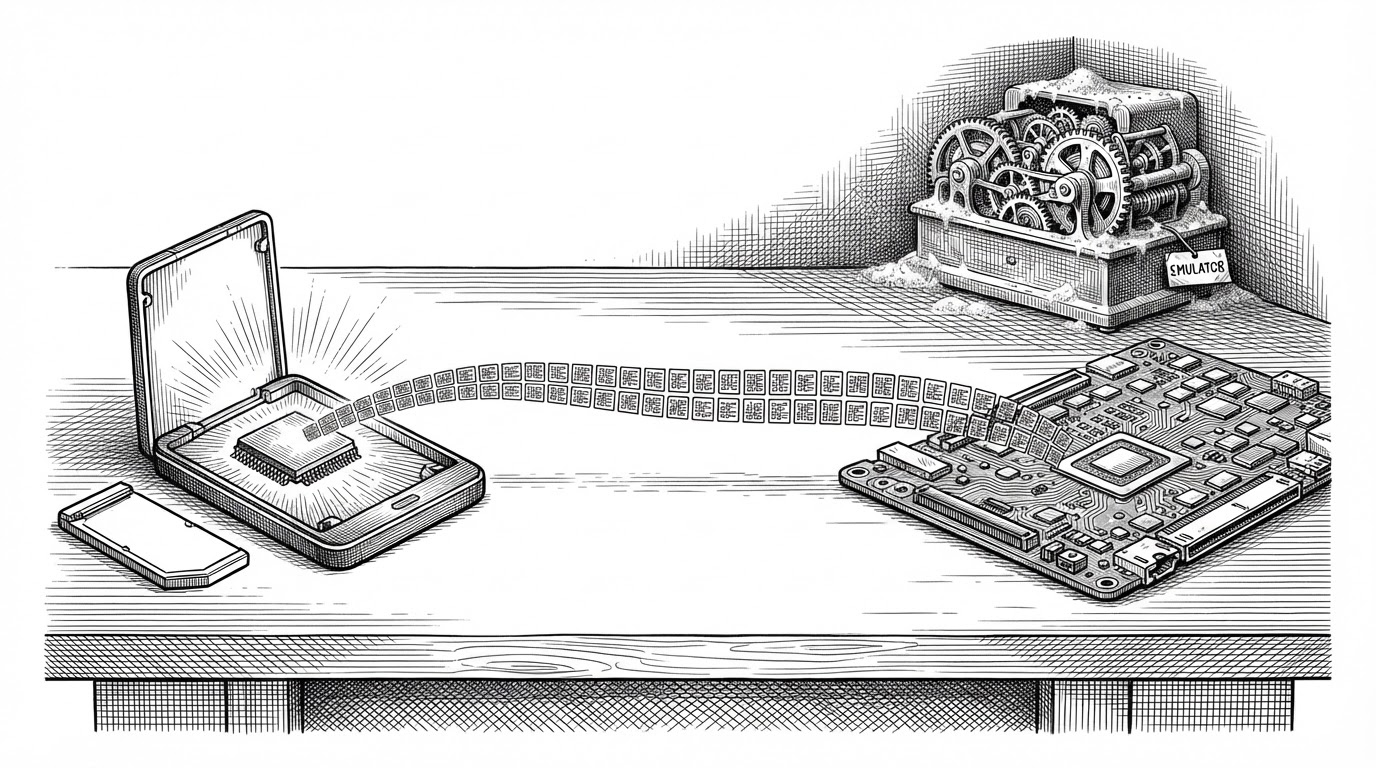
The repository leans hard on the Python standard library. No Pillow, no NumPy, no OpenCV. That is a real tradeoff, because the parsing code gets more manual, but it also means the pipeline can run in minimal containers and agent environments where installing extra packages is a liability.
For this kind of tool, portability is not a nice-to-have. It is part of the product. If the goal is to let coding assistants reconstruct objects inside a constrained workflow, then the workflow itself has to be as frictionless as possible.
What this beats, and what it does not
| Tool class | Strength | Weakness | Where img2threejs fits |
|---|---|---|---|
| Neural mesh generators | Fast, photoreal outputs | Opaque, harder to edit | Good for assets, not code-native iteration |
| Visual 3D tools | Friendly scene building | Still centered on UI workflows | Useful for designers, less native for agents |
| img2threejs | Editable, token-efficient, animation-ready | Not chasing photorealism | Best when the workflow starts in a coding assistant |
This is not a claim that procedural code beats every mesh generator. It does not. It is a narrower claim: if the user is an LLM-driven coding agent, the most useful output may be the one it can immediately read back and revise.
The bigger bet: procedural 3D for AI workflows
img2threejs points at a larger format shift. If language models are becoming the interface for creation, then 3D should be generated in a form they can reason about. Not just render. Not just export. Reason.
That is the project’s best idea. It recasts 3D reconstruction as a translation layer between vision and code, and once you see that, the rest of the design choices start to make sense.