Bypassing the Standard Library: Inside jpd002/Play--Framework
How a custom C++ utility layer achieves the bit-exact precision needed to emulate legacy console architecture on modern hardware.

- The framework rejects the C++ Standard Library to guarantee bit-exact structural alignment and deterministic behavior across different host architectures.
- Custom memory stream wrappers automatically handle endianness translation, allowing developers to safely manipulate legacy big-endian data on little-endian devices.
- Instead of bundling bloated cross-platform middleware, the framework uses targeted native shims to access OS-level networking and UI components.
- Dynamic loading of Vulkan function pointers prevents operating system loader crashes on older devices lacking modern graphics drivers.
The Cost of the Standard Library
To build a cross-platform PlayStation 2 emulator, you have to throw away the C++ Standard Library. Standard C++ prioritizes general-purpose flexibility and performance on the host machine. Emulation requires absolute, bit-exact determinism across vastly different host architectures.
A software emulator cannot rely on standard implementations. Compiler-specific structure packing, variable bit-widths for standard integer types, and the opaque overhead of standard input and output streams introduce fatal inconsistencies. When you are faking a MIPS CPU on an ARM processor, a single misaligned byte crashes the virtual system.
The jpd002/Play--Framework repository acts as an invisible operating system. It is a custom system layer that explicitly rejects std:: abstractions. In their place, it provides hyper-optimized, size-constrained native wrappers to achieve high-performance determinism.
Enforcing Bit-Exact Reality
The core of the framework is built on aggressive enforcement of data layouts. The Types.h header utilizes static_assert extensively to guarantee exact bit-widths for all primitive types. This ensures that a 32-bit integer behaves identically whether compiled with GCC for Android or MSVC for Windows.
Legacy consoles often utilize big-endian memory architectures, directly conflicting with the little-endian nature of modern x86 and ARM processors. The framework solves this with EndianUtils.h.
Wrappers like MSBFU32 (Most Significant Byte First Unsigned 32-bit) use operator overloading to intercept memory access. This allows developers to naturally manipulate big-endian console memory safely, while the framework automatically applies highly optimized, compiler-specific byte-swapping intrinsics under the hood.
The Best Native Abstraction Layer
Cross-platform compatibility often means bundling massive, generic libraries. The Play Framework takes the opposite approach. It acts as a remarkably thin waist, preferring to route calls directly to the host operating system.
The networking layer exemplifies this philosophy. Instead of shipping a heavy dependency like libcurl to every platform, the framework implements an HttpClient factory pattern. This factory dynamically routes requests to the most efficient native implementation available.
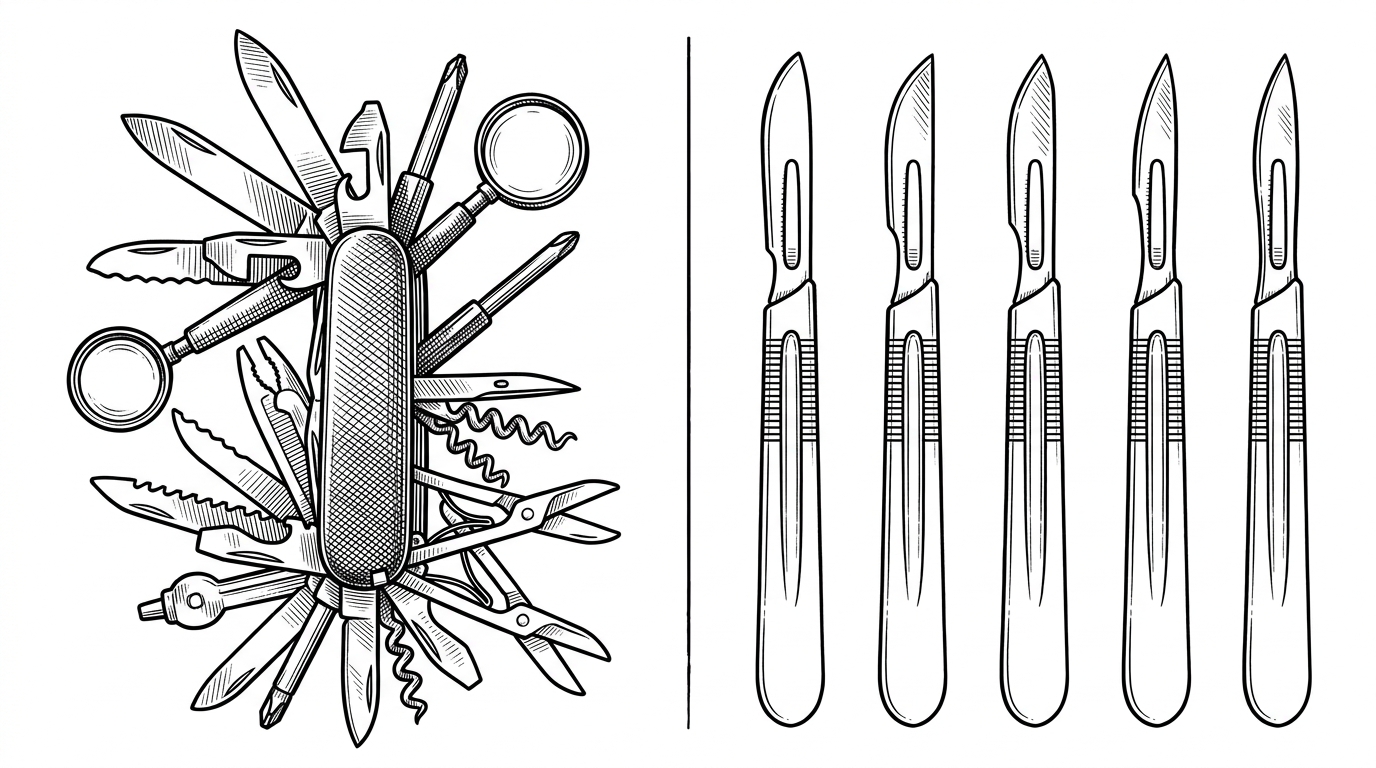
On Android, it uses JNI to call Java's HttpURLConnection. On Apple devices, it leverages NSURLSession. On Windows, it binds to WinHTTP. This approach keeps mobile binary sizes incredibly small while inherently supporting OS-level certificate management and proxy settings.
Surviving the Graphics API Wars
Rendering a decade-old custom graphics synthesizer requires agility. The framework provides robust abstractions over Vulkan, OpenGL, and Direct3D9. The Vulkan implementation is particularly defensive.
Instead of linking directly against Vulkan libraries, the framework uses a macro pattern to dynamically load function pointers at runtime. If a user attempts to run the emulator on an older device missing proper Vulkan drivers, the application gracefully falls back to an older API rather than crashing at the OS loader level.
The Architecture of an Emulator
Building an emulator forces a developer to care about every single CPU cycle and byte of memory layout. General-purpose tools often fail under these extreme constraints.
The jpd002/Play--Framework represents a masterclass in domain-specific engineering. By aggressively stripping away the unpredictable elements of standard C++ and embracing targeted native abstractions, it provides the deterministic foundation required to resurrect specialized legacy hardware on modern devices.