ai-ads-claude: The Advertising Agency Hiding Inside Claude Code
A modular skill system that splits ad strategy into parallel specialist agents, scores readiness across audience, creative, funnel, budget, and competition, and packages the result into a polished report.
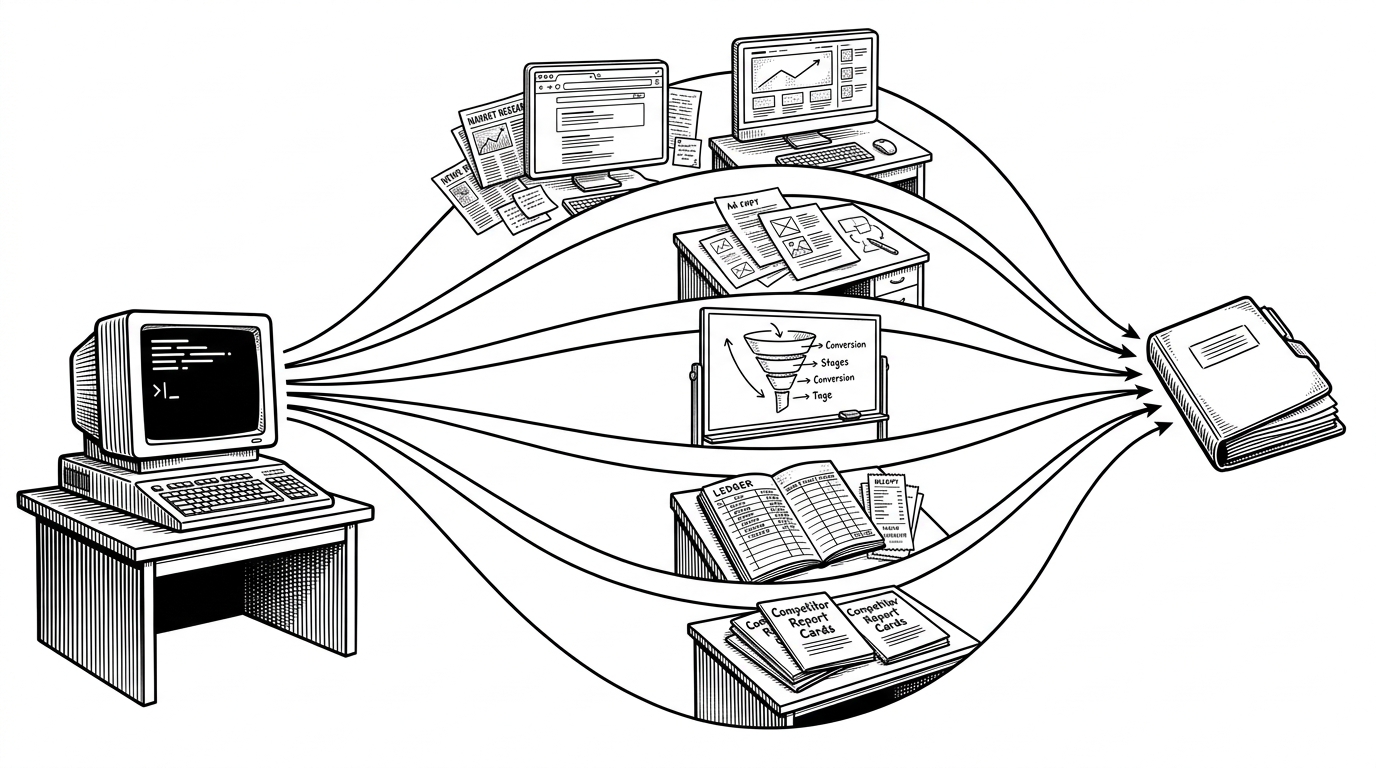
- ai-ads-claude matters because it treats advertising strategy as a coordinated system of roles, evidence, and outputs instead of a single chat prompt.
- Its most interesting move is orchestration, since one command fans out into specialized agents that work in parallel and then recombine into a single strategy.
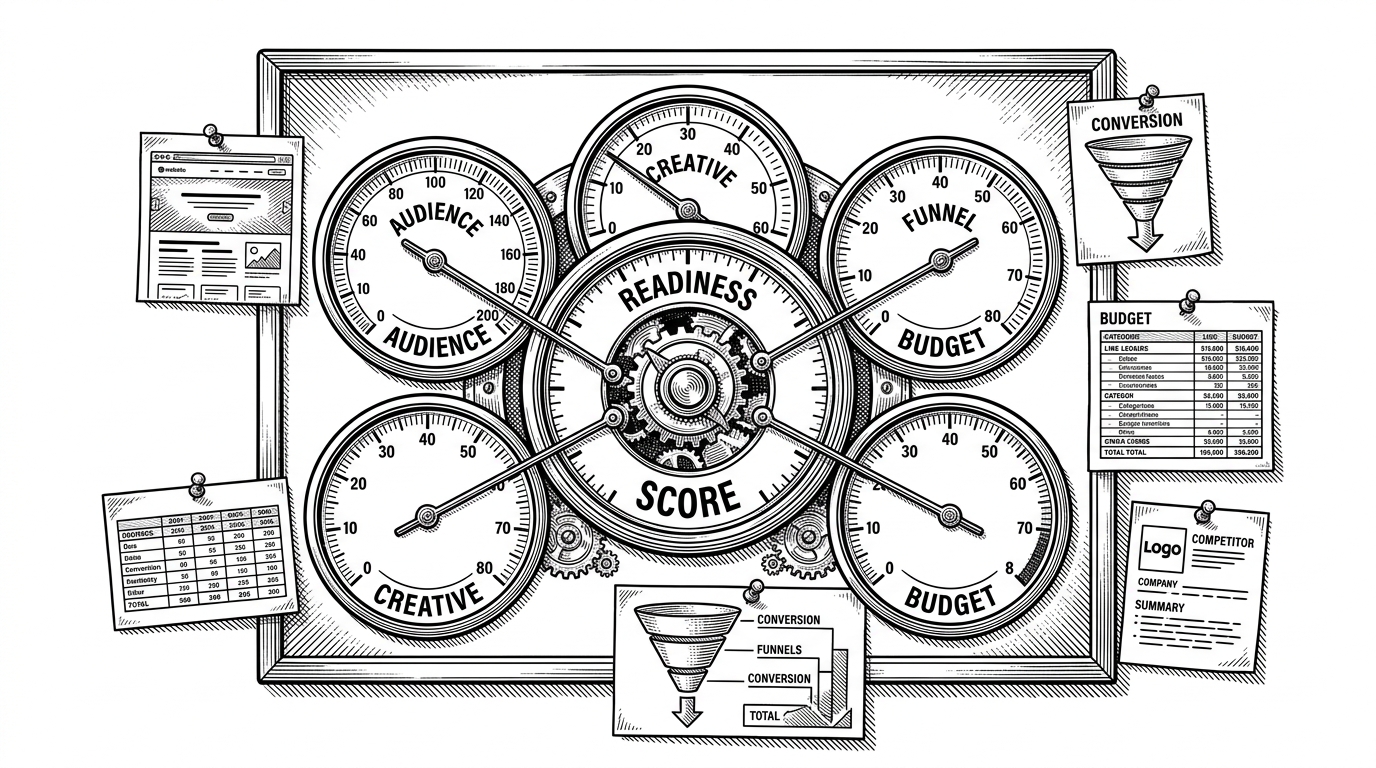
- The repo makes judgment visible by turning fuzzy marketing advice into a weighted readiness score across audience, creative, funnel, budget, and competition.
- Python handles the packaging layer while Claude handles the reasoning, which makes the result feel like a deliverable rather than a conversation.
The CLI Becomes the Agency
Most AI ad tools start with copy. This repo starts with structure. It takes the familiar Claude Code command line and turns it into an agency workflow, where /ads strategy becomes the entry point for research, analysis, scoring, and reporting.
That is the real surprise. ai-ads-claude is not trying to be a clever prompt pack. It is trying to encode the way a good performance team actually works: split the problem, assign specialists, then synthesize the result into something a marketer can use.
Five Specialists, One Strategy
The core move is parallelization. Instead of asking one model to hold audience research, creative analysis, funnel critique, budget planning, and competitive positioning in a single context window, the orchestrator routes each job to a focused sub-agent.
That matters because specialization preserves judgment. A budget agent can reason in benchmarks and learning curves. A creative agent can stay obsessed with angle quality. A competitive agent can compare the offer against market noise without dragging the rest of the workflow into the weeds.
Markdown Is the Product Surface
The repo’s architecture is unusually legible. The command layer lives in /ads, the role definitions live in /agents, and the specialist actions live in /skills. That means the software is also documentation.
This is a smart choice for a tool aimed at marketers and builders. You do not need to reverse engineer a black box to understand what it is doing. The prompts, roles, and workflow shape are all visible as text, which makes the system easier to trust and easier to extend.
A typical usage path looks like this:
/ads strategy https://example.com
/ads audit
/ads creative
/ads budget
That surface matters. It gives non-specialists a way to inspect the process without needing to learn a new app. It also makes the repository feel like a reusable operating system for ad work, not a one-off assistant.
The Readiness Score Makes Judgment Visible
The scoring model is the clearest sign that this project is trying to encode expert judgment, not just generate prose. It weights audience, creative, funnel, budget, and competitive position into a composite readiness score.
That is a stronger pattern than a generic thumbs-up or red-yellow-green summary. The tool is not saying the campaign is good or bad in the abstract. It is showing which parts of the strategy are strong, which parts need work, and how much each area matters to the final decision.
| Dimension | Generic prompt assistant | ai-ads-claude |
|---|---|---|
| Workflow model | Single prompt answers everything | Router sends work to specialist agents in parallel |
| Data source | Usually whatever fits in context | Website evidence, search results, benchmarks, and competitor inputs |
| Strength | Fast to ask | Readable process and narrower judgment |
| Weakness | Context dilution and vague advice | Less direct than full platform automation |
| Best for | Quick drafts | Strategy, audits, and decision support |
The budget lane is especially revealing. Rather than treating spend as a generic number, the repo models a 3-month progression from learning to optimizing to scaling. That is how experienced operators think, and it is the kind of detail that separates a useful workflow from a flashy demo.
Why the PDF Matters
The Python layer is not decorative. It bridges model output and client-ready delivery, which is a crucial distinction. Claude does the reasoning. generate_ads_pdf.py turns that reasoning into a packaged artifact.
That division of labor is important. LLMs are good at synthesis, framing, and analysis. Scripts are good at repeatable formatting, file handling, and predictable output. The repo gets stronger by respecting that boundary instead of pretending the model should do every part of the job.
How It Stacks Up
Compared with a generic single-prompt ad assistant, ai-ads-claude is more structured and more believable. Compared with direct API-driven ad automation, it is lighter, more readable, and easier to extend inside Claude Code.
| Approach | What it does well | Tradeoff | Best fit |
|---|---|---|---|
| Generic ad prompt | Fast drafting | Too much in one context window | Quick ideation |
| ai-ads-claude | Modular strategy and scoring | Does not directly mutate ad accounts | Strategy work and audits |
| API-driven ad agent | Can change campaigns directly | Heavier integrations and more complexity | Operational automation |
That tradeoff is the point. This repo is not trying to become a media buying robot. It is trying to make strategic thinking repeatable, inspectable, and easy to hand off.
What This Repo Suggests About AI Workflows
The broader lesson is bigger than ads. AI tools become more credible when they encode roles, constraints, evidence, and output formats. The best systems do not ask one model to be a genius at everything. They build a process around the model so good judgment has somewhere to live.
That is why this repository stands out. It uses Claude Code like a workstation, not a chatbot. The result is not just generated copy. It is a workflow that behaves like a small agency, with enough structure to feel operational and enough flexibility to stay useful.