ai-agency-claude: Claude Code Becomes a Sales Team: Inside `ai-sales-team-claude`
A command-line agency that researches prospects, scores opportunities, and generates client-ready deliverables by combining parallel agents, weighted rubrics, and a PDF synthesis layer.
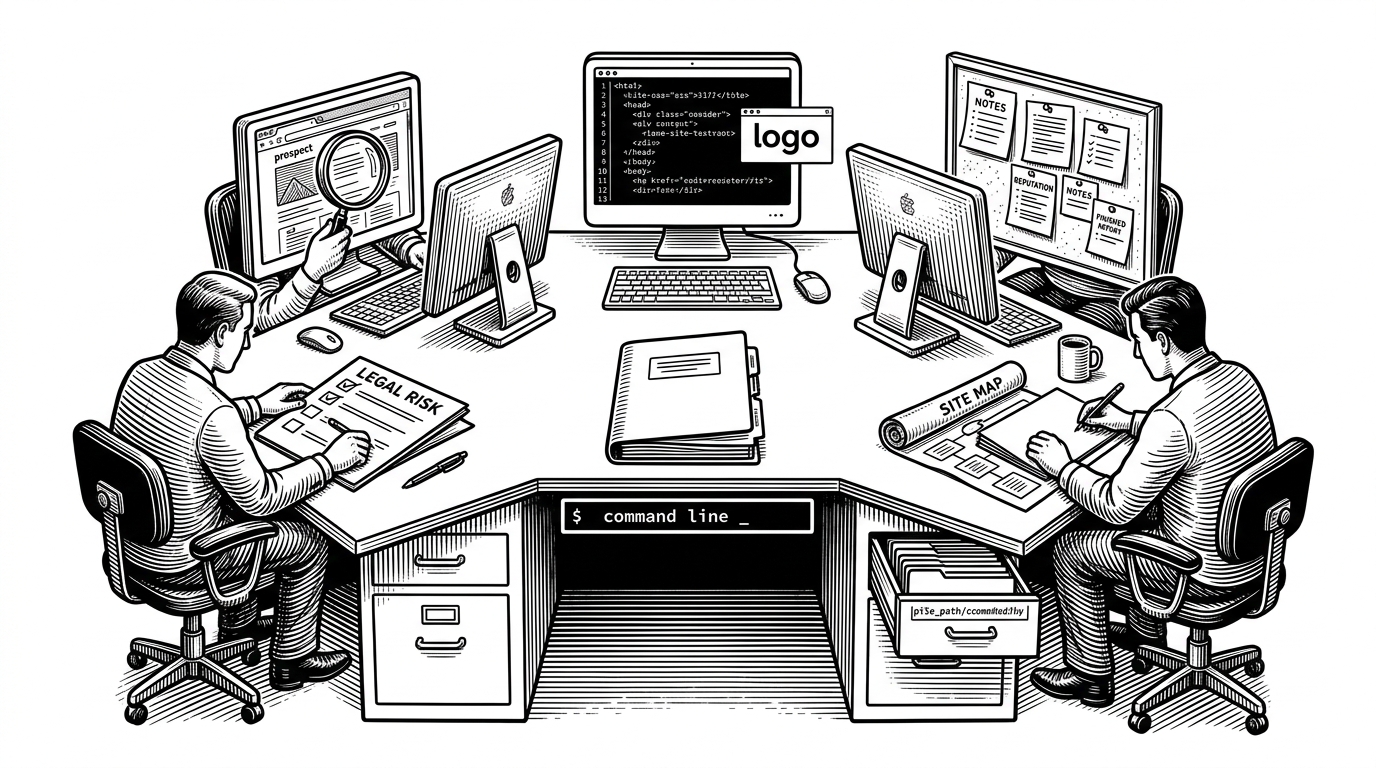
- This repo turns Claude Code into a vertical business runtime, not a chat interface.
- Its core trick is separating messy model judgment from deterministic scoring and PDF output.
- The GEO agent widens discoverability from search engines to AI crawlers and structured-data legibility.
- The result is a workflow that feels closer to a tiny consultancy pipeline than an agent demo.
The terminal that sells
`ai-sales-team-claude` is not trying to be a general agent framework. It is trying to make Claude Code useful for one job: turning a target company into a structured sales deliverable. That deliverable can include research, lead qualification, buying-committee mapping, outreach, meeting prep, and a final PDF report.
That is the surprising part. The repo does not just answer questions. It imposes order on a messy medium, then packages the result in a form a human can actually use. The pitch is simple: start from the command line, end with something client-facing.
Research any company, qualify leads with BANT + MEDDIC, map the buying committee, generate personalized outreach, prepare for meetings, and produce professional PDF pipeline reports — all from the command line.
What this repo actually wires together
The project is built like a Claude Code extension kit. The agency folder holds the orchestrator, agents defines the specialist personas, skills exposes commands, scripts handles the heavy lifting, and install.sh pushes everything into the right local Claude directories.
That structure matters because it makes the repo feel like a plugin system, not a SaaS clone. It is designed to live inside ~/.claude, which means the user is not learning a new platform. They are extending the one they already use.
# Install into Claude Code's local extension space
./install.sh

# Then use agency commands inside Claude Code
/agency onboard
/agency research <company>
/agency propose <target>
The real trick is parallel judgment
The architecture is built around a simple idea: do not ask one model to think about everything at once. Give it a shared brief, split the work across specialist agents, then force each agent to return structured output. That turns a fuzzy conversation into a pipeline.
The repo leans on three stages. Discovery gathers the target context. Parallel audit sends that context to five agents. Synthesis merges their JSON into a weighted composite score and a final report. It is a consultancy process rendered as tooling.
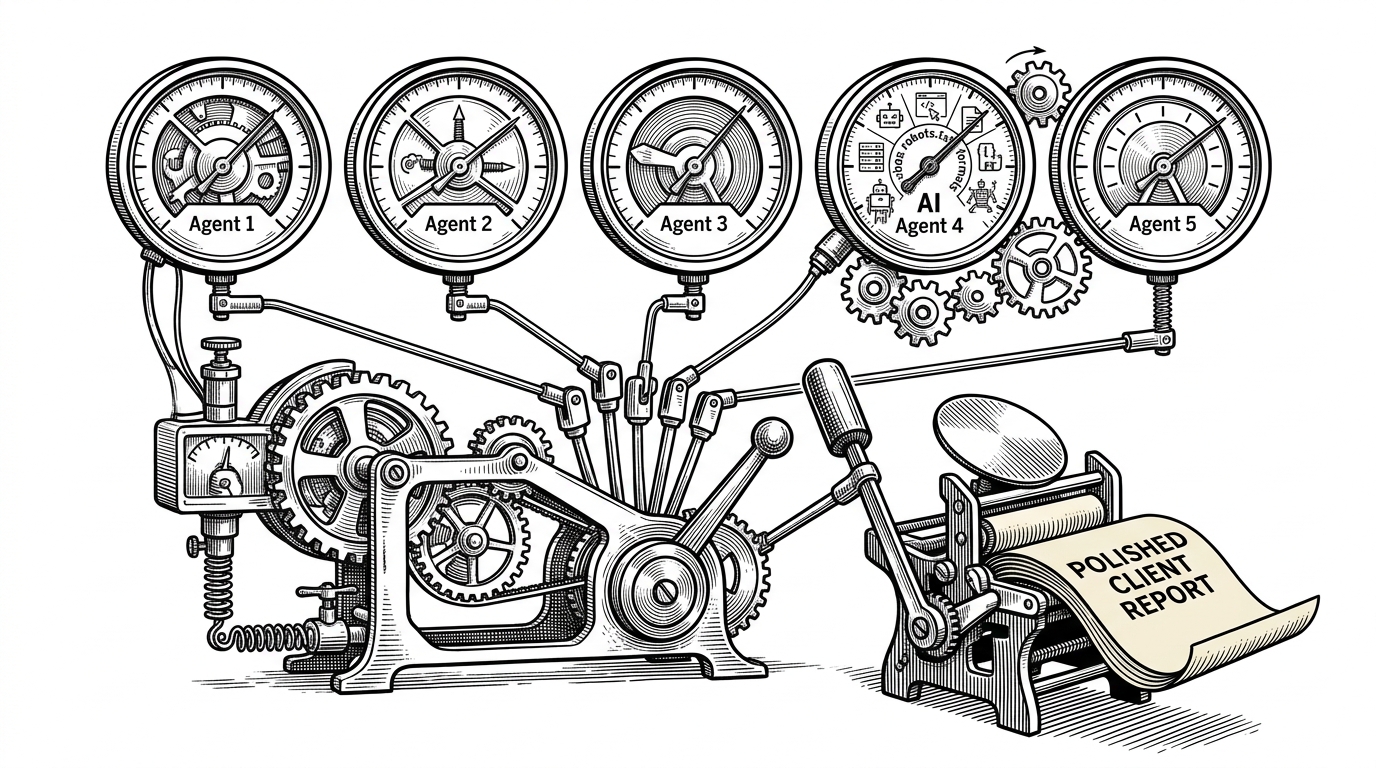
That structure is more important than the prompt text. The prompts can be swapped. The constraint is the design choice: each agent must answer in a machine-readable way, so the orchestration layer can compare, weight, and assemble the result without hand-waving.
Why the GEO agent matters more than it sounds
The most forward-looking part of the repo is the GEO agent. It does not just check classic search visibility. It asks whether a site is legible to AI systems, whether robots rules allow crawling, and whether structured data makes the page easy to cite or summarize.
That widens the meaning of discoverability. In this model, a company is not only optimizing for search engines. It is optimizing for the tools that summarize, retrieve, and repurpose web content across AI workflows.
In practical terms, that means the repo is already treating AI crawlers as part of the market. That is a small technical detail with a big strategic implication.
From prompts to a deliverable clients can invoice
The Python synthesis layer is the part that makes the project feel real. The agents think. The script packages. That gap matters, because lots of agent demos stop at the interesting conversation. This one keeps going until the result is ready to hand over.
The PDF step is not cosmetic. It turns a chain of model outputs into an artifact with business weight. Once the workflow can produce a report, it can be sold, reviewed, revised, and billed.
# scripts/generate_agency_pdf.py
# Takes JSON outputs from the agents and turns them into a client-ready PDF

from reportlab.lib.pagesizes import letter
from reportlab.pdfgen import canvas

# ...collect scores, summaries, and recommendations...
# ...render a polished report...
How this differs from broader AI agency frameworks
Most agent frameworks are horizontal. They want to be flexible enough to do anything. This repo is vertical. It optimizes for one business motion, and it optimizes hard.
| Approach | Strength | Weakness | Best for | What this repo does differently |
|---|---|---|---|---|
| General-purpose agent framework | Broad flexibility and lots of integrations | Often stops at orchestration without a business outcome | Teams building custom agent products | Ships a narrow sales workflow with a built-in deliverable |
| Broad AI agency toolkit | Many specialist personas and tasks | Can feel like a collection of prompts instead of a system | Experimenters and prompt tinkerers | Uses structured scoring and PDF synthesis to force completion |
| Claude Code extension like this repo | Lives inside an existing CLI workflow | Less general than a full platform | Operators who want immediate utility | Treats Claude Code like a business runtime with one command entry points |
The difference is not just scope. It is discipline. The repo does not try to impress you with breadth. It tries to close the loop from research to report.
Why this matters
`ai-sales-team-claude` is a clean example of where agentic software is heading. The valuable projects are not the ones that only speak well. They are the ones that can coordinate specialist work, reduce uncertainty, and produce something operationally useful.
That is why this repo stands out. It treats Claude Code as a runtime for a vertical business process, not as a novelty prompt shell. The result is less like an assistant and more like a tiny consultancy pipeline.