Matterbridge: The Stateless Wormhole Connecting the Fractured Chat Universe
How a single Go binary reconciles thirty years of incompatible protocols to create a "Unified Field Theory" for online conversation.
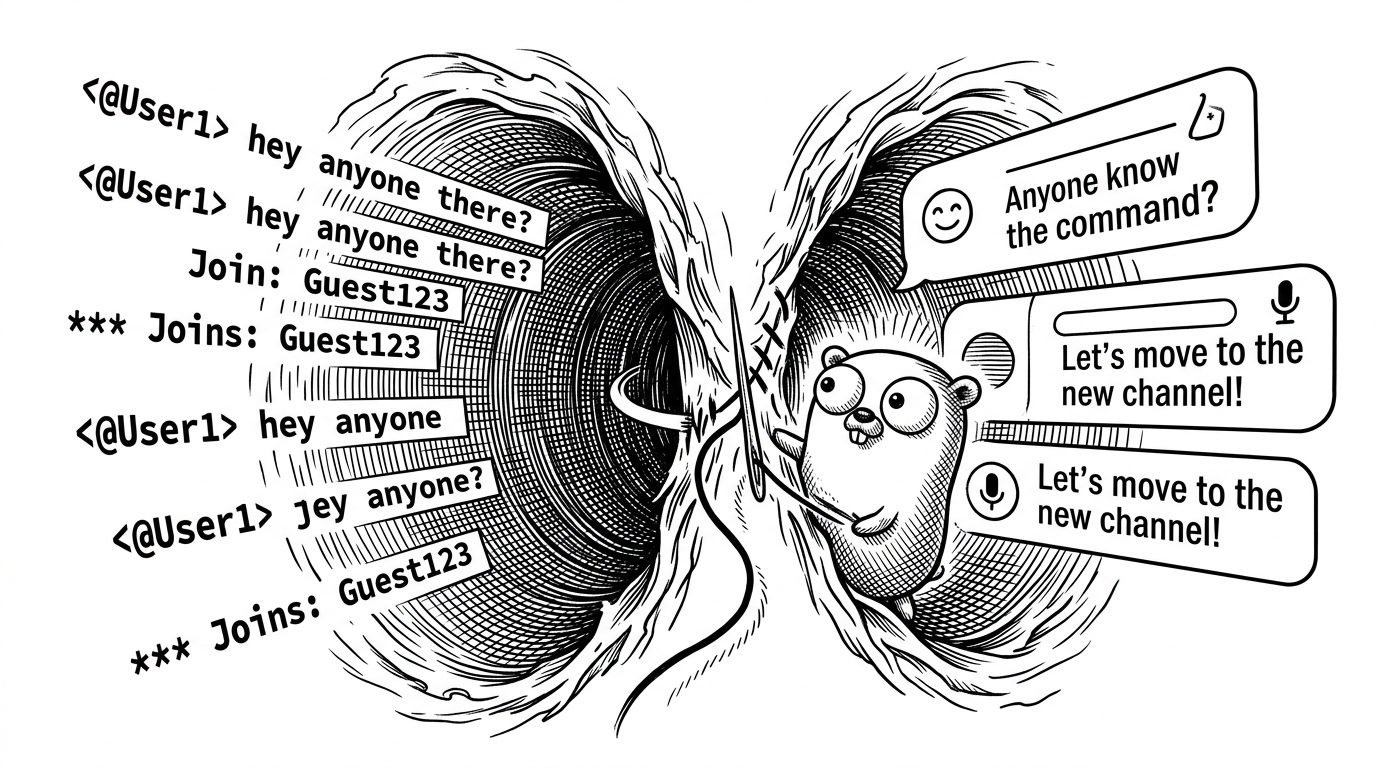

"@sas1024 Are you willing to help? I need people to test the different bridges on master as I'm not running a lot of bridges anymore. PR reviews are also welcome, any help is :)"
- Matterbridge functions as a stateless Go binary that reconciles over thirty different chat protocols without requiring a database or heavy infrastructure.
- The system uses identity spoofing via webhooks to mirror user avatars and nicknames across disparate platforms.
- Embedded Tengo scripting allows users to implement custom message filtering and transformations without recompiling the core source code.
- A central router translates protocol-specific events into a universal message struct to maintain a coherent conversation flow between different networking philosophies.
The Protocol Tower of Babel
The "Chat Wars" ended with a fragmented peace. Half the engineering team lives in Discord, the old guard refuses to leave IRC, and client communications happen on WhatsApp. Attempting to force everyone onto a single platform like Slack inevitably fails. People prefer their native environments.
Matterbridge is the invisible, stateless middleware that stitches these fractured realities back together. It is not just a bot. It is a universal translator that reconciles fundamentally different networking philosophies, bridging over thirty distinct protocols into a single, coherent conversation.
The Universal Architecture
The core genius of Matterbridge lies in its central abstraction: the config.Message struct. This is the common denominator message format. When a protocol-specific Bridge receives an event, it translates that native event into this universal format.
The architecture relies heavily on Go's concurrency model. A central Gateway routes messages between various Bridges. The Router acts as the central exchange, converting protocol-specific events into the universal struct and fanning them out to all connected endpoints.
The Spoofing Masterclass
Generic chat bots suffer from the "Identity Problem." Every forwarded message looks like it came from a generic robot avatar, stripping the human element from the conversation. Matterbridge solves this through identity persistence.
By leveraging Discord Webhooks and Slack API tricks, Matterbridge mirrors avatars and nicknames across platforms. It does not just relay text. It relays presence, making the bridged communication feel native to whatever platform the user is viewing.
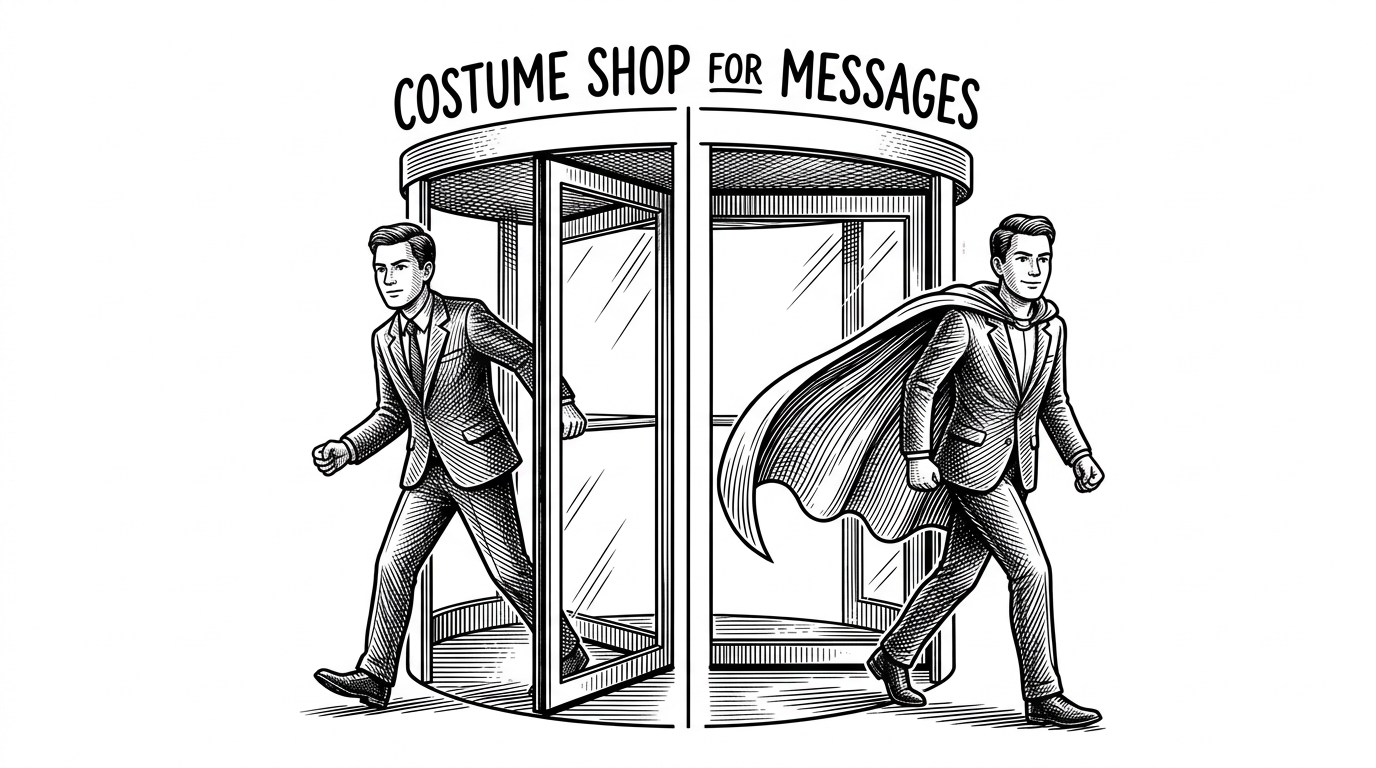
Extensibility via Tengo
Bridging protocols often requires custom filtering. A community manager might want to strip specific tags before sending a message from Discord to IRC. Instead of forcing users to fork the Go repository and recompile the binary, Matterbridge embeds Tengo.
Tengo is a small, dynamic scriptable language for Go. Power users can write custom message manipulation logic in small .tengo scripts. This allows for sophisticated filtering and transformation in transit without ever touching the core source code.
The Lightweight Alternative
When architects look at chat interoperability, the Matrix ecosystem is often the default choice. However, Matrix requires a federated network, a homeserver, and a database. It is a heavy infrastructure investment.
Matterbridge takes the opposite approach. It is a single, stateless Go binary (under 30MB) that connects directly to multiple APIs simultaneously. It requires zero infrastructure beyond a simple TOML configuration file.
| Feature | Matterbridge | Matrix (Bridges) | Apprise |
|---|---|---|---|
| Architecture | Stateless Binary Middleware | Federated Homeserver Hub | One-Way Notification Sender |
| Infrastructure Load | Extremely Low (Single Go Binary) | High (Database, Synapse Server) | Low (Python Script) |
| Identity Spoofing | Native via Webhooks | Requires "Puppeting" Setup | N/A (One-Way) |
| Best For | Many-to-Many Community Sync | Enterprise Self-Sovereignty | System Alerts and CI/CD |
A Community-Held Bridge
The project was created by Wim (@42wim) and has grown into a mature utility supporting dozens of protocols. As the project scaled, maintaining active integrations across thirty APIs became a significant burden for a single maintainer. Wim actively sought community involvement to keep the bridges functional as external APIs evolved.
This community-driven approach has allowed Matterbridge to survive the relentless churn of proprietary API changes. While platforms constantly shift their rate limits and authentication schemes, the stateless wormhole remains open, quietly translating the fractured internet back into a single room.
Sources: Matterbridge GitHub Repository, BrightCoding Deep Dive, and public GitHub issue discussions.