shapeit: The Writing Tool That Refuses to Let a Draft Run Wild
A conversational editor that turns raw markdown into structured articles by forcing every section to justify itself.

- shapeit’s real trick is not generation speed, but forcing structure to emerge before prose hardens.
- The repo turns writing into a staged conversation, where openings, sections, and format choices are negotiated one by one.
- Its value is opinionated control, especially for people who want AI help without generic AI mush.
- The larger lesson is that better writing tools may win by sequencing judgment, not by producing more text at once.
Most AI writing tools chase throughput. shapeit takes the opposite bet: the draft should be argued into existence, not sprayed onto the page. That makes it feel less like a text generator and more like a control surface for editorial judgment.
The tool that won’t let the model improvise too early
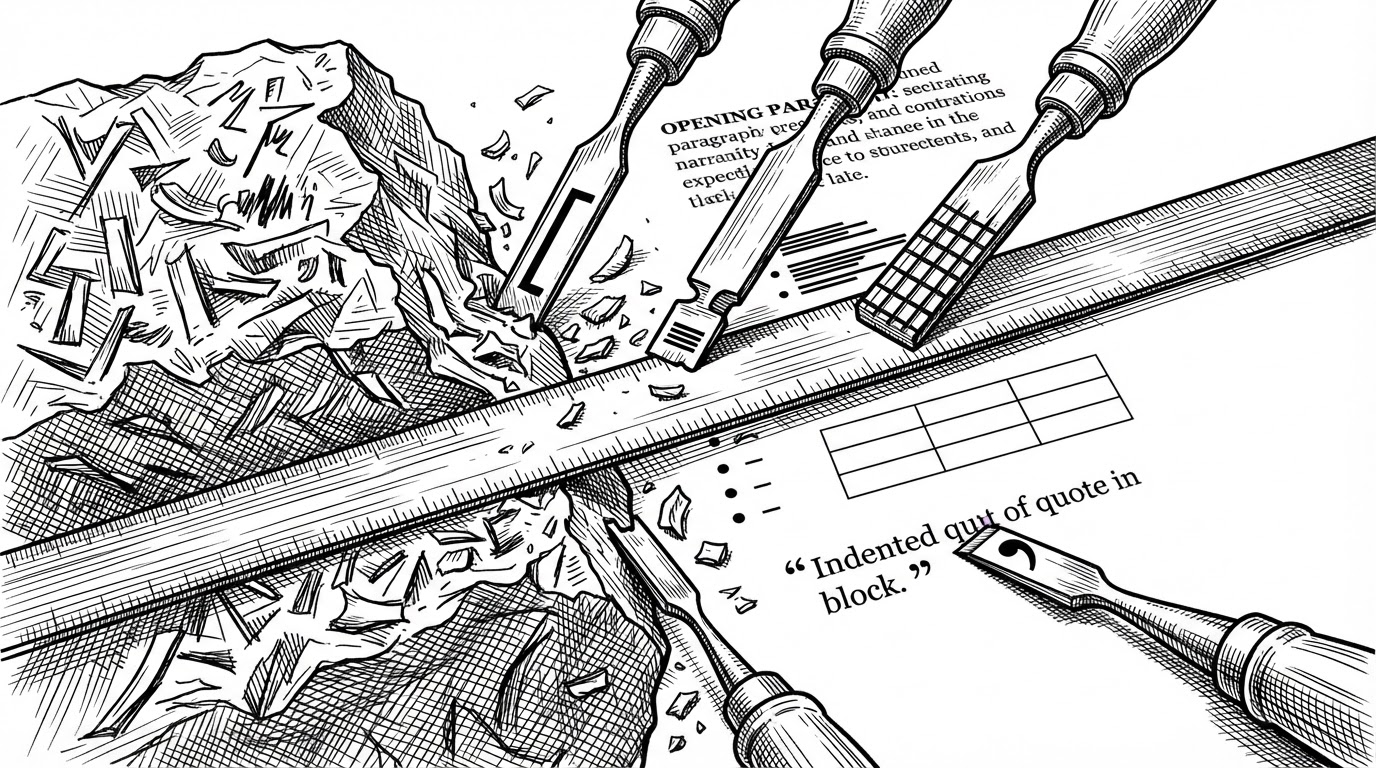
The interesting move here is simple. shapeit starts with raw markdown, then pushes the writer through a conversational shaping session instead of one giant prompt. Openings, sections, lists, tables, and quotes are handled as separate decisions, which keeps the model from racing ahead before the structure is sound.
From raw notes to shaped prose
That sequence matters because it changes the unit of work. Instead of asking an LLM for a complete article, shapeit asks for the next editorial decision. The result is more deliberate prose, but also more accountable prose, because each paragraph has to survive a checkpoint before the next one exists.
Why the repo feels opinionated instead of generic
Take a markdown file of raw material and shape it into an article through a conversational session — drafting candidate openings, growing the piece paragraph by paragraph, arguing about format (lists, tables, callouts, quotes) at each step.
That line says almost everything. shapeit is not a blank canvas, and it is not a template dump. It behaves like an editor with standards, which is why it fits the broader anti-slop ecosystem around Leon Lin’s other skills.
| Approach | How structure appears | Opinion level | Best for |
|---|---|---|---|
| Raw ChatGPT workflow | Structure arrives only if the user keeps asking for it | Low | Fast, messy drafting |
| Generic prompt template | Structure is baked into a one-shot instruction | Medium | Reusable content patterns |
| Vercel AI SDK | You build the workflow yourself | Low to medium | Custom AI products |
| shapeit | Structure is negotiated step by step in conversation | High | Editorial shaping under constraint |
The technical shape of the system
Under the hood, the repo stays practical. It is a Next.js app, with the editor logic living in a dedicated route and the UI kept lean enough that the writing workflow stays front and center. That restraint matters: the point is not to impress with infrastructure, but to make the editorial loop feel natural.

The important architectural idea is not novelty, it is discipline. shapeit uses a small amount of application logic to enforce a lot of editorial intent, which is a good reminder that most AI products fail less from missing models than from missing structure.